
What happens at Mass in the Catholic Church, explained
Mass in the Catholic Church is the central act of worship in which Catholics gather to hear Scripture, pray together, and receive the Eucharist, which Catholics believe is the body and blood of Christ under the appearance of bread and wine. It follows a set structure divided into two main parts: the Liturgy of the Word and the Liturgy of the Eucharist. Every Mass, whether celebrated in a small rural parish or a large cathedral, follows this same basic pattern, though details vary by language, music, and local custom.
For Catholics, Mass is not simply a service to attend but an encounter they believe brings them into direct contact with Christ. Understanding its structure helps explain why Catholics consider attending Mass, especially on Sundays, a serious obligation rather than an optional activity.
Why Mass holds such a central place in Catholic life
The Catholic Church teaches that the Mass makes present the sacrifice of Christ on the cross in a sacramental way. This is different from simply remembering a past event. Catholics believe that when the priest consecrates the bread and wine, a real change occurs, known as transubstantiation, even though the elements still look and taste like bread and wine.
This belief explains why the Eucharist sits at the heart of Catholic worship. The Second Vatican Council described the Eucharist as the "source and summit" of Christian life, meaning everything else in Catholic practice flows from and leads back to this moment. Because of this, missing Mass without a serious reason is considered a grave matter in Catholic moral teaching, and Catholics are expected to attend every Sunday and on certain holy days.
Key idea: Catholics do not view Mass as a reenactment of the Last Supper or the crucifixion. They believe it makes that one sacrifice present again, in a way that transcends ordinary time.
How the Mass is structured from beginning to end
Every Mass follows a consistent outline, even though hymns, readings, and homilies change daily. Knowing this structure makes it easier to follow along, especially for newcomers or visitors attending a Catholic Mass for the first time.
The introductory rites
Mass begins with an opening hymn and procession, followed by the Sign of the Cross and a greeting from the priest. The congregation then takes part in a brief penitential act, acknowledging sinfulness and asking for mercy. On most Sundays outside of certain penitential seasons like Lent, this is followed by the Gloria, a hymn of praise.
The Liturgy of the Word
This section centers on Scripture readings. A typical Sunday Mass includes:
- A reading from the Old Testament
- A Psalm, usually sung or recited responsively
- A reading from the New Testament epistles
- A Gospel reading, for which the congregation stands
- A homily given by the priest or deacon, explaining the readings
- The Profession of Faith, typically the Nicene Creed
- The Prayers of the Faithful, also called general intercessions
The readings follow a three-year cycle on Sundays, meaning Catholics hear a wide range of Scripture over time rather than the same passages repeated every year.
The Liturgy of the Eucharist
This is the part of Mass Catholics consider most sacred. It begins with the Offertory, when bread and wine are brought to the altar along with monetary collections. The priest then leads the Eucharistic Prayer, the long central prayer of consecration, during which Catholics believe the bread and wine become the body and blood of Christ.
Within the Eucharistic Prayer, the congregation says or sings the Holy, Holy, Holy (Sanctus) and later responds to the Mystery of Faith with an acclamation. The priest recites the words of institution, echoing Christ's words at the Last Supper described in passages like Luke 22:19-20, where Jesus shares bread and wine with his disciples and asks them to do this in his memory.
After the consecration, the congregation prays the Lord's Prayer, exchanges a sign of peace, and prepares for Holy Communion. Catholics in good standing with the Church approach the altar to receive the consecrated host, and sometimes the consecrated wine as well.
The concluding rites
Mass ends quickly after Communion. The priest offers a final blessing, sometimes with a brief announcement period beforehand, and the congregation is sent out with words like "Go forth, glorifying the Lord by your life." A closing hymn often accompanies the recessional.
What roles different people play during Mass
Several people typically take part in celebrating Mass, each with a distinct role:
- The priest presides over the entire liturgy and is the only one who can consecrate the Eucharist.
- The deacon, if present, may proclaim the Gospel, assist with the chalice, and lead certain prayers.
- Altar servers assist the priest with practical tasks like carrying items to the altar.
- Lectors read the Old and New Testament passages.
- Extraordinary ministers of Communion help distribute the Eucharist when needed.
- The choir or cantor leads the congregation in sung parts of the liturgy.
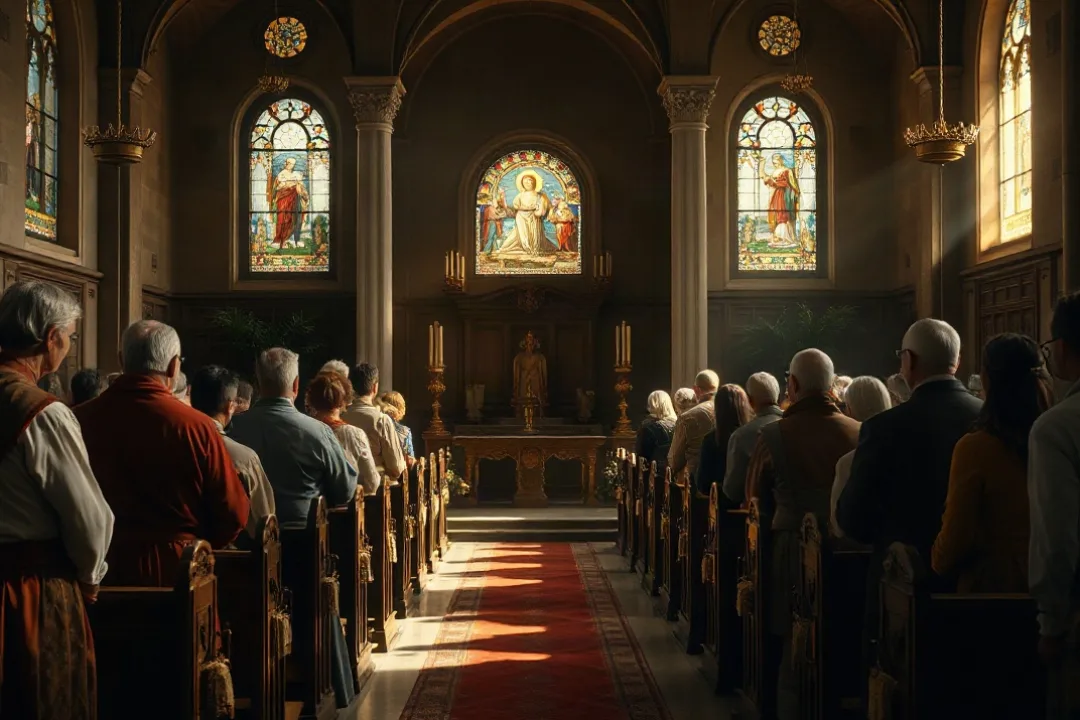
The congregation itself is not a passive audience. Catholics are expected to respond, sing, stand, kneel, and sit at designated points, since the Mass is understood as something the whole community celebrates together, not a performance watched from the pews.
What the different postures and gestures mean
Visitors sometimes find the constant standing, sitting, and kneeling confusing. Each posture carries meaning.
Standing generally signals respect and attentiveness, such as during the Gospel reading. Kneeling expresses humility and adoration, especially during the Eucharistic Prayer. Sitting allows for listening and reflection, as during the first readings and the homily. Small gestures like bowing the head at the name of Jesus or striking the chest during the penitential act are also common, though not required of visitors who are not Catholic.
"The Eucharist is the source and summit of the Christian life." This phrase, drawn from Church teaching following the Second Vatican Council, summarizes why Mass holds such weight in Catholic practice.
How often Catholics are expected to attend Mass
Catholic teaching holds that attending Mass on Sundays and certain holy days of obligation, such as Christmas and the Feast of the Immaculate Conception, is required for practicing Catholics. The reasoning is rooted in the idea that worship of God and participation in the Eucharist are not optional extras but central duties of faith.
Many Catholics also attend Mass on weekdays, though this is not obligatory. Daily Mass tends to be shorter, often without a homily or with a briefer one, and without a full choir or extended music.
Common differences between a Sunday Mass and a daily Mass
While the structure stays the same, there are practical differences worth knowing:
- Sunday Masses usually include more music, often a full choir or band
- Sunday Masses tend to run forty-five minutes to an hour, while daily Mass can be twenty to thirty minutes
- Daily Mass often has a smaller congregation, mostly regular parishioners
- Homilies on Sundays are usually longer and more developed
- Certain feast days bring special readings, colors, and sometimes additional rites
What first-time visitors should know before attending
Someone attending a Catholic Mass for the first time, whether out of curiosity, for a wedding, or a funeral, does not need to participate in every gesture. Following along respectfully is enough.
A few practical points can help:
- Dress modestly; many parishes do not have strict rules, but respectful clothing is expected
- Non-Catholics should not receive Communion, since the Eucharist is reserved for Catholics in good standing
- Arriving a few minutes early avoids walking in during the opening procession
- Silence is expected before Mass begins and during quiet moments of the liturgy
- Following the missal or printed program, if provided, makes it easier to track the readings and responses
Common misunderstandings about the Mass
Several misconceptions come up often, even among people who attend Mass regularly.
- Mistake: Thinking the Eucharist is only a symbol. Catholic teaching holds it is the real presence of Christ, not merely a symbolic gesture.
- Mistake: Believing the homily is the most important part. While instructive, the homily is secondary to the Liturgy of the Eucharist in Catholic theology.
- Mistake: Assuming all Masses are identical in length and style. Local customs, music traditions, and the presiding priest's pace can vary Mass considerably.
- Mistake: Thinking visitors who are not Catholic cannot attend Mass at all. Anyone can attend and observe; only reception of Communion is restricted.
- Mistake: Treating Mass purely as a cultural or social event rather than an act of worship, which overlooks its central religious purpose.
Tip: If you are unfamiliar with the responses, simply stand, sit, or kneel along with the congregation, and remain quiet during parts you don't know. No one expects visitors to recite every prayer by memory.
How the Latin Mass differs from the typical parish Mass
Most Catholic parishes in the United States celebrate Mass in English, following the form established after the Second Vatican Council, often called the Novus Ordo or Ordinary Form. Some parishes, however, offer the Traditional Latin Mass, also called the Extraordinary Form, celebrated almost entirely in Latin with the priest facing away from the congregation toward the altar.
The Latin Mass follows an older structure with different rubrics, more extended silence, and a different arrangement of prayers, though the core elements of Scripture readings and the Eucharistic consecration remain present in both forms. Availability of the Latin Mass varies significantly by diocese and parish.
What happens during a funeral or wedding Mass
Funeral and wedding Masses follow the same basic structure as a regular Sunday Mass but include additional rites specific to the occasion. A funeral Mass, for example, incorporates prayers for the deceased and often a final commendation near the casket. A wedding Mass includes the exchange of vows and rings within the Liturgy of the Word, before moving into the standard Liturgy of the Eucharist.
Guests who are not Catholic are welcome to attend these Masses and participate in standing, sitting, and praying along, while refraining from receiving Communion unless they are Catholic and in good standing with the Church.
Frequently asked questions
How long does a typical Catholic Mass last?
A Sunday Mass usually runs about forty-five minutes to an hour, depending on the length of the homily, music, and whether there are additional rites like baptisms. Weekday Masses are shorter, often twenty to thirty minutes, since they typically skip the homily or keep it brief and include less music.
Can a non-Catholic receive Communion at Mass?
No. The Catholic Church reserves Holy Communion for Catholics who are in good standing, meaning they have been properly catechized, are not conscious of serious unconfessed sin, and believe in the real presence of Christ in the Eucharist. Visitors who are not Catholic are welcome to attend but are asked to refrain from receiving Communion.
What is the difference between Mass and a Catholic church service in general?
Mass specifically refers to the Eucharistic liturgy that includes the consecration of bread and wine. Other Catholic services, like Eucharistic adoration, the Rosary, or Stations of the Cross, are devotional practices that do not include the Eucharistic sacrifice and therefore are not technically called Mass.
Why do Catholics kneel during parts of the Mass?
Kneeling expresses humility, reverence, and adoration, particularly during the Eucharistic Prayer when Catholics believe the bread and wine become the body and blood of Christ. It signals a posture of worship rather than ordinary attentiveness, distinguishing especially sacred moments from the rest of the liturgy.
Leave a Reply