
What a child's first Eucharist means and how to prepare for it
A child's first Eucharist marks the moment they receive the body and blood of Christ for the first time, usually around age seven or eight. For Catholic families, this sacrament is often called First Communion, and it represents one of the most significant milestones in a young person's faith life. It is not a graduation or a one-time celebration, but the beginning of a lifelong practice of receiving the sacrament regularly.
Understanding what the Eucharist is, why the Church asks children to prepare for it, and how families can make the day meaningful helps everyone involved approach it with the right spirit. This guide covers the theology behind the sacrament, the steps of preparation, and practical advice for parents, godparents, and catechists.
What the Eucharist actually is in Catholic belief
In Catholic teaching, the Eucharist is not a symbol or a reenactment. Catholics believe that during Mass, bread and wine are truly changed into the body and blood of Jesus Christ through a process called transubstantiation. The outward appearance stays the same, but the substance, according to Church teaching, becomes Christ himself.
This belief traces back to the Last Supper, described in passages like Luke 22:19, where Jesus shares bread with his disciples and tells them to continue the practice in memory of him. The Mass reenacts that moment at every celebration, and receiving Communion is understood as a real encounter with Christ, not just a ritual gesture.
Because of this, the Church treats the first time a child receives Communion as a serious spiritual event, not simply a cultural rite of passage. The preparation that precedes it exists to help children grasp, at an age-appropriate level, what they are about to receive.
Why children usually receive their first Eucharist around age seven
The Catholic Church generally sets the age of reason at around seven years old. This is the age at which a child is considered capable of distinguishing right from wrong and understanding, at a basic level, what it means to receive the Eucharist with reverence.
Before this age, children typically do not have the cognitive or moral development needed to grasp concepts like sin, grace, or the real presence of Christ. Church guidelines ask that a child be able to:
- Understand that the Eucharist is different from ordinary food
- Know the basic story of the Last Supper and why Catholics celebrate Mass
- Recognize the difference between right and wrong choices
- Participate in the sacrament of reconciliation (confession) before receiving Communion for the first time
Some dioceses or parishes may adjust the age slightly, and children with developmental differences are often given accommodations so they can still participate meaningfully.
How the preparation process typically works
Most parishes run a structured First Communion preparation program that spans one or two years, often paired with religious education classes. The exact format varies by parish, but it generally includes these stages:
- Enrollment — Parents register their child for the parish's sacramental preparation program, usually in first or second grade.
- Catechesis — Weekly or biweekly classes teach the basics of the faith: the Mass, the sacraments, prayers like the Our Father and Hail Mary, and the story of salvation.
- First Reconciliation — Before receiving the Eucharist, children prepare for and celebrate their first confession, since Church teaching holds that one should be in a state of grace before receiving Communion.
- Retreat or day of reflection — Many parishes hold a retreat shortly before the First Communion Mass, giving children and families time to focus on the meaning of the sacrament.
- The First Communion Mass — Often celebrated as a group Mass for the whole class, sometimes with the bishop or pastor presiding.
Parents are expected to be active participants in this process, not just chauffeurs to Sunday classes. Many programs include parent sessions or require a parent to sign off on home-based lessons and prayers practiced together.
Tip: Attending Mass together as a family each week during the preparation year does more to deepen a child's understanding of the Eucharist than any workbook. Familiarity with the rhythm of the Mass makes the sacrament feel natural rather than foreign.
What godparents and sponsors are expected to do
Unlike baptism, First Communion does not require a formal sponsor in the same way, but many families involve godparents or a chosen Catholic adult to support the child spiritually. This person's role is less about ceremony and more about ongoing encouragement.
Helpful contributions from godparents or sponsors include:
- Attending Mass with the child occasionally during preparation
- Giving a meaningful gift tied to faith, such as a rosary, a children's Bible, or a prayer book
- Writing a letter or card explaining why the Eucharist matters to them personally
- Being present, when possible, for the First Communion Mass itself
Their presence reinforces that the child is joining a wider community of faith, not just completing a family obligation.
Common mistakes families make when preparing for First Communion
Families often focus heavily on logistics and miss the spiritual purpose of the day. A few patterns show up again and again in parishes:
- Treating it mainly as a party. Elaborate receptions, outfits, and photo sessions can overshadow the actual Mass if planning isn't kept in proportion.
- Skipping Mass attendance during preparation. A child who only attends church for class but not for weekly Mass has a harder time connecting the lessons to real experience.
- Underestimating First Reconciliation. Some children find confession intimidating; walking them through it calmly in advance reduces anxiety.
- Overloading the day with extended family demands. Travel, multiple events, and tight schedules can leave a child exhausted and distracted during the Mass itself.
- Not discussing the meaning at home. Classes alone rarely stick; conversations at the dinner table about what the Eucharist means reinforce what's taught at church.
Keeping the focus on the sacrament itself, while still allowing for a genuine celebration afterward, tends to produce the most meaningful experience for the child.
What the First Communion Mass and day usually look like
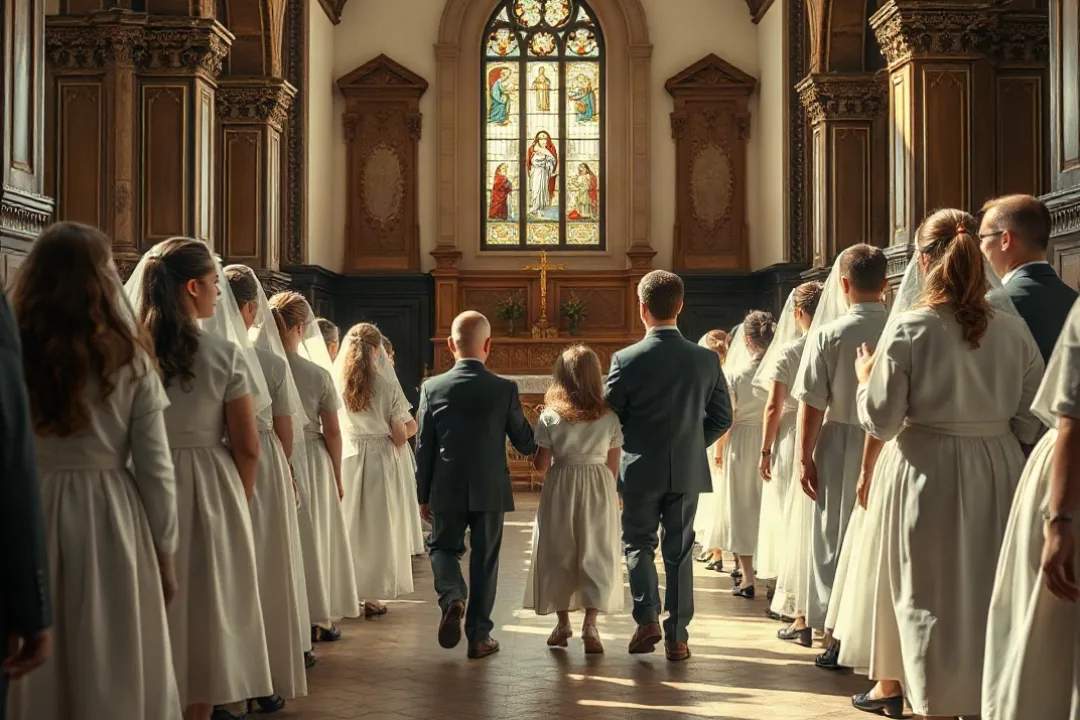
On the day itself, children typically wear special clothing: white dresses for girls and dress shirts or suits for boys, a tradition symbolizing purity and new beginning. The Mass usually follows the normal structure but includes a special moment where the class as a group approaches the altar for the first time.
Many parents choose meaningful items for the occasion, such as:
- A First Communion candle, sometimes lit from the child's baptismal candle
- A personalized missal or prayer book
- A cross or medal to wear
- A photo album or scrapbook to mark the milestone
After Mass, families commonly gather for a meal or small reception, inviting close relatives and godparents. The scale varies enormously by culture and region, from a modest lunch to a large multi-generational gathering, especially in communities with strong Catholic traditions such as Hispanic, Filipino, Polish, and Italian American families.
How to talk to a child about what the Eucharist means
Children absorb abstract theology poorly if it's explained only in adult language. Simple, honest comparisons work better than complicated doctrine.
Some approaches that catechists and parents find effective:
- Comparing the Eucharist to a special family meal where everyone is welcomed and fed
- Explaining that Jesus wanted to stay close to people in a real way, and the Eucharist is how he does that at every Mass
- Reading the story of the Last Supper together and asking what it might have felt like to be in that room
- Letting the child ask questions without rushing to a textbook answer, and admitting when a mystery is hard to fully explain
As theologian and author Flannery O'Connor once put it in a letter about the Eucharist, "if it's a symbol, to hell with it." Her blunt remark captures how seriously the Catholic tradition takes the real presence, even if a seven-year-old needs a gentler version of the same idea.
How First Communion differs across Christian traditions
While "First Eucharist" is the term most associated with Catholic and Orthodox practice, other Christian traditions mark the moment differently.
- Eastern Orthodox Christians often give infants their first Communion shortly after baptism, since the sacraments of initiation are usually celebrated together.
- Protestant denominations that practice Communion, such as Lutherans and Methodists, often have a confirmation-linked first Communion in the early teen years rather than childhood.
- Baptist and many evangelical churches view Communion as a symbolic remembrance rather than a sacrament involving real presence, so there is typically no formal "first Communion" preparation process at all.
These differences reflect deeper theological distinctions about what Communion actually is, not just variations in ceremony.
Practical checklist for parents in the months leading up to the day
A simple timeline can keep preparation on track without turning it into a stressful project.
- Six months out: Confirm enrollment in the parish program, check the class and Mass schedule, and begin attending Mass as a family if that isn't already routine.
- Three months out: Start practicing key prayers at home and talk through what First Reconciliation involves.
- One month out: Shop for attire, order any keepsakes, and confirm guest attendance for the Mass and reception.
- One week out: Attend the parish retreat or day of reflection if offered, and keep the schedule light so the child isn't overtired.
- The day before: Lay out clothing, review logistics for the morning, and spend some quiet time talking with the child about how they're feeling.
Small, steady steps like these reduce last-minute stress and keep the focus where it belongs.
Frequently asked questions
What age do children typically receive their first Eucharist?
Most Catholic children receive their first Eucharist around age seven or eight, which the Church considers the "age of reason," the point at which a child can understand basic right from wrong and grasp the meaning of the sacrament.
Does a child need to go to confession before First Communion?
Yes. Church practice requires children to celebrate their First Reconciliation (confession) before receiving the Eucharist for the first time, since one is expected to be in a state of grace before receiving Communion.
What is the difference between First Communion and confirmation?
First Communion is when a person first receives the Eucharist, while confirmation is a separate sacrament, usually celebrated later in adolescence or adulthood, that marks a fuller commitment to the Catholic faith and the gifts of the Holy Spirit.
What should a godparent give for a First Communion gift?
Meaningful, faith-centered gifts are traditional: a rosary, a children's Bible, a prayer book, a cross or medal, or a handwritten letter explaining what the Eucharist means to the giver personally.
Leave a Reply