
What age is confirmation celebrated across Christian traditions

If you have a child nearing their teenage years, or you're returning to church after time away, you've probably asked the same question a lot of parents and adult converts ask: what age is confirmation actually supposed to happen? The honest answer is that there isn't one universal age. It depends on the denomination, the specific diocese or parish, and sometimes on the individual's own readiness.
Confirmation marks a significant step in a person's faith journey, often described as the completion of baptismal grace. But the timing of that step has shifted over centuries and still varies widely today, even within the same church.
Why there's no single confirmation age across Christian traditions
Confirmation developed differently in the Eastern and Western churches, and later splintered further during the Reformation. In the early centuries of Christianity, baptism, confirmation, and first communion were often administered together, even to infants. That practice still exists in Eastern Orthodox and Eastern Catholic churches, where babies may be confirmed (called chrismation) shortly after baptism.
In the Western Latin Catholic Church, the three sacraments eventually separated in practice, mostly for logistical reasons tied to the growth of large dioceses and the limited number of bishops available to perform confirmations personally. Over time, this separation created room for local bishops to set their own guidelines about when young Catholics should be confirmed.
Protestant denominations that practice confirmation, such as Lutherans, Methodists, and Episcopalians, generally treat it as a mature affirmation of faith rather than strictly tied to infant baptism, which pushes the typical age later into adolescence.
What age do Catholic children typically get confirmed
In the United States, Catholic confirmation age usually falls somewhere between second grade and high school, though most dioceses land in one of a few common windows:
- Age 7 to 9 — Some dioceses restore the ancient order, confirming children around the same time as first communion, often in second or third grade.
- Age 12 to 13 — A common choice tied to the start of middle school, treating confirmation as a milestone of early adolescence.
- Age 15 to 17 — Many dioceses, particularly in the past few decades, moved confirmation to high school so that the sacrament coincides with a more conscious, personal commitment to faith.
The Code of Canon Law for the Latin Church states that confirmation should be given at roughly the age of discretion, unless the national bishops' conference sets a different age, or there's danger of death, or another serious reason suggests otherwise. "Age of discretion" generally means old enough to understand right from wrong and to make a reasoned choice, which in practice has been interpreted anywhere from seven years old upward.
Why dioceses set different ages
Individual bishops have real discretion here, and their decisions often reflect pastoral philosophy as much as policy. A diocese that confirms younger children usually emphasizes that confirmation completes baptism and shouldn't be delayed simply because a child is still young. A diocese that waits until the teenage years usually emphasizes personal ownership of faith, arguing that a sacrament meant to strengthen someone for Christian witness works better when the candidate has had more life experience and can genuinely choose it.
There's also a practical element. Bishops typically confirm candidates personally or delegate the task to a priest, and scheduling confirmation for a specific grade level across an entire diocese makes logistics more manageable for parish religious education programs.
Good to know: If your family has moved between dioceses, your child's confirmation age might change along with the move. Always check with the new parish's religious education office rather than assuming the previous diocese's timeline still applies.
How confirmation age differs in Protestant and Orthodox traditions
Outside the Catholic Church, confirmation looks and feels somewhat different, and so does the typical age.
- Eastern Orthodox and Eastern Catholic churches: Chrismation usually happens in infancy, immediately after baptism, so there's effectively no separate "confirmation age" to plan for.
- Lutheran churches: Confirmation commonly takes place around age 13 to 15, often after a multi-year course of instruction in Scripture and the catechism, frequently tied to eighth grade.
- Episcopal/Anglican churches: Confirmation age varies by diocese but often falls in the early to mid-teens, sometimes later for adult converts entering the church who were baptized elsewhere.
- Methodist and other mainline Protestant churches: Many now use "confirmation" loosely to describe a class culminating in a public profession of faith, typically around middle school age, though some congregations confirm younger children alongside first communion-style milestones.
Adults who convert to any of these traditions, or who were never confirmed as children, can be confirmed at any age. Adult confirmation is common and typically happens through a program like the Rite of Christian Initiation of Adults in Catholic parishes, which doesn't follow a set age at all.
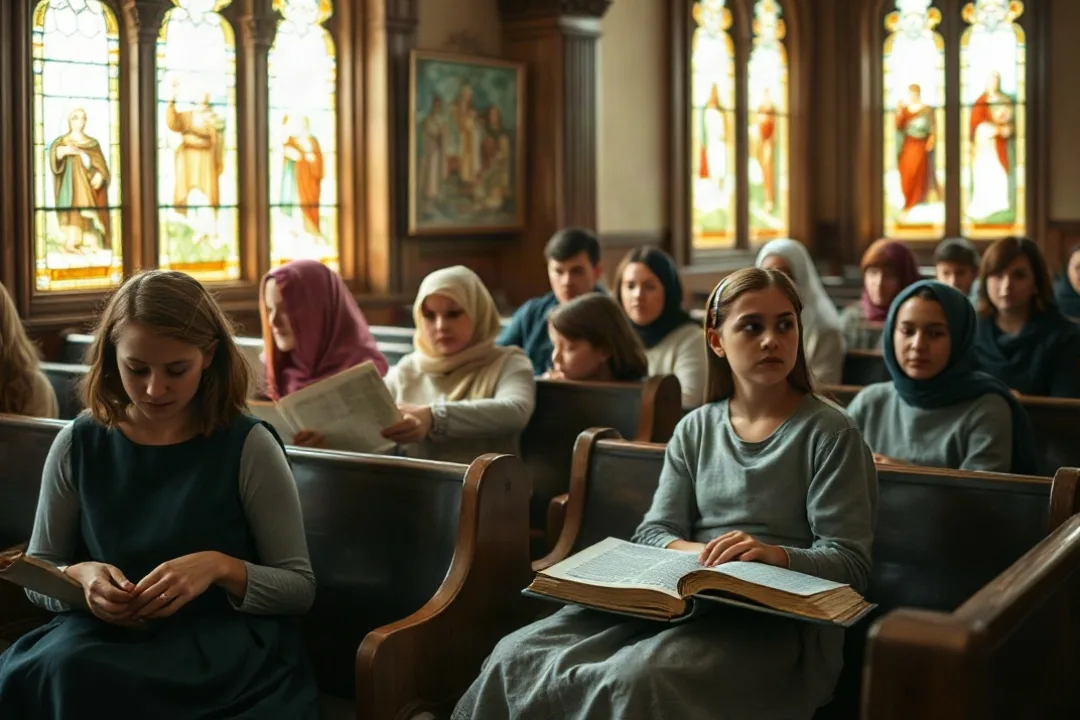
What factors actually go into deciding the right age for confirmation
Beyond diocesan policy, a few practical and spiritual considerations shape when confirmation makes sense for a particular person.
- Maturity and comprehension: Confirmation asks the candidate to understand, at least in basic terms, what they're committing to. A seven-year-old and a sixteen-year-old process that commitment very differently.
- Completion of preparation classes: Most parishes require a set number of months or years of religious education before confirmation, so the age often depends on when a child started that formation.
- Family and school schedules: Many parishes intentionally time confirmation around a natural transition, like finishing eighth grade, since families already associate that stage with "moving on."
- Personal readiness: Some pastors allow flexibility if a candidate needs more time to prepare, or conversely, if an older sibling's experience suggests an earlier or later track works better for a particular child.
- Sponsor availability: Candidates need a confirmation sponsor who is themselves a confirmed, practicing member of the faith; scheduling sometimes depends on finding the right sponsor.
What happens during confirmation preparation
Regardless of the exact age, most traditions require some kind of structured preparation before the sacrament itself. A typical path looks like this:
- Enrollment in a religious education or confirmation class, often lasting one to two full academic years.
- Study of core teachings, including the creed, the sacraments, moral teaching, and the role of the Holy Spirit.
- Choosing a sponsor, usually a godparent, relative, or trusted adult already confirmed in the faith.
- Selecting a confirmation name in many Catholic parishes, often the name of a saint the candidate feels connected to.
- Completing service hours or retreats, which many parishes require as a practical expression of faith in action.
- Meeting with the pastor or confirmation director to confirm readiness before the date is scheduled.
- The confirmation ceremony itself, usually performed by a bishop in Catholic parishes, laying hands on the candidate and anointing them with chrism oil.
None of these steps strictly require a certain number of birthdays. They require a certain level of preparation, which is really what "age of discretion" is trying to capture in the first place.
Common mistakes families make when thinking about confirmation age
A few misunderstandings come up again and again when parents start planning for a child's confirmation.
- Assuming there's one correct age everywhere. Diocesan and denominational policies genuinely differ, so comparing notes with relatives in another state or country can be misleading.
- Waiting too long to ask the parish. Preparation programs often start a full year or two before the ceremony, so checking the parish's schedule early avoids a scramble later.
- Overlooking the sponsor requirement. Some families leave sponsor selection until the last minute, only to discover the chosen person isn't eligible because they aren't a confirmed, practicing member of the faith.
- Treating confirmation as "graduation" from church. In many traditions, especially Catholic teaching, confirmation is meant to deepen commitment, not conclude religious practice.
- Forgetting that adults can be confirmed too. Some adults assume they missed their chance because they weren't confirmed as children, when in fact most parishes welcome adult candidates at any age.
A helpful reminder: If a family moves mid-preparation, ask the new parish whether previous classes and service hours will count, since policies on transferring progress between parishes vary quite a bit.
How to find out the confirmation age your specific parish or diocese uses
Because confirmation age is set locally rather than universally, the most reliable source of information is always the parish or congregation itself. A few practical steps make this easier:
- Call or visit the parish's religious education or faith formation office and ask directly which grade or age range they confirm.
- Check the diocese's website, since many publish confirmation guidelines for all parishes under their authority.
- Ask about exceptions for homeschooled students, adult converts, or children with special needs, since these groups often follow a slightly different timeline.
- If switching parishes or dioceses, request a written record of completed religious education so credit can be transferred where possible.
Scripture itself doesn't specify an age for this kind of commitment. Passages like Acts 8:14-17, describing the apostles laying hands on new believers in Samaria so they would receive the Holy Spirit, are often cited as a biblical foundation for confirmation, but they describe adult believers responding to the gospel rather than setting a fixed age for the rite. That's part of why churches have felt free to adapt the timing to their own pastoral judgment over the centuries.
Confirmation, whenever it happens, is meant to be less about marking a birthday and more about marking readiness to live out a faith someone has chosen for themselves.
Frequently asked questions
Is there a minimum age requirement for Catholic confirmation?
Canon law sets confirmation around the 'age of discretion,' generally understood as the ability to reason and choose, but national bishops' conferences and individual dioceses can set their own specific minimum age, which is why it varies from around age 7 to the mid-teens across the United States.
Can adults be confirmed if they missed it as a child?
Yes. Most parishes welcome adults for confirmation at any age, often through a program like the Rite of Christian Initiation of Adults. Adult candidates typically complete a preparation course similar to younger candidates before the ceremony.
Does confirmation age differ between Catholic and Protestant churches?
Yes, noticeably. Catholic dioceses vary widely, from early elementary school to high school. Lutheran and many mainline Protestant confirmations typically happen around age 13 to 15, often tied to completing a multi-year catechism class.
What if my family moves to a new diocese during confirmation preparation?
Contact the new parish's religious education office as soon as possible. Some parishes accept prior coursework and service hours toward their requirements, while others ask candidates to complete additional preparation under their own program before scheduling the ceremony.
Leave a Reply