
What is a catechist and what does the role actually involve?
Maybe you just got asked by your parish to help teach a religious education class, or your child came home talking about their "catechist" and you realized you're not entirely sure what that word means. You're not alone. The term gets used a lot in Catholic and some other Christian communities, but the actual job behind it is often fuzzy for people who didn't grow up with it.
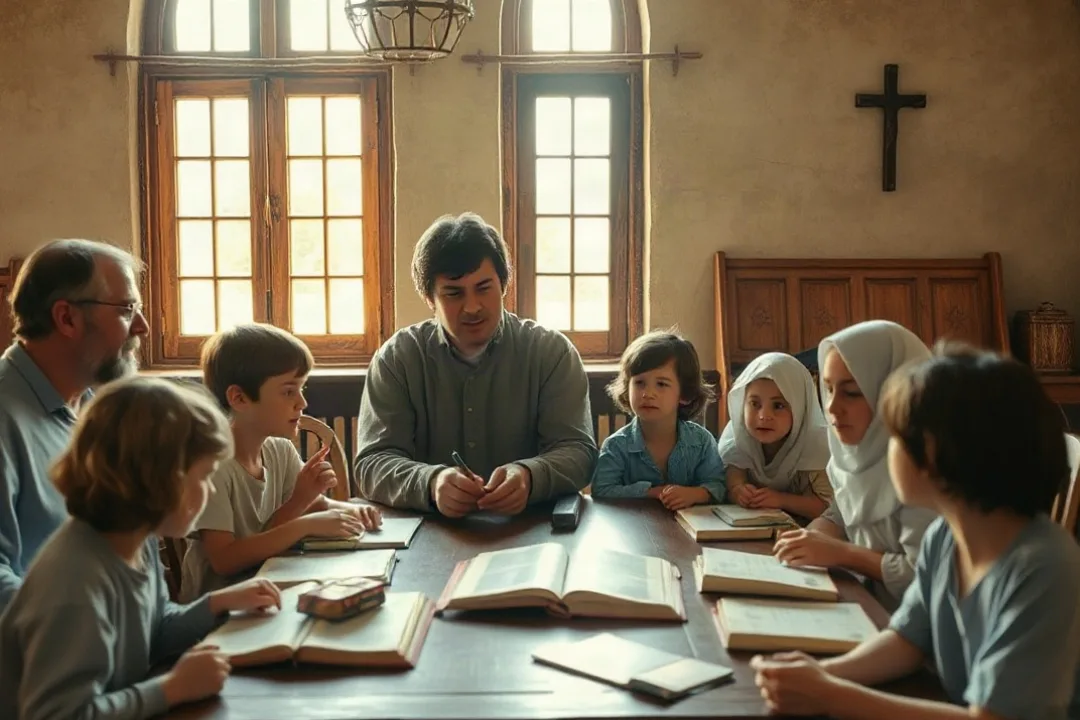
A catechist is someone who teaches the fundamentals of the Christian faith to others, usually within a parish or church community. The word comes from the Greek katechein, meaning "to instruct" or "to echo down." In practice, a catechist is the person leading Sunday school classes, preparing children for First Communion or Confirmation, guiding adults through the process of joining the Church, or running Bible study groups for teens and families.
What does a catechist actually do day to day
The job looks different depending on the parish, the age group, and the time of year, but most catechists share a similar set of responsibilities. At the core, a catechist is responsible for passing on religious teaching in a way that people can understand and connect with, not just reciting facts.
- Preparing lessons based on a curriculum provided by the diocese or parish, often tied to the liturgical calendar.
- Leading weekly classes for children, teens, or adults, which can range from twenty minutes with kindergartners to an hour-long discussion with adults.
- Preparing students for sacraments such as Baptism, First Communion, Confirmation, or, for adults, entry into the Church through RCIA (now often called OCIA).
- Communicating with parents about what their children are learning and how they can reinforce it at home.
- Modeling the faith through their own conduct, since young people especially tend to absorb more from watching an adult than from any worksheet.
- Keeping records of attendance, sacrament preparation, and sometimes background check compliance required by the diocese.
Some catechists work with a single age group for years and become deeply familiar with how to explain complex ideas, like the Trinity or the nature of sin, to eight-year-olds. Others rotate between classes or take on adult formation, which requires a different kind of teaching entirely.
How catechists differ from teachers, priests, and youth ministers
It helps to separate the catechist role from a few similar-sounding jobs, because people often mix them up.
A schoolteacher in a Catholic school may also teach religion, but their job is broader and tied to a formal academic curriculum with grades and state education requirements. A catechist, by contrast, usually volunteers or works part-time specifically for faith formation, often outside regular school hours, like on a weekday evening or Sunday morning.
A priest or deacon administers the sacraments and leads the liturgy. Catechists don't have that sacramental authority. Their job is formation and preparation, not presiding over the sacraments themselves.
A youth minister often focuses on building community, organizing retreats, and general pastoral care for teens, while a catechist's focus is more specifically on doctrinal and scriptural instruction, though in smaller parishes one person sometimes wears both hats.
Worth remembering: a catechist doesn't need to have all the theological answers memorized. The role is less about being an expert and more about being a steady, honest guide who is willing to keep learning alongside the people they teach.
What qualifications or training does someone need to become a catechist
Requirements vary by diocese and denomination, but there's a general pattern most parishes follow. Nobody expects a brand-new volunteer to show up with a theology degree.
- Practicing membership in the faith community. Most parishes require catechists to be registered, practicing members, usually attending Mass regularly.
- A background check and safe environment training. Because catechists work with minors, dioceses almost always require clearance through child protection programs before anyone is allowed in a classroom.
- Basic catechist formation. This can be a single workshop, an online course, or a multi-session certificate program offered by the diocese, covering how to teach, classroom management, and the content of the curriculum being used.
- Ongoing formation. Many dioceses expect catechists to keep attending workshops or conferences periodically to stay current and deepen their own understanding.
- A willingness to be mentored. New catechists are often paired with an experienced one for a year before leading a class independently.
Paid catechetical leaders, such as a Director of Religious Education, usually need more formal credentials, sometimes including a certificate or degree in theology or religious education. But the vast majority of catechists in American parishes are unpaid volunteers who juggle the role alongside full-time jobs and families.
Why people choose to become catechists
Few people land in this role by accident. Most catechists describe being asked directly by a pastor or director of religious education, or stepping in because their own child was starting a program and a classroom needed a volunteer.
Common reasons people stay in the role for years include:
- Wanting to deepen their own understanding of the faith by teaching it to others.
- Feeling a sense of responsibility to pass something meaningful on to the next generation.
- Enjoying the relationships that build over a year or more with the same group of students.
- Seeing it as a practical way to contribute to their parish beyond attending Mass.
A catechist does not teach a subject; a catechist hands on a relationship.
That idea captures something catechists tend to discover only after a while in the role: the facts and prayers matter, but what actually sticks with students is the example and patience of the person teaching them.
What skills make someone effective in this role
Not everyone who loves their faith is automatically good at teaching it. The two require different muscles, and the best catechists tend to develop both over time.
- Patience with repetition. Children ask the same questions in different ways, and adults preparing for sacraments often need concepts explained more than once before they click.
- Comfort with not knowing everything. Saying "that's a great question, let me find out and get back to you" builds more trust than guessing or glossing over a hard topic.
- Storytelling ability. Scripture and tradition are full of narrative, and catechists who can tell a story well tend to hold attention far better than those who rely only on handouts.
- Organization. Lesson planning, tracking sacrament requirements, and communicating with parents all take a baseline level of structure.
- Genuine warmth. Students, especially children, can tell the difference between someone going through the motions and someone who actually wants to be there.
Common mistakes new catechists make and how to avoid them
Almost every catechist looks back on their first year and winces a little. These are the patterns that show up most often, along with ways to fix them.
- Over-relying on worksheets. Busywork fills time but doesn't build understanding. Mixing in discussion, storytelling, and simple activities keeps students engaged longer.
- Talking over students' heads. Using theological vocabulary without explaining it in plain language loses younger students almost immediately. It helps to pause and ask, in your own words, what I just said.
- Not preparing enough. Walking into class without reviewing the lesson ahead of time usually results in a disorganized session and restless students.
- Avoiding hard questions. Kids and teens ask blunt questions about suffering, death, or why God allows bad things to happen. Dodging these erodes trust; honest, age-appropriate answers build it.
- Forgetting classroom management basics. Even a deeply faithful catechist will struggle if they haven't thought through simple things like seating, transitions, and how to handle side conversations.
- Neglecting their own formation. Teaching from a place of personal growth, rather than just reciting a manual, makes the biggest difference in how lessons land.
A practical tip: keep a simple journal of what worked and what fell flat after each class. Reviewing it before the next session saves more planning time than almost any other habit.
How parishes recruit and support catechists
Most religious education programs run on volunteer labor, which means recruitment is a constant, quiet effort behind the scenes. Parishes typically ask at Mass, through bulletins, or directly from the Director of Religious Education, who often knows which parents or parishioners might be a good fit.
Support structures vary widely. Some parishes provide detailed lesson plans, materials, and regular check-ins, while smaller or under-resourced parishes sometimes hand a volunteer a textbook and a classroom key with minimal guidance. If you're considering the role, it's reasonable to ask upfront what training, materials, and mentoring will be provided before you commit.
Many dioceses also run regional conferences or days of formation specifically for catechists, offering workshops on topics like teaching children with learning differences, handling difficult questions from teens, or using technology in the classroom. Attending even one of these can make a noticeable difference in confidence and skill.
What age groups and settings catechists typically work with
The term covers a wide range of teaching contexts, not just one classroom format.
- Early childhood classes focused on simple prayers, Bible stories, and basic concepts like God's love.
- Elementary-age sacramental preparation, especially for First Reconciliation and First Communion, usually around second grade.
- Confirmation preparation for teens, often paired with service hours and retreats.
- Adult faith formation, including RCIA/OCIA for adults entering the Church or returning after years away.
- Special needs catechesis, a growing area where catechists adapt materials and pacing for students with cognitive or developmental differences.
Each setting calls for a different approach, and many catechists find they have a natural fit with one age group even if they end up teaching several over the years.
How to get started if you're interested in becoming a catechist
If the role sounds appealing, the path in is usually simpler than people expect.
- Talk to your parish's Director of Religious Education or pastor and ask what openings and requirements exist.
- Complete the required background check and safe environment training, which most dioceses require before any contact with minors.
- Sign up for the introductory catechist formation session, which usually covers teaching basics and the curriculum used locally.
- Ask to shadow or co-teach with an experienced catechist for part of a semester before leading a class solo.
- Request the textbook or lesson materials in advance so you have time to review them before your first class.
Most people find that the hardest part is simply saying yes the first time. After a semester or two, the rhythm of planning and teaching starts to feel familiar, and the relationships built with students often become the most rewarding part of the whole experience.
Frequently asked questions
Is a catechist a paid position or a volunteer role?
Most catechists are unpaid volunteers, especially in weekly parish religious education programs. Some parishes do employ a paid Director or Coordinator of Religious Education who oversees the volunteer catechists and curriculum, but the classroom teaching itself is typically done on a volunteer basis.
Do you need a theology degree to become a catechist?
No. Most parishes only require that you are a practicing, registered member of the faith community, pass a background check, and complete a basic catechist training workshop offered by the diocese. Ongoing formation is encouraged, but an advanced degree is not a requirement for most volunteer roles.
What age groups do catechists typically teach?
Catechists work with a wide range of ages, from young children in early religious education classes to teens preparing for Confirmation and adults going through RCIA or OCIA. Some also specialize in teaching students with special needs, adapting materials and pacing accordingly.
How is a catechist different from a youth minister?
A catechist focuses mainly on doctrinal and scriptural instruction tied to sacrament preparation and religious education classes. A youth minister typically focuses more broadly on community building, pastoral care, and events for teens. In smaller parishes, one person sometimes handles both roles.
Leave a Reply