
Is today a day of obligation? How to check and what it means
In the United States, today is a day of obligation if it's a Sunday, or if it's one of six specific holy days on the Catholic calendar that haven't been shifted or lifted by a diocesan rule. The fastest way to know for sure is to check the date against that short list and then apply one extra rule that trips up a lot of people: in some years, the obligation on certain holy days simply doesn't apply.
That sounds more complicated than it is. Once you know the six holy days and the one exception that applies to three of them, you can answer the question for any date on the calendar in about ten seconds.
What "day of obligation" actually means
A day of obligation is a day on which Catholics are required, under normal circumstances, to attend Mass. The requirement comes from canon law and from the authority of local bishops' conferences, who set the specific list of holy days for their country. Missing Mass on a day of obligation without a serious reason is considered a grave matter in Catholic moral teaching, though the Church has always recognized legitimate excuses like illness, caring for someone who is sick, dangerous weather, or lack of reasonable access to a church.
Every Sunday is automatically a day of obligation. That part never changes and has no exceptions tied to the calendar. The more complicated piece is the separate list of holy days of obligation that fall on weekdays throughout the year.
The six holy days of obligation in the United States
The United States Conference of Catholic Bishops recognizes six holy days of obligation beyond Sundays. Here they are, in calendar order:
- January 1 – Solemnity of Mary, Mother of God
- The Ascension of the Lord – forty days after Easter, observed on a Thursday in some dioceses and moved to the following Sunday in most U.S. provinces
- August 15 – The Assumption of the Blessed Virgin Mary
- November 1 – All Saints' Day
- December 8 – The Immaculate Conception of the Blessed Virgin Mary
- December 25 – Christmas, the Nativity of the Lord
If today's date matches one of these, there's a good chance it's a day of obligation. But three of them come with a built-in exception that you need to check before assuming Mass is required.
How to check if today is a day of obligation: a step-by-step approach
Use this short sequence to work it out for any date:
- Check if today is a Sunday. If so, it's a day of obligation, full stop.
- Check if today matches one of the six fixed or movable holy days listed above. If it doesn't, today is not a day of obligation.
- If today is January 1, August 15, or November 1, check what day of the week it falls on. In the United States, when any of these three dates falls on a Saturday or a Monday, the bishops have granted a dispensation that removes the obligation to attend Mass that particular year. The celebration still happens at parishes, but attendance isn't required.
- If today is the Immaculate Conception (December 8) or Christmas (December 25), the obligation always applies, regardless of what day of the week it falls on. No automatic dispensation exists for these two.
- If today is the Feast of the Ascension, check your diocese. Many U.S. provinces have moved this celebration permanently to the following Sunday, which means it's already covered by the Sunday obligation and there's no separate Thursday requirement. A smaller number of dioceses still keep it on Thursday as a holy day.
Quick tip: The Saturday/Monday exception only applies to January 1, August 15, and November 1. Christmas and the Immaculate Conception are never affected by it, even if they land on a Saturday or Monday.
Why some holy days get dispensed and others don't
The rule about Saturdays and Mondays exists because of a practical concern: when a holy day falls right next to a Sunday, Catholics could end up with an obligation to attend Mass on two consecutive days, which the U.S. bishops judged as an unnecessary burden for a holy day that isn't among the most central feasts of the year. So for January 1, August 15, and November 1, the obligation is automatically lifted in those years.
Christmas and the Immaculate Conception are treated differently because of their theological weight. Christmas celebrates the Incarnation itself, and December 8 honors a dogma central to Catholic belief about Mary. The bishops decided these two deserve the obligation every single year, even on a Saturday or Monday, even if that means two Masses in a row.
The Ascension situation is different again. It isn't a dispensation so much as a relocation. Rather than removing the obligation in certain years, most U.S. ecclesiastical provinces moved the entire celebration from its traditional Thursday to the following Sunday, merging it with the regular Sunday obligation. This varies by region, so a Catholic traveling between dioceses might notice the Ascension observed on different days depending on where they are.
What fulfilling the obligation actually requires
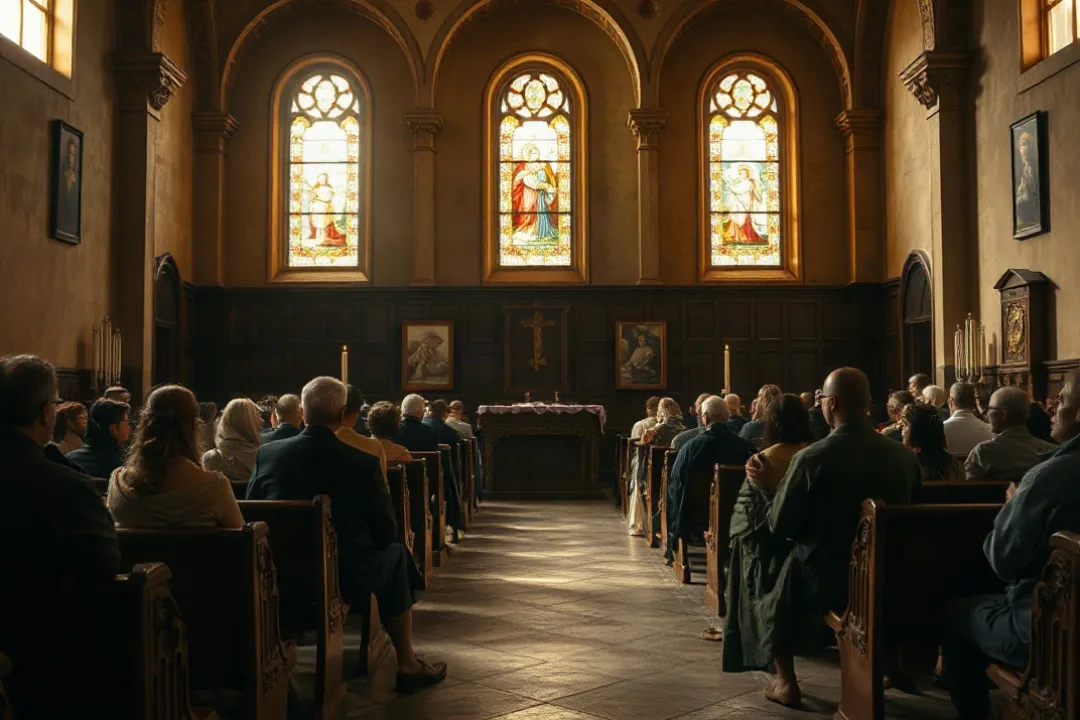
Attending Mass on a day of obligation means being present for the entire liturgy, from the opening procession through the final blessing, ideally in a state that allows full participation. A few practical points often come up:
- Vigil Masses count. Attending Mass on the evening before a holy day of obligation (just as with Saturday evening Masses for Sunday) satisfies the requirement.
- One Mass can sometimes cover two obligations. If a holy day falls on a Saturday and the obligation applies that year, attending the Saturday evening vigil Mass for that holy day does not automatically also fulfill Sunday's obligation — those remain separate requirements unless the readings and timing specifically combine them, which is uncommon.
- Virtual or televised Mass does not fulfill the obligation under normal circumstances, though exceptions exist for those who are homebound, ill, or otherwise unable to attend in person.
- Traveling doesn't remove the obligation. If you're out of town on a holy day, you're still expected to find a Catholic parish nearby.
Holy days that are no longer required in some places
A few feasts that used to carry the obligation in earlier centuries — such as the feasts of the Epiphany, Corpus Christi, and Saints Peter and Paul in certain countries — are no longer on the official U.S. list. Local custom and history still shape how parishes celebrate these days, and many remain important liturgically, but they don't carry the binding requirement to attend Mass in the United States the way they might in other countries.
This is a reminder that the list of holy days of obligation is not universal across the whole Church. Each national bishops' conference, with Vatican approval, sets its own calendar. A Catholic visiting Italy, the Philippines, or Poland might find a different set of obligatory feast days than the six observed in the U.S.
How the Ascension date varies by region
Because the handling of the Ascension differs so much from diocese to diocese, it's worth a closer look. The feast falls forty days after Easter Sunday, which always lands on a Thursday. Historically, that Thursday carried the obligation everywhere.
Starting several decades ago, most ecclesiastical provinces in the United States petitioned to move the observance to the following Sunday for pastoral reasons, mainly to make it easier for working Catholics to participate in a celebration that marks one of the most significant events in the life of Christ. A handful of provinces, including some in the northeastern United States, kept the traditional Thursday date. This means the honest answer to "is today a day of obligation" around the Ascension season depends on where you live, not just what the date is.
Canon law describes holy days of obligation as days "on which the faithful are bound to participate in the Mass," a requirement rooted in the idea that certain mysteries of faith deserve dedicated, communal worship beyond the weekly rhythm of Sunday.
What to do if you're genuinely unsure about today's status
If none of the steps above gives you a confident answer, a few reliable sources can settle it quickly:
- Check your parish bulletin or website. Parishes almost always list upcoming holy days and Mass times well in advance.
- Call the parish office. Staff can confirm whether a particular date carries the obligation this year, especially around the Saturday/Monday exception.
- Look up your diocese's liturgical calendar. Diocesan websites typically publish the full year's schedule, including any local variations for the Ascension.
- Ask about Mass times rather than just the date. If a parish is offering extra Masses on a weekday, that's usually a sign the day carries some liturgical weight, even if it isn't strictly a day of obligation.
Keeping a simple mental list of the six holy days, plus the Saturday/Monday rule for three of them, covers the vast majority of situations a practicing Catholic will run into during a typical year. The exceptions are few enough to memorize, and once they're familiar, checking "is today a day of obligation" becomes a quick habit rather than a source of confusion.
Frequently asked questions
What happens if a holy day of obligation falls on a Saturday or Monday?
For January 1, August 15, and November 1, U.S. bishops have granted a standing dispensation: when any of these three dates falls on a Saturday or Monday, the obligation to attend Mass is lifted that year. The feast is still celebrated, but attendance isn't required. This rule doesn't apply to Christmas or the Immaculate Conception.
Does Christmas always require Mass attendance even on a weekend?
Yes. Christmas, December 25, always carries the obligation regardless of what day of the week it falls on. The same is true for the Immaculate Conception on December 8. Neither of these two dates is covered by the Saturday/Monday dispensation that applies to the other holy days.
Why does the Ascension get celebrated on different days in different places?
The Ascension traditionally falls on a Thursday, forty days after Easter. Most U.S. ecclesiastical provinces moved its celebration to the following Sunday for pastoral convenience, folding it into the regular Sunday obligation. A smaller number of dioceses kept the original Thursday date, so the correct day depends on where you live.
Does watching Mass online count as fulfilling a day of obligation?
Generally, no. The obligation is meant to be fulfilled by physically attending Mass. Exceptions apply to people who are homebound, hospitalized, or otherwise genuinely unable to attend in person, in which case following Mass remotely can be a reasonable substitute, often with guidance from a priest or pastor.
Leave a Reply