
Adult baptism in the Catholic Church: what to expect
Adult baptism in the Catholic Church is the first of three sacraments of initiation, and for most adults it happens alongside confirmation and First Communion during a single ceremony, usually at the Easter Vigil. Unlike infant baptism, adult baptism follows a period of instruction and discernment that can last the better part of a year. The process is structured, but it is also personal, built around the individual's questions, background, and readiness.
Many people searching for information on this topic are either considering baptism themselves or supporting a friend, partner, or family member through the process. Understanding how it works, what is required, and what actually happens on the day can make the experience less intimidating and more meaningful.
What adult baptism actually means in Catholic teaching
In Catholic theology, baptism is the doorway into the Christian life. It washes away original sin, incorporates the person into the Church, and marks the beginning of a relationship with God that continues through confirmation and the Eucharist. For adults, this is not a passive ritual performed on them; it is the culmination of a conscious decision to embrace Christian faith.
Because adults can understand and consent to what is happening, the Church treats their baptism as inseparable from a broader process of formation. That formation is not simply paperwork or a class to complete. It involves learning Catholic teaching, building a prayer life, and getting to know a faith community before making a lifelong commitment.
Who actually needs the full adult baptism process
Not every adult entering the Catholic Church needs to be baptized. The requirements differ depending on someone's religious history:
- Adults who have never been baptized in any Christian tradition go through the full process of catechesis and are baptized, confirmed, and receive First Communion together.
- Adults baptized in another Christian denomination (such as most Protestant churches) are not rebaptized, because the Church recognizes baptisms performed with water in the name of the Father, Son, and Holy Spirit as valid. These individuals make a profession of faith and are received into full communion, then confirmed and given First Communion.
- Adults with an uncertain baptismal history, where there is no record and no witness to confirm a baptism took place, may receive what is called a conditional baptism, phrased in a way that respects the possibility a valid baptism already occurred.
This distinction matters because it affects how long the preparation process takes and what the ceremony itself looks like. Someone coming from another Christian tradition typically has a shorter and different formation path than someone with no prior faith background.
Key point: baptism in the Catholic Church is never repeated. If a person was validly baptized elsewhere as a Christian, that baptism stands, even if the rest of their formation still needs to happen.
How the OCIA process works from start to finish
Adult initiation in the United States is guided by a process historically called the Rite of Christian Initiation of Adults (RCIA), now more commonly referred to as OCIA, the Order of Christian Initiation of Adults. Parishes run this as an ongoing program, usually starting in the fall and culminating the following spring.
The stages of formation
The process generally moves through several recognizable periods, though parishes vary slightly in pacing:
- Inquiry period, sometimes called the precatechumenate, where newcomers ask questions informally and decide whether to continue, with no commitment required.
- Catechumenate, a longer stage of structured teaching covering Scripture, Catholic doctrine, the sacraments, and moral teaching, often paired with regular attendance at Mass.
- Rite of Election, usually celebrated on the first Sunday of Lent, often at the diocesan cathedral, where the bishop formally recognizes those who are ready to be baptized.
- Purification and enlightenment, the weeks of Lent leading up to Easter, focused on prayer, reflection, and final preparation.
- Celebration of the sacraments, typically at the Easter Vigil, when baptism, confirmation, and First Communion are received.
- Mystagogy, the period after Easter when new Catholics continue to meet and deepen their understanding of what they have received.
This timeline is not rigid. Some parishes offer a shorter track for people coming from another Christian denomination, since they are not being baptized and already hold many of the same core beliefs. Others adjust the schedule for someone who begins the process later in the year.
What actually happens during the baptism ceremony
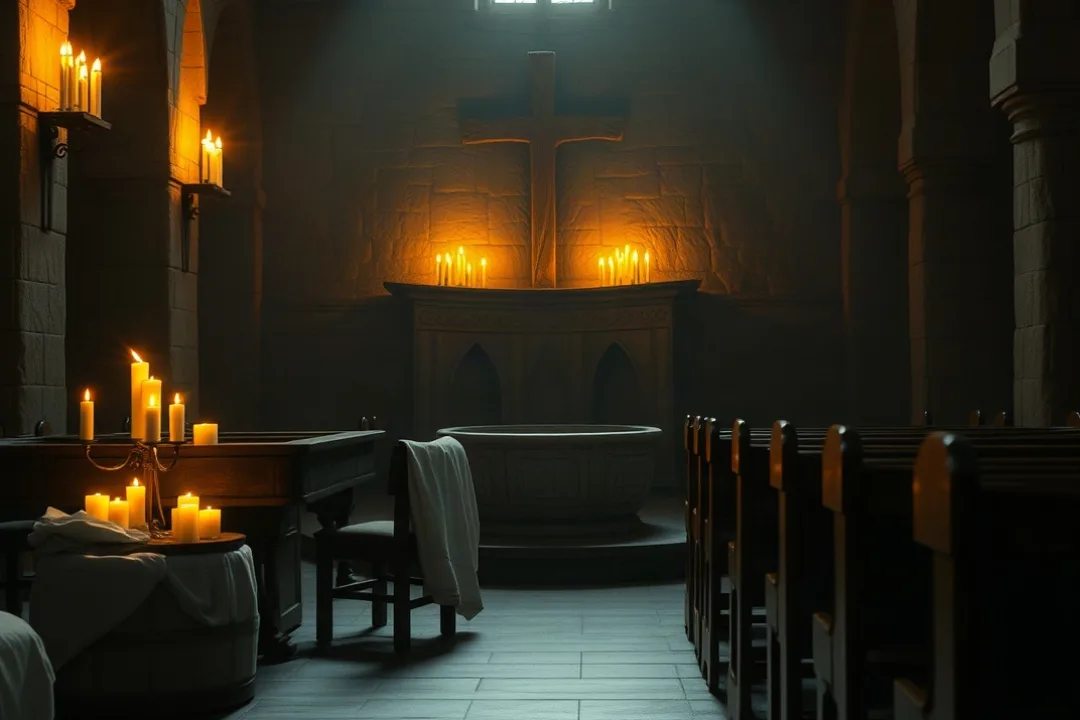
For adults, baptism is almost always celebrated by immersion or by the pouring of water three times over the head, while the priest or deacon says the Trinitarian formula invoking the Father, Son, and Holy Spirit. This is usually followed immediately, in the same liturgy, by confirmation and then First Communion, since adults are considered ready to receive all three sacraments of initiation at once.
Several symbolic elements accompany the baptism itself:
- A white garment is given, symbolizing the new life and purity the person now shares in Christ.
- A baptismal candle, lit from the Easter candle, represents the light of Christ the new Catholic is called to carry.
- Anointing with sacred chrism marks the person as belonging to Christ, distinct from the anointing that comes later with confirmation.
- The person chooses or confirms a baptismal name, often the name of a saint they feel connected to.
The Easter Vigil, held after sunset on Holy Saturday, is the most common setting for adult baptisms because of its deep symbolism: it is the liturgical commemoration of Christ's resurrection, and new Christians rise with him into new life. Some parishes also baptize adults at other times of year for pastoral reasons, but Easter remains the norm.
The role of godparents and sponsors
Every adult being baptized is expected to have at least one sponsor, sometimes also called a godparent in this context. This person's role is not ceremonial decoration; they are meant to accompany the candidate through formation and model what a committed Catholic life looks like.
Church guidelines generally require that a sponsor be:
- A practicing Catholic who has already received confirmation and First Communion
- At least 16 years old, unless a pastor grants an exception
- Living in a way consistent with Catholic teaching and able to fulfill the role responsibly
- Not the spouse of the person being baptized, since the role involves spiritual guidance beyond marriage
Parishes often ask the candidate to choose a sponsor from within their own parish community, since that person may be asked to attend sessions, pray with the candidate, and stand beside them at the Rite of Election and at the baptism itself.
Practical tips and common mistakes to avoid
People entering the process for the first time often stumble over a handful of predictable issues. Keeping these in mind can make the journey smoother:
- Start earlier than you think you need to. Many parishes begin OCIA classes in September for an Easter celebration, so arriving in January can mean waiting almost a full extra year.
- Gather baptismal records early if there is any chance you were baptized as a child. Contacting the church where it may have happened can take weeks.
- Don't assume you'll be rebaptized if you were baptized in another Christian church. Bring any documentation you have, since it affects your entire preparation track.
- Choose a sponsor thoughtfully, not simply the first practicing Catholic you know. This should be someone who will actually show up for the process, not just the ceremony.
- Expect questions, not just answers. OCIA sessions are discussion-based, and bringing doubts or difficult questions is normal and welcomed.
- Talk to your parish's OCIA coordinator directly rather than relying on general information online, since parish practices and schedules vary.
A note on pacing: there is no fixed minimum length for adult preparation set in stone for every case, but most parishes plan for several months of formation so that the decision to be baptized is informed, not rushed.
What changes after baptism
Baptism is not the finish line. New Catholics are expected to continue growing in their faith through regular participation in Mass, ongoing learning, and involvement in parish life. The period of mystagogy that follows Easter exists precisely because the Church recognizes that understanding deepens with experience, not just instruction.
As Saint Augustine put it in reflecting on the sacraments, the visible sign points toward an invisible reality that continues to unfold over a lifetime.
The sacraments produce what they signify.
That idea captures why the Church treats the day of baptism as a beginning rather than a conclusion. The formation, the sponsor relationships, and the parish connections built during the process are meant to continue long after the water, oil, and white garment of the ceremony itself.
Frequently asked questions
How long does it take to become baptized Catholic as an adult?
Most parishes run formation programs over roughly six to nine months, often starting in the fall for an Easter baptism. Someone already baptized in another Christian tradition may need a shorter preparation, while someone with no prior faith background may need longer, depending on the parish's schedule and the person's pace.
Do I need to be baptized again if I was baptized Protestant?
No. The Catholic Church recognizes baptisms performed with water in the name of the Father, Son, and Holy Spirit as valid, regardless of denomination. Instead of being rebaptized, you make a profession of faith and are received into full communion, then confirmed and given First Communion.
Can I choose any adult to be my baptism sponsor?
Not quite. A sponsor must be a practicing Catholic who has already received confirmation and First Communion, at least 16 years old, and living in a way consistent with Church teaching. Spouses typically cannot serve as a sponsor for each other, since the role is meant to provide separate spiritual guidance.
Is adult baptism always done at the Easter Vigil?
It is the most common timing because of the liturgical symbolism of resurrection, but it is not the only option. Pastoral circumstances, such as health concerns or scheduling, sometimes lead parishes to celebrate adult baptism at another point in the year instead.
Leave a Reply