
Catholic holidays: a guide to the church's feast days
Catholic holidays fall into two main groups: holy days of obligation, when Catholics are expected to attend Mass, and the broader array of feast days that mark saints, events in the life of Jesus, and moments in salvation history. The two anchor points of the entire calendar are Christmas and Easter, with dozens of other observances arranged around them throughout the liturgical year.
Unlike the civil calendar, the Catholic calendar is not a simple list of one-off dates. It is built around seasons that prepare for and extend the meaning of the two great feasts, plus a rotating set of saints' days and solemnities that give the year its particular rhythm. Understanding how these pieces fit together makes it much easier to know what is being celebrated and why.
What makes a day a Catholic holiday
In church language, a "holiday" is usually called a feast, solemnity, or memorial, depending on its importance. Solemnities are the highest rank and include Christmas, Easter, and the Assumption of Mary. Feasts rank below solemnities and often honor specific events or saints, such as the Feast of the Transfiguration. Memorials, the most common type, usually celebrate individual saints and appear on almost every day of the year.
A smaller subset of these days are holy days of obligation. On these days, Catholics who are able are expected to attend Mass, much as they would on a Sunday. The exact list of obligatory days can vary somewhat by country, since local bishops' conferences have some authority to adjust it.
Key distinction: every holy day of obligation is a Catholic holiday, but not every Catholic holiday is a holy day of obligation. Many beloved feasts, like St. Patrick's Day or the Feast of St. Francis, are widely celebrated without requiring Mass attendance.
The major Catholic holidays throughout the year
Some Catholic holidays have fixed calendar dates every year, while others move depending on the date of Easter. Here are the observances most Catholics in the United States will recognize:
- Christmas (December 25): celebrates the birth of Jesus and stands alongside Easter as the most important feast of the year.
- Epiphany (January, date varies by region): commemorates the visit of the Magi and the revelation of Jesus to the wider world.
- Ash Wednesday (movable, in February or March): opens the season of Lent with fasting and the marking of ashes on the forehead.
- Palm Sunday (movable, the Sunday before Easter): recalls Jesus's entry into Jerusalem before his passion.
- Holy Thursday, Good Friday, and Easter Vigil (movable): together these form the Easter Triduum, the three days at the heart of the Christian year.
- Easter Sunday (movable, between late March and late April): celebrates the resurrection of Jesus and is the most important feast in the entire calendar.
- Ascension (movable, 40 days after Easter): marks Jesus's ascension into heaven.
- Pentecost (movable, 50 days after Easter): celebrates the coming of the Holy Spirit upon the apostles.
- All Saints' Day (November 1): honors all the saints in heaven, known and unknown.
- Immaculate Conception (December 8): celebrates Mary being conceived free from original sin.
Easter's moving date explains why so many other holidays shift from year to year. The date is calculated as the first Sunday after the first full moon following the spring equinox, which is why it can fall anywhere between late March and late April.
Holy days of obligation observed in the United States
In the U.S., the bishops' conference has set a specific list of holy days of obligation. A few of these are transferred to the nearest Sunday in some years, so it is worth checking a parish bulletin or diocesan calendar each year to confirm the exact dates. The standard list includes:
- Solemnity of Mary, Mother of God (January 1)
- Ascension of the Lord (moved to Sunday in many U.S. dioceses)
- Assumption of the Blessed Virgin Mary (August 15)
- All Saints' Day (November 1)
- Immaculate Conception of the Blessed Virgin Mary (December 8)
- Christmas (December 25)
Sundays themselves are always counted as holy days of obligation as well, since weekly Mass attendance is a basic expectation of Catholic practice, separate from this special list.
The liturgical seasons that organize the Catholic year
Catholic holidays do not float in isolation. They are embedded in liturgical seasons, each with its own mood, color, and spiritual focus. Recognizing these seasons helps explain why certain feasts cluster together.
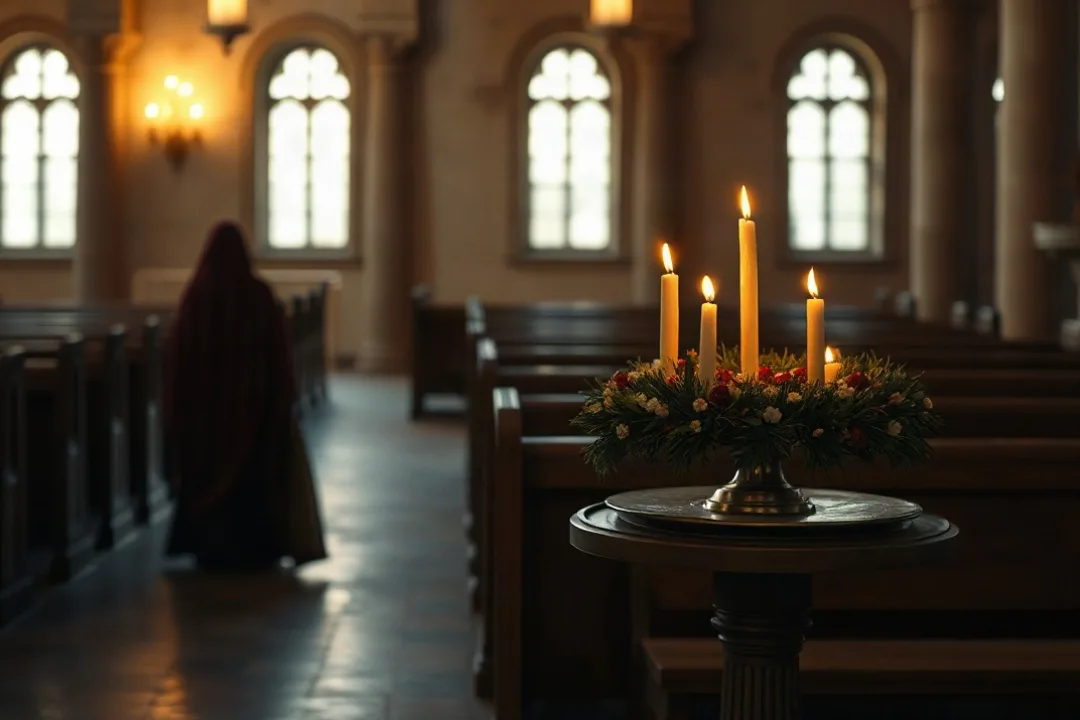
- Advent: the four weeks before Christmas, a time of preparation and expectation, marked by the lighting of candles on an Advent wreath.
- Christmas season: runs from December 25 through the Baptism of the Lord in January, celebrating the incarnation.
- Ordinary Time (first stretch): the weeks between Christmas season and Lent, with no dominant theme of its own.
- Lent: forty days of fasting, prayer, and almsgiving leading up to Easter, beginning on Ash Wednesday.
- Easter season: fifty days of celebration from Easter Sunday through Pentecost.
- Ordinary Time (second stretch): the longest season, running from after Pentecost until Advent begins again, during which many saints' feasts occur.
This cycle repeats every year, which is why the Catholic calendar is sometimes described less as a list of individual holidays and more as a continuous story told in stages.
How Catholic holidays are typically observed
Observance varies by feast, but several practices recur across the calendar. Attending Mass is central on major solemnities and holy days of obligation. Many feasts also come with specific customs tied to family, food, or community life.
- Christmas Eve and Christmas Day often involve a vigil or midnight Mass, followed by family gatherings and traditional meals.
- Ash Wednesday includes the marking of ashes and the start of personal Lenten commitments, such as giving up a particular food or habit.
- Good Friday is marked by fasting, somber liturgies, and sometimes the veneration of the cross.
- Easter Vigil, held after sundown on Holy Saturday, includes the lighting of a new fire, the blessing of the Easter candle, and often the baptism of new Catholics.
- All Saints' Day and All Souls' Day (November 1 and 2) are often observed together, with visits to cemeteries and prayers for the dead.
Parish communities frequently add their own local traditions, such as processions, novenas, or patronal feast celebrations tied to the saint their church is named after.
Why some Catholic holidays move and others stay fixed
Fixed-date holidays, like Christmas or the Immaculate Conception, always fall on the same calendar date regardless of the day of the week. Movable holidays are calculated in relation to Easter, which itself depends on lunar and solar cycles rather than a set date.
This is why Ash Wednesday, Palm Sunday, Holy Thursday, Good Friday, Easter, Ascension, and Pentecost shift from year to year, sometimes by several weeks. Parishes publish updated liturgical calendars annually, and most diocesan websites list the exact dates well in advance so families can plan accordingly.
Practical tip: if you want to know whether a specific Catholic holiday falls on a Sunday in a given year, check your diocese's liturgical calendar directly, since local adaptations (especially for the Ascension) can change whether Mass attendance that day is obligatory.
One useful way to think about the whole system comes from how the church itself describes the purpose of its calendar.
The liturgical year is arranged so that the whole mystery of Christ, from incarnation to ascension, is unfolded throughout the course of the year.
That single idea, that the calendar tells one continuous story rather than marking isolated events, is the clearest way to understand why Catholic holidays are organized the way they are.
Frequently asked questions
What is the difference between a Catholic holiday and a holy day of obligation?
A Catholic holiday is any feast, solemnity, or memorial on the church calendar, while a holy day of obligation is a specific subset of these days on which Catholics are expected to attend Mass, similar to a Sunday requirement.
Why does Easter fall on a different date every year?
Easter's date depends on the lunar calendar rather than a fixed day. It falls on the first Sunday after the first full moon following the spring equinox, which places it anywhere between late March and late April.
Is the Ascension always a holy day of obligation in the United States?
Not uniformly. Many U.S. dioceses have transferred the Ascension to the following Sunday instead of keeping it on its traditional Thursday, so the obligation status can depend on where you live.
Do Catholic holidays include saints' feast days?
Yes. Alongside major solemnities like Christmas and Easter, the calendar includes feasts and memorials for individual saints nearly every day of the year, though most of these do not require Mass attendance.
Leave a Reply