
The 12 days of Christmas: what they are and how to celebrate
The 12 days of Christmas run from December 25 through January 5, not in the weeks before Christmas as many people assume. This twelve-day stretch connects Christmas Day to Epiphany on January 6, the date many Christian traditions mark as when the Magi reached Bethlehem.
Confusion about the timing is common because retailers and calendars often treat the days leading up to December 25 as a countdown. That countdown is actually Advent, a separate season that can last anywhere from about three to four weeks depending on when the fourth Sunday before Christmas falls. The 12 days of Christmas begin only after Advent ends, starting the evening of Christmas Day itself.
When do the 12 days of Christmas start and end
The season opens on December 25 and closes on January 5, often called Twelfth Night. The following day, January 6, is Epiphany, which caps the season and commemorates the visit of the Magi to the infant Jesus, as well as other revelations tied to Christ's early life depending on the tradition.
- Day 1 – December 25, Christmas Day
- Day 2 – December 26
- Day 3 – December 27
- Day 4 – December 28
- Day 5 – December 29
- Day 6 – December 30
- Day 7 – December 31, New Year's Eve
- Day 8 – January 1, New Year's Day
- Day 9 – January 2
- Day 10 – January 3
- Day 11 – January 4
- Day 12 – January 5, Twelfth Night
Some calendars count slightly differently, treating January 6 as the twelfth day instead of the fifth. Both counting methods exist in different regional traditions, so you may see either version referenced depending on the source.
Where the tradition of a 12-day Christmas season comes from
The twelve-day structure dates back to the early centuries of the Christian calendar, when church leaders worked out how to link the celebration of Christ's birth with the celebration of his manifestation to the wider world at Epiphany. Rather than treating Christmas as a single day of festivity followed by a return to ordinary life, the early church stretched the celebration across nearly two weeks.
In medieval and early modern Europe, this period became a genuine season of feasting, rest from labor, and community gatherings. Farm work slowed during the depths of winter, which made it practical to set aside an extended stretch for visiting neighbors, exchanging small gifts, and holding larger shared meals. Twelfth Night in particular became known for its own customs, including special cakes baked with a hidden bean or coin inside; whoever found it in their slice was crowned the "king" or "queen" of the celebration for the evening.
Quick fact: the Christmas tree, lights, and decorations in many Western households traditionally stay up through the full 12 days and come down around Twelfth Night or Epiphany, not immediately after December 25.
What the song "The 12 Days of Christmas" actually describes
The familiar carol, with its partridge in a pear tree and five golden rings, is a cumulative song where each verse adds a new gift from a "true love," building toward an increasingly long and repetitive list by the twelfth verse. Musically and structurally, it resembles other memory-and-forfeit games that were popular in English and French households centuries ago, where singers had to recall an ever-growing chain of items without mistakes.
A persistent claim online suggests that each gift in the song is a coded symbol for a point of Christian doctrine, supposedly created during a period when open religious teaching was restricted. Historians and folklorists who have studied the song's origins generally find no solid evidence for this theory; it appears to have emerged much later as an appealing story rather than a documented fact. The song is better understood simply as a playful, escalating piece of seasonal entertainment rather than a secret catechism.
The twelve gifts, in order
- A partridge in a pear tree
- Two turtle doves
- Three French hens
- Four calling birds
- Five golden rings
- Six geese a-laying
- Seven swans a-swimming
- Eight maids a-milking
- Nine ladies dancing
- Ten lords a-leaping
- Eleven pipers piping
- Twelve drummers drumming
How different cultures observe this stretch of the calendar
Not every country treats these twelve days the same way, and the customs attached to them vary widely across regions and communities.
- Spain and much of Latin America: gift-giving is often centered on January 6, tied to the arrival of the Three Kings rather than Christmas Day itself.
- Parts of Eastern Europe: the days are marked with caroling, house blessings, and visits from costumed performers who go door to door.
- England and Ireland: Twelfth Night cake and the custom of taking down decorations on January 5 remain common, with some households holding that leaving decorations up past that date brings bad luck.
- Germany and Austria: the period includes "Rauhnächte" or "rough nights," older folk traditions involving smoke cleansing of homes and barns against the coming year.
In the United States, the season is less uniformly observed as a distinct block of time, though many churches continue to mark it liturgically, and some families use it as a deliberate stretch of slower, less commercial celebration after the rush of December shopping and travel.
Simple ways to mark each of the 12 days at home
You do not need elaborate plans to give the season some shape. A few small, repeatable rituals can carry a household through the stretch without much extra effort.
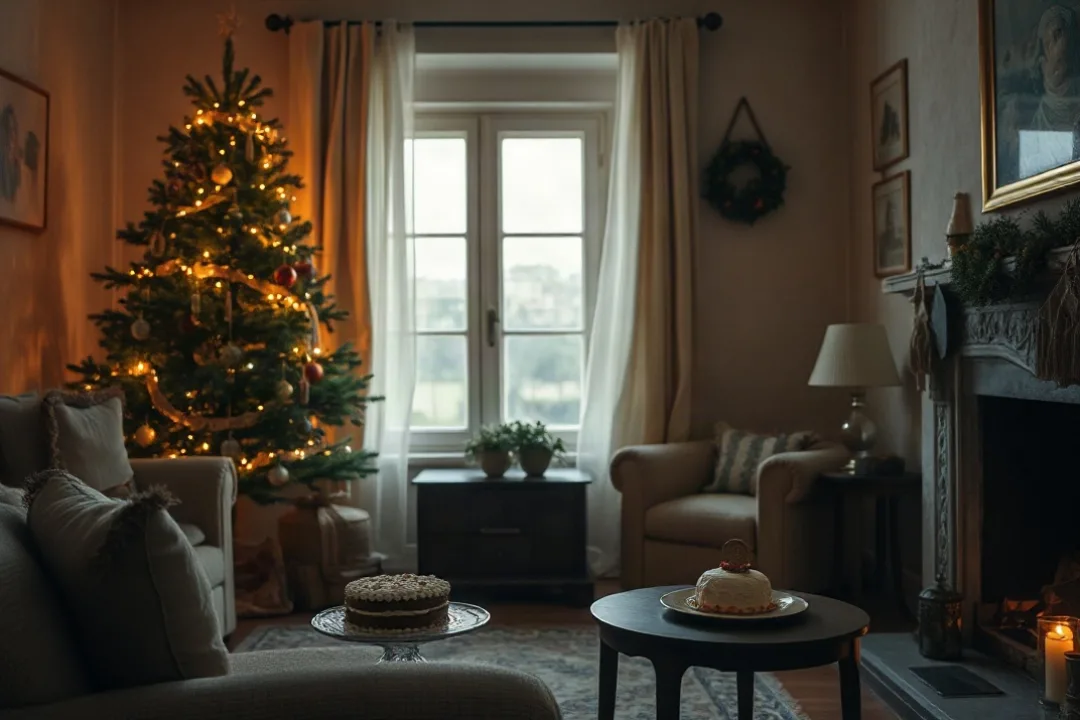
- Keep the tree and lights up. Resist taking everything down on December 26; let the decorations stay through Twelfth Night as a visible marker of the ongoing season.
- Spread out gift-giving. Instead of concentrating everything on one morning, save a few small gifts or treats for later days, especially if children in the house tend to feel a letdown once the main day passes.
- Plan one quiet gathering. A simple dinner, a game night, or a call with extended family on one of the in-between days keeps the sense of connection going past December 25.
- Bake something for Twelfth Night. A plain cake with a single almond, bean, or coin hidden inside revives an old custom and gives the last evening its own small event.
- Write or send a few thank-you notes. The slower days between Christmas and New Year's are a practical window for acknowledging gifts without the pressure of the holiday rush.
- Reflect on the year closing and the one opening. Many people find the days between December 25 and January 1 useful for a low-pressure version of year-end review, separate from New Year's resolutions made under deadline pressure.
A note on decorations and the timing of taking them down
Folklore around decoration timing is fairly consistent across English-speaking countries: putting decorations up too early, before Christmas Eve, was traditionally considered bad luck, and leaving them up past Twelfth Night was considered worse luck still. Whether or not anyone takes the superstition seriously today, it offers a tidy, practical rule: up by Christmas Eve, down by Twelfth Night, with the full 12 days in between to enjoy them.
Tip: if you host guests over the holidays, letting decorations stand through early January means you don't have to scramble to redecorate for a New Year's gathering only days after taking everything down.
How the 12 days relate to Epiphany and the wider church calendar
In liturgical traditions, the 12 days of Christmas function as the lead-up to Epiphany, which itself opens a longer season sometimes called Epiphanytide or Ordinary Time, depending on the denomination. Epiphany commemorates the visit of the Magi, described in Matthew 2:1-12, where visitors from the East follow a star and bring gifts to the young Jesus, recognizing him as a significant figure beyond his immediate community. Some traditions also connect Epiphany to the baptism of Jesus or to the wedding at Cana, treating the date as a broader celebration of Christ becoming known to the world rather than a single narrow event.
This explains why many churches hold special services on January 6, sometimes including the blessing of homes with chalk marked above doorways, a custom still practiced in some Catholic communities in the United States and parts of Europe. The chalk marking typically includes the year and three letters tied to the names traditionally given to the Magi, written as a blessing for the household in the coming year.
The light shines in the darkness, and the darkness has not overcome it. (John 1:5, paraphrased)
That verse, often read during the Christmas season, captures the general spirit behind stretching the celebration across twelve days rather than compressing it into one: the point is sustained attention rather than a single burst of activity followed by an abrupt return to routine.
Common misconceptions worth clearing up
- "The 12 days lead up to Christmas." They do not; that period is Advent. The 12 days follow Christmas Day.
- "Each gift in the song is a secret religious code." This claim is widely circulated but not supported by solid historical evidence.
- "Decorations must come down on December 26." Traditionally, the opposite is true in many customs; decorations are meant to stay up through the full season.
- "The 12 days are only a British or European custom." Versions of the extended Christmas season, often tied to Epiphany, appear across many Christian cultures worldwide, including throughout Latin America.
Clearing up the timing alone changes how the season feels. Treating December 25 as the start of a longer stretch, rather than the finish line of a monthlong buildup, can turn the days right after Christmas into something worth planning for instead of simply enduring.
Frequently asked questions
Do the 12 days of Christmas start before or after December 25?
They start on December 25 and run through January 5. The weeks before Christmas Day are a separate season called Advent, which is often mistaken for the 12 days because of countdown calendars and shopping promotions.
What is the significance of Twelfth Night?
Twelfth Night falls on January 5 and traditionally marks the end of the Christmas season, right before Epiphany on January 6. Historically it was an evening of feasting and games, including a special cake baked with a hidden bean or coin.
Is the song about the 12 days of Christmas based on real religious symbolism?
Despite a popular claim that each gift secretly represents a point of Christian doctrine, there is no solid historical evidence supporting that theory. Researchers generally treat the song as a cumulative memory game rather than a coded religious text.
When should Christmas decorations come down according to tradition?
Many traditions hold that decorations should stay up through the full 12 days and come down on or around January 5 or 6, rather than right after Christmas Day. Taking them down too early or leaving them up too long were both considered bad luck in older folklore.
Leave a Reply