
The Viper and the Shipwreck: What Really Happened to Paul
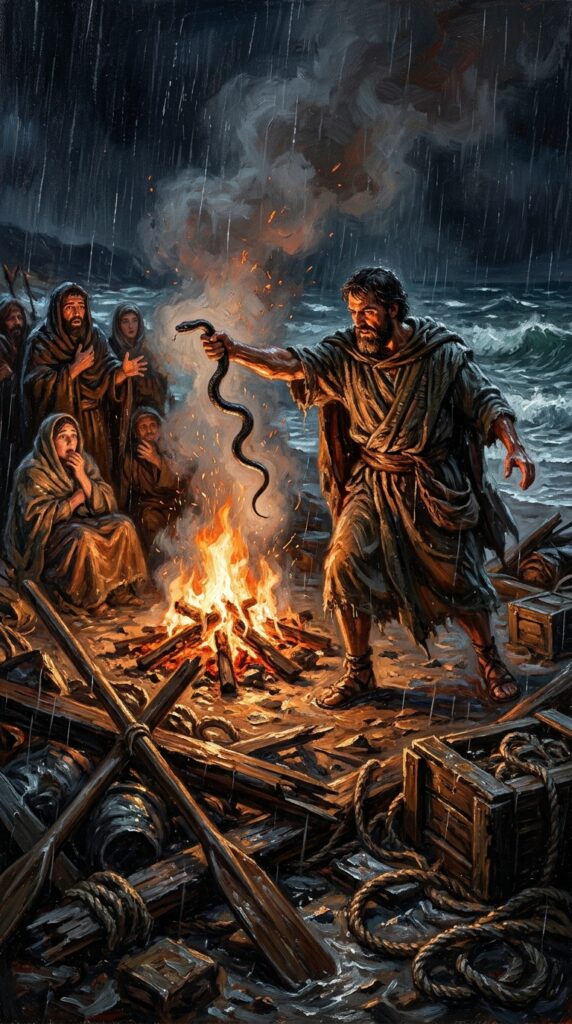
If you watched the video of the Apostle Paul crawling out of a catastrophic shipwreck only to have a venomous viper latch onto his hand, you were likely left wondering how anyone could survive both disasters back to back. The islanders watching on that rainy beach were convinced his life was over. They stood quietly in the cold mist, waiting for his body to swell and collapse onto the rocks. Yet what actually took place next completely overturned their expectations—and the miraculous ending began long before the snake ever struck.
The Warning the Ship’s Captain Refused to Hear
To understand the wonder of what happened on that beach, we have to look back at how Paul ended up on the open sea in the first place. Paul was traveling as an imperial prisoner under the custody of a Roman centurion named Julius. He had appealed his legal case to Caesar, which meant he had to be transported across the Mediterranean Sea to Rome.
As autumn set in, sailing conditions turned treacherous. Scripture tells us that travel had already become dangerous because the Day of Atonement fast had already passed. Paul, sensing the grave danger ahead, spoke up and warned the ship’s officers.
“Men, I can see that our voyage is going to be disastrous and bring great loss to ship and cargo, and to our own lives also.” (Acts 27:10)
The centurion, however, chose to trust the advice of the ship’s pilot and the owner rather than a Hebrew prisoner. The harbor where they were anchored was not ideal for spending the winter, so the crew decided to push forward in hopes of reaching Phoenix, a safer port on the coast of Crete. That decision nearly cost every single person aboard their lives.
Fourteen Days of Darkness in a Raging Sea
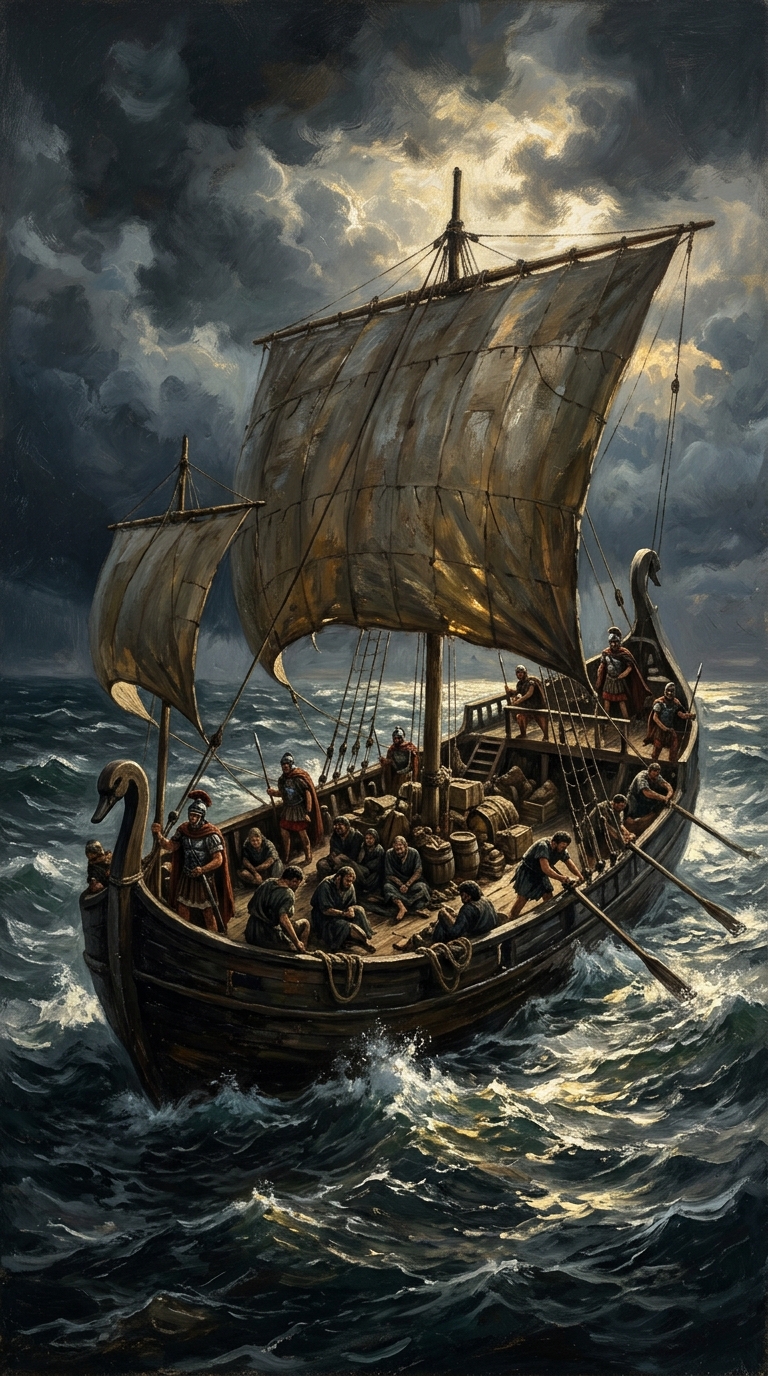
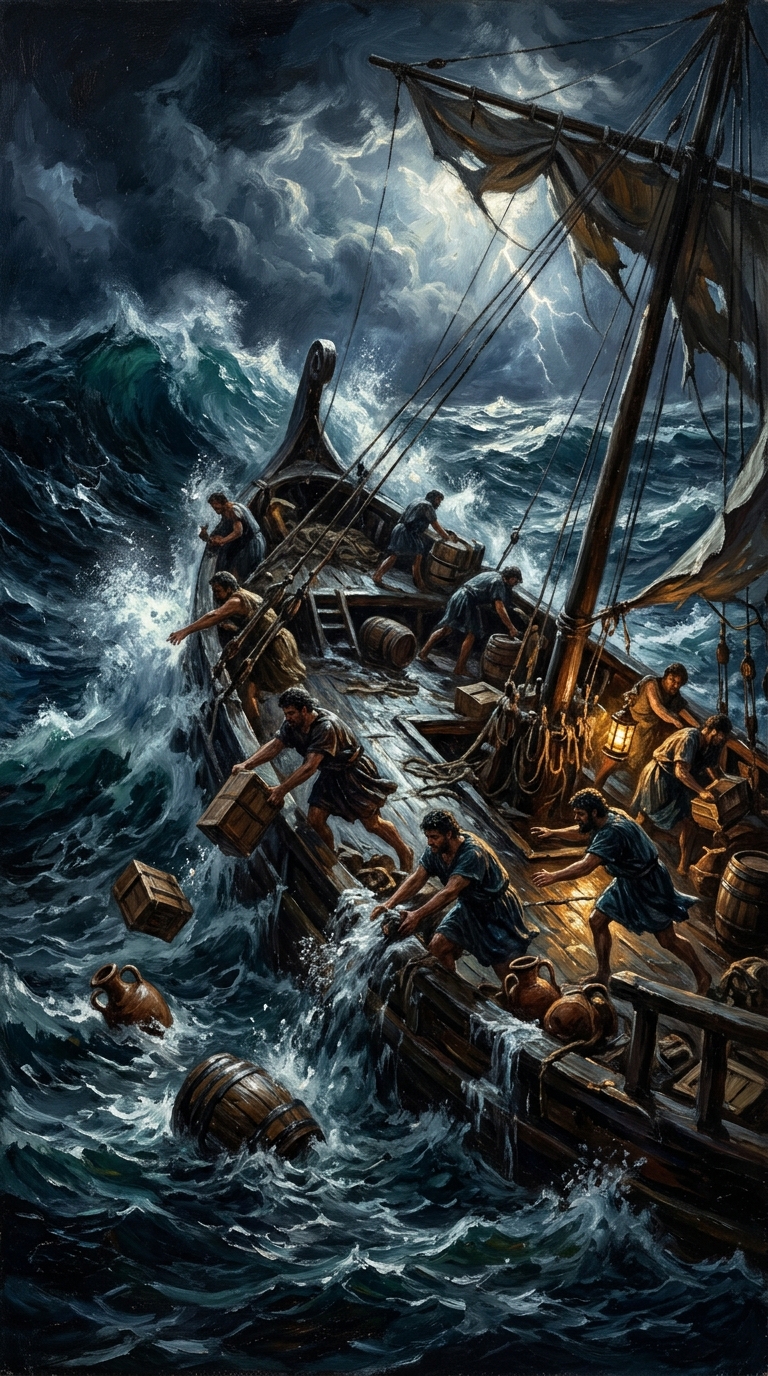
Shortly after they set sail, a ferocious hurricane-force tempest known as the “Northeaster” swept down from the island. The wind was so fierce that the sailors could not steer into it, so they gave way and let the vessel drive along before the gale. For several days, the crew desperately threw cargo and the ship’s tackle overboard to lighten the load.
The situation became terrifyingly bleak. The Luke-authored account in Acts describes the sheer desperation that settled over the ship:
“When neither sun nor stars appeared for many days and the storm continued raging, we finally gave up all hope of being saved.” (Acts 27:20)
Ancient sailors navigated primarily by the sun and stars. Without them, they were blind in a violent sea. Yet in the darkest hour of the storm, Paul stood before the frightened crew with a message of hope. An angel of the God he served had appeared beside him during the night.
The angel told Paul not to be afraid, assuring him that he would stand before Caesar and that God had graciously granted the lives of everyone sailing with him (Acts 27:23–24). Paul urged the exhausted men to eat and take courage, declaring his steady confidence in the Lord: “For I have faith in God that it will happen just as he told me” (Acts 27:25).
There were exactly 276 people aboard that vessel—soldiers, sailors, and prisoners alike (Acts 27:37). On the fourteenth night, the crew sensed land approaching. At daybreak, they spotted an unfamiliar bay and attempted to run the ship aground on a beach. Instead, the vessel struck a sandbar. The bow jammed fast, while the stern began breaking apart under the pounding surf.
The Roman soldiers planned to execute the prisoners to prevent any escapes, but the centurion intervened because he wanted to spare Paul’s life. He ordered those who could swim to jump overboard first, while the rest clung to wooden planks and floating wreckage. Just as God had promised, all 276 people reached the shore safely (Acts 27:44).
The Cold Beach of Malta and the Viper’s Strike
Once safely ashore, the survivors discovered they were on the Mediterranean island of Malta. The local residents showed remarkable hospitality, building a roaring bonfire to welcome the drenched, shivering survivors out of the rain and bitter cold.
Paul, demonstrating the humble servant heart that marked his entire ministry, gathered an armful of dry brushwood to help keep the fire burning. As he laid the bundle on the glowing coals, a viper driven out by the sudden heat fastened itself directly onto his hand (Acts 28:3).
When the local islanders saw the snake dangling from Paul’s hand, they drew an immediate theological conclusion rooted in their pagan world view. They assumed Paul must be a notorious criminal paying the ultimate penalty.
“They said to each other, ‘This man must be a murderer; for though he escaped from the sea, the goddess Justice has not allowed him to live.’” (Acts 28:4)
To the onlookers, the scene seemed obvious. The man was a prisoner who had slipped past a shipwreck, but divine retribution had caught up with him on the sand. They watched closely, expecting him to swell up with deadly inflammation or suddenly drop dead on the ground.
What Happened Next: From Murderer to “God”
Here is the astonishing resolution that the video left untold. Paul did not panic, cry out, or collapse. Scripture records the moment with profound simplicity: Paul simply shook the viper off his hand straight into the fire and suffered no harm at all (Acts 28:5).
The islanders waited a long time, watching for the first signs of venom coursing through his veins. Minutes turned into hours, and nothing happened. Paul showed no swelling, no weakness, and no distress.
“After waiting a long time and seeing nothing unusual happen to him, they changed their minds and said he was a god.” (Acts 28:6)
In a matter of moments, the crowd swung from one extreme to the other. First, they condemned Paul as a cursed murderer; then, they proclaimed him a divine being. Yet Paul never accepted their idolatrous praise. Instead, the open door allowed the power and mercy of the true God to transform the entire island.
Nearby lay the estate of Publius, the chief official of Malta. Publius welcomed the shipwrecked travelers into his home and hosted them kindly for three days. At that time, Publius’ father was confined to bed, suffering from recurring fever and dysentery.
Paul went into the sick man’s room, knelt down, and prayed. He laid his hands on him, and the man was completely healed (Acts 28:8). Word spread quickly across the island, and the rest of the sick on Malta came to Paul and were healed as well (Acts 28:9).
What began as a terrifying storm and a venomous attack turned into three months of powerful ministry, mutual honor, and gospel witness before Paul and his companions finally set sail once again for Rome.
When Storms and Vipers Cannot Stop God’s Purpose
Paul’s journey through the Mediterranean highlights a comforting truth for every believer walking through deep waters. God’s promises are not derailed by hurricane winds, shattered ships, or unexpected strikes from the brushwood.
- God’s presence remains in the storm: Even when neither sun nor stars appeared for two weeks, God’s angel stood beside Paul in the dark.
- Human opinions change quickly: The islanders shifted from calling Paul a murderer to calling him a god in a single afternoon. Our identity rests on who God says we are, not on the shifting opinions of onlookers.
- Every trial holds a ministry: The very shipwreck that looked like a tragedy became the vehicle that brought physical healing and the message of Christ to the people of Malta.
Paul eventually made it to Rome, just as the Lord had declared. The storm could not drown him, and the snake could not poison him, because God’s assignment over his life was not yet finished.
Have you ever experienced a difficult season where unexpected setbacks seemed to strike right after a major trial, only to watch God turn it into an opportunity to show His faithfulness? Tell us your thoughts in the comments below!
Leave a Reply