
The Six-Toed Giant in the Bible and the Man Who Slew Him
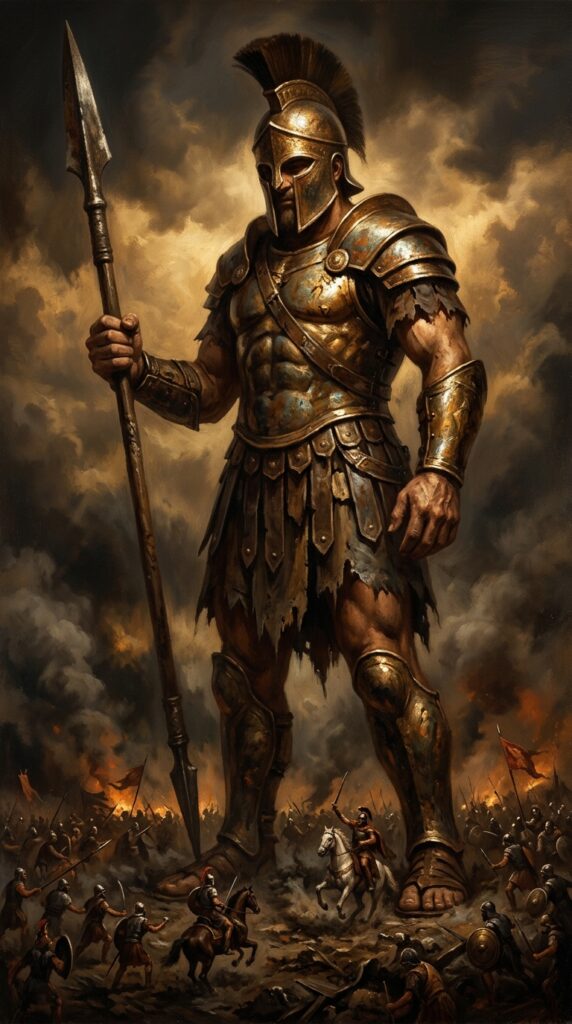
If you just watched our short video, you probably paused for a second to wonder if you heard that right. Another giant? One with six fingers on each hand and six toes on each foot—twenty-four digits in all? And on top of that, David wasn't the hero who brought him down?
It sounds like something out of folklore, but it is written directly in the pages of Scripture. Tucked away toward the very end of 2 Samuel is an extraordinary account that most believers skim right past. It records the twilight of King David’s military career, a terrifying new wave of Philistine champions, and the unlikely hero who finished what David started decades earlier in the Valley of Elah.
If you came here wanting to know who killed this twenty-four-digit warrior and how he was connected to David, the answer is both surprising and deeply inspiring. But to truly appreciate what happened, we have to look at the battlefield where this showdown took place.
The Forgotten Chapter of Israel's Giants
Most Sunday school lessons end the story of biblical giants with Goliath crashing face-first into the dust. We love that story because it reminds us that faith in God can bring down any giant. Yet Scripture makes it clear that Goliath had family, and the Philistine stronghold of Gath was still home to formidable warriors known as the descendants of Rapha.
Decades after David struck down Goliath with a shepherd's sling and a smooth stone, the Philistines rose up again. The record of these encounters is preserved in 2 Samuel 21:15-22 and retold in 1 Chronicles 20:4-8. These chapters describe a series of brutal skirmishes where Israel faced monstrous foes.
Among them was a warrior whose physical description immediately catches the reader's eye. Second Samuel 21:20 records:
"And there was again war at Gath, where there was a man of great stature, who had six fingers on each hand, and six toes on each foot, twenty-four in number, and he also was descended from the giants."
In medical terminology today, this condition is known as polydactyly, but in the ancient world, combined with his immense height and lineage, it was seen as a terrifying mark of unnatural strength. Just like Goliath before him, this warrior stood before Israel's lines and taunted them, daring anyone to face him man-to-man.
Why David Couldn't Fight This Giant
Whenever a Philistine giant stepped forward to mock the living God, everyone in Israel naturally looked to one man: David. After all, slaying giants was David's signature victory. He was the king, the sweet psalmist of Israel, and the fearless warrior who had led armies to triumph time and time again.
However, time changes everything. By the time this six-fingered warrior challenged Israel, David was an older man. Decades of running from King Saul, living in caves, reigning over a divided nation, and leading brutal military campaigns had taken a heavy physical toll.
Earlier in the very same chapter, Scripture paints a poignant picture of David's fading physical strength:
"David went down together with his servants, and they fought against the Philistines. And David grew weary." (2 Samuel 21:15)
In that battle, another giant named Ishbi-benob—armed with a bronze spearhead weighing over seven pounds and brandishing a brand-new sword—cornered the exhausted king and intended to kill him. David was moments from death when his faithful commander, Abishai the son of Zeruiah, rushed in and struck the giant down.
That close call terrified David's soldiers. They realized that their beloved king was no longer invincible. His men gathered around him and made a solemn vow:
"You shall no more go out with us to battle, lest you quench the lamp of Israel." (2 Samuel 21:17)
David had to hang up his armor. The king who had built his reputation on personal bravery now had to sit behind the lines while his men marched out. So when the six-fingered giant of Gath stepped onto the field shouting insults, David could not answer the call.
The Reveal: The Nephew Who Stepped Up
With the king sidelined, who would dare to face a giant with twenty-four digits who was bellowing curses against the armies of Israel? The answer is revealed in 2 Samuel 21:21:
"And when he taunted Israel, Jonathan the son of Shimei, David's brother, struck him down."
The man who defeated this terrifying giant was named Jonathan—and he was David's nephew! His father was Shimeah (also spelled Shimei), David's older brother (1 Samuel 16:9). Jonathan was not the famous prince Jonathan, the son of Saul who had been David's best friend; that Jonathan had died long before on Mount Gilboa. This was a younger Jonathan, born into David's own extended family.
Imagine the scene. Decades earlier, young David had stood before his older brothers—including Jonathan's father—and asked in holy indignation, "Who is this uncircumcised Philistine, that he should defy the armies of the living God?" (1 Samuel 17:26). At the time, David's brothers had scoffed at him.
Yet decades later, the family dynamic had completely transformed. David’s faith had become the family heritage. When another giant stood on another battlefield shouting the exact same insults, David's nephew didn't cower in fear like the generation before him. Jonathan carried the same holy fire that his uncle had carried into the Valley of Elah. He walked out onto the battlefield, faced the twelve-fingered, twelve-toed monster, and struck him down.
A Legacy of Giant Slayers
Jonathan was not the only warrior who stepped into the gap when David grew old. In fact, 2 Samuel 21 lists four different giants who fell during this campaign, none of them killed by David alone:
- Ishbi-benob was struck down by David's nephew and commander, Abishai (2 Samuel 21:16-17).
- Saph (also called Sippai) was killed by Sibbecai the Hushathite at Gob (2 Samuel 21:18; 1 Chronicles 20:4).
- Lahmi, the brother of Goliath the Gittite, whose spear shaft was like a weaver's beam, was defeated by Elhanan (1 Chronicles 20:5; referenced in 2 Samuel 21:19).
- The twenty-four-digit giant of Gath was slain by Jonathan, David's nephew (2 Samuel 21:20-21).
The passage concludes with a powerful summary in 2 Samuel 21:22: "These four were descended from the giants in Gath, and they fell by the hand of David and by the hand of his servants."
David didn't strike the fatal blows against these four giants, yet Scripture still credits the victories partly to him. Why? Because David had created a culture of courage. When one boy took down a giant with God's help, he showed an entire nation that giants can fall. By the time David was old, he was surrounded by men who looked at giants not as insurmountable threats, but as targets waiting to be toppled by the power of God.
The Timeless Lesson: New Battles, New Hands
This hidden chapter of Scripture holds a deeply comforting truth for all of us today. We live in a world that often places all the pressure on a single leader, a single parent, or a single hero. But God's kingdom has never been a one-man show.
There come seasons in life when we grow weary. The battles of youth give way to the limitations of age, exhaustion, or illness. In those moments, it is easy to feel discouraged, wondering who will stand for truth when our own strength runs out. But God is never caught off guard. When David grew tired, the Lord had already raised up Abishai, Sibbecai, Elhanan, and young Jonathan.
God does not ask you to fight every battle forever. His work continues from generation to generation. When we walk in faith, we leave behind a blueprint for our children, our nephews, and our friends, teaching them that the same God who delivered us from the lion and the bear will deliver them from whatever giant stands in their path.
David’s nephew proved that courage is contagious. You may not face a warrior with twenty-four digits, but whatever challenge stands before you today, remember that the God of David is still on the throne—and He delights in raising up ordinary people to do extraordinary things.
Have you ever faced a season where God provided unexpected help just when your strength ran out? Share your thoughts and stories in the comments below!
Leave a Reply