
The Mystery of Methuselah: What Happened the Year He Died?

If you arrived here from our video, you are likely asking the very question that has fascinated Bible students for centuries: what actually happened the year Methuselah died, and why does his lifespan matter so much?
In Genesis, the genealogies can sometimes feel like long lists of ancient names and hard-to-pronounce numbers. Yet tucked away in those carefully preserved generations is an astonishing timeline. Methuselah lived 969 years—longer than anyone else in human history. But his extraordinary age is far more than an ancient record; it connects directly to one of the most cataclysmic events in the Bible.
A Legacy of Faith: The World Before the Flood

To understand Methuselah, we first have to understand the family he came from. He was the son of Enoch, one of the most remarkable figures in the Old Testament. Genesis 5:24 tells us,
“Enoch walked faithfully with God; then he was no more, because God took him away.”
Enoch lived in a world rapidly falling into corruption, violence, and rebellion. Yet amidst that darkness, Enoch chose close communion with the Lord. Before God took Enoch into heaven without experiencing death, Enoch welcomed a son into the world and named him Methuselah.
Methuselah grew up under the spiritual legacy of a father who walked with God. In turn, Methuselah became grandfather to a man named Noah, whom Scripture describes as righteous and blameless among the people of his time. Generation by generation, God was preserving a faithful line through which He would preserve humanity.
Doing the Math: The Secret in the Genesis Chronology
Genesis chapter 5 lays out the ages of the patriarchs with remarkable precision. When you sit down with a notebook and track the years step by step, an unmistakable pattern emerges.
Here is how the timeline unfolds in Scripture:
- Methuselah’s age when his son was born: Genesis 5:25 tells us, “When Methuselah had lived 187 years, he became the father of Lamech.”
- Lamech’s age when Noah was born: Genesis 5:28–29 records that Lamech lived 182 years and fathered a son whom he named Noah.
- Noah’s age when the Flood began: Genesis 7:6 states, “Noah was six hundred years old when the floodwaters came on the earth.”
Now, let us add those biblical numbers together:
187 (Methuselah’s age at Lamech’s birth) + 182 (Lamech’s age at Noah’s birth) + 600 (Noah’s age when the Flood arrived) = 969 years.
Now look at Genesis 5:27:
“Altogether, Methuselah lived a total of 969 years, and then he died.”
The numbers align to the very year. Methuselah died in the exact year the great Flood broke upon the earth.
It is important to notice what the text says—and what it does not say. Scripture does not say Methuselah perished in the floodwaters of judgment. Because he belonged to the godly line of Seth, most biblical commentators believe Methuselah passed away naturally just months or weeks before the rains began and God shut the door of the ark.
It is also worth noting that this exact mathematical match comes from the traditional Hebrew Masoretic Text, which forms the basis of our modern Old Testaments. Other ancient manuscripts, such as the Greek Septuagint (LXX), record slightly different ages for the patriarchs at the birth of their sons. But within the Hebrew text preserved down through the centuries, the alignment is exact and breathtaking.
What Does the Name Methuselah Really Mean?
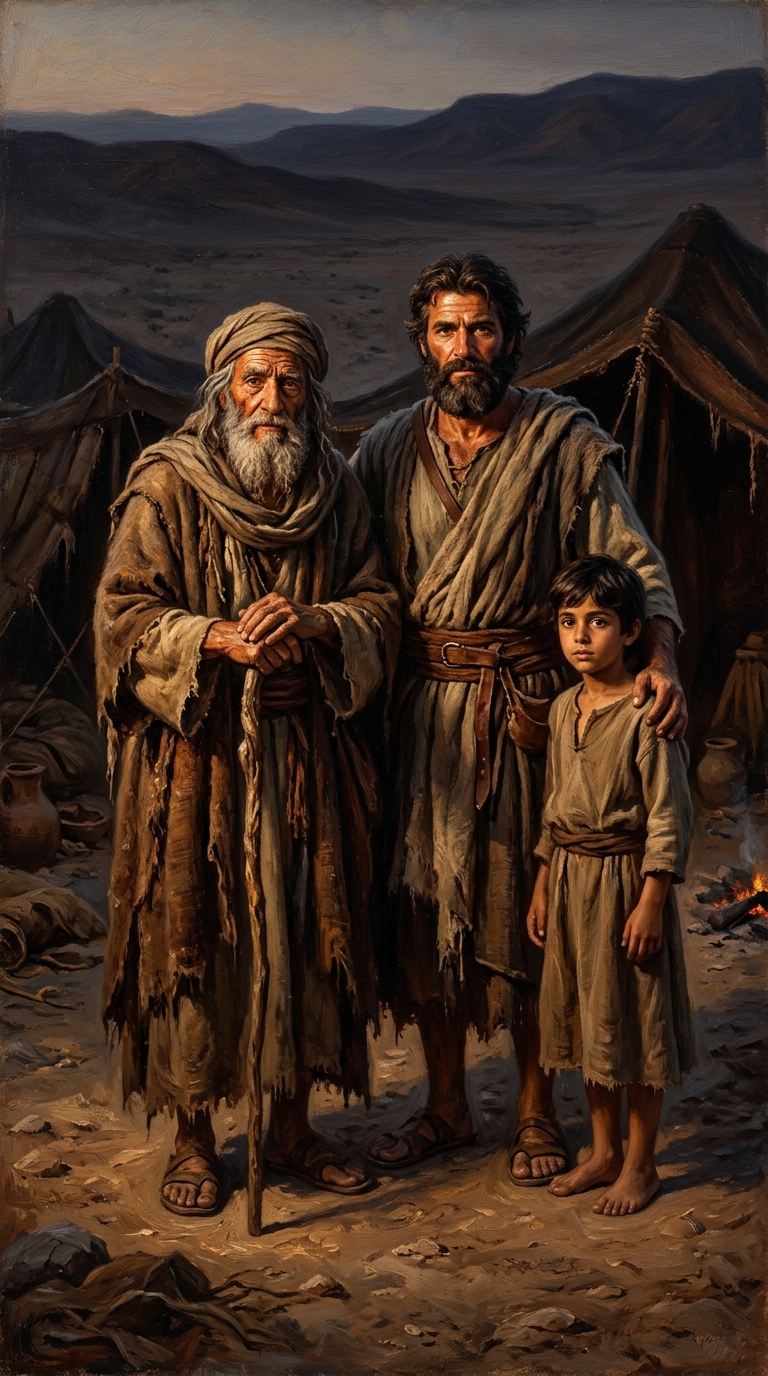
For generations, Bible teachers have pointed out a popular interpretation of Methuselah’s name. In popular Christian writing, you will often hear that Methuselah comes from two Hebrew roots: muth (meaning “death”) and shalach (meaning “to send” or “to bring forth”).
Under this interpretation, his name translates roughly to: “When he dies, it shall be sent” or “His death shall bring.”
If that devotional reading holds true, Enoch named his boy as an inspired, prophetic warning to the ancient world: as long as this child draws breath, judgment will be held back. The moment he dies, the judgment will fall.
Linguistic scholars offer a more cautious view. In ancient Semitic languages, the prefix Methu- frequently means “man of.” Combined with shelach—which can mean a dart, javelin, or weapon (as seen in 2 Chronicles 23:10)—many Hebrew scholars translate the name as “man of the spear” or “man of the dart,” denoting a warrior or protector. Others suggest it points to an ancient ancestral title.
Whether his name was intended as a literal prophecy or simply as a traditional name of his era, the timeline itself remains undeniable. His life formed a living bridge from the world of Adam right up to the threshold of the ark.
A Living Monument of God’s Long-Suffering Grace
Why did God grant Methuselah more years on earth than anyone else? Out of all the people who ever walked the globe, why was this man allowed to reach 969 years?
When we look at the character of God, the answer becomes beautiful. In 2 Peter 3:9, the apostle Peter writes about God’s timing and judgment:
“The Lord is not slow in keeping his promise, as some understand slowness. Instead he is patient with you, not wanting anyone to perish, but everyone to come to repentance.”
Every single year added to Methuselah’s life was an added year of divine mercy. As the ancient world grew darker, more corrupt, and increasingly rebellious, God did not act impulsively. He waited. While Noah preached righteousness and worked on the ark, Methuselah lived on as a testament to the Creator’s extraordinary patience.
Nine hundred and sixty-nine years of sunrise, sunset, and breath. It was as if God held back the waters of judgment until the very last possible moment, giving humanity every opportunity to turn back to Him.
What This Means for Us Today
When you read the genealogies of Genesis, you are not merely reading a ledger of ancient dates. You are witnessing the steady, faithful hand of a Sovereign God who numbers every day and guides human history toward His redemptive purpose.
Methuselah’s life reminds us that God’s patience is immense, but His promises are certain. Just as He held the floodgates open with longsuffering grace in Noah’s day, He continues to extend grace to our world today through Jesus Christ.
Did you know this mathematical detail was hidden right inside Genesis 5? What does Methuselah’s long life teach you about God’s patience in your own walk? Let us know your thoughts in the comments below!
Leave a Reply