
What to wear at a first communion: a complete guide

For the child receiving the sacrament, the standard choice is a white dress with a veil for girls and a white or light-colored suit for boys, since white symbolizes purity and new beginnings in Catholic tradition. Parents and guests, on the other hand, should stick to modest, semi-formal clothing in subdued colors, avoiding white entirely so the child remains the visual focus of the day. The exact expectations can vary slightly by parish, family tradition and region, but these general guidelines apply almost everywhere in the United States.
First Communion sits at the intersection of a religious ceremony and a family celebration, which is why the dress code feels a bit different from an ordinary church service. The Mass itself calls for reverence and modesty, while the reception afterward often allows for a bit more personal style. Knowing the difference helps you plan an outfit that works for both parts of the day.
What the child receiving First Communion should wear
Parishes in the United States almost universally expect a certain level of formality from the children making their First Communion, since this is considered one of the most significant milestones in a Catholic child's early faith life.
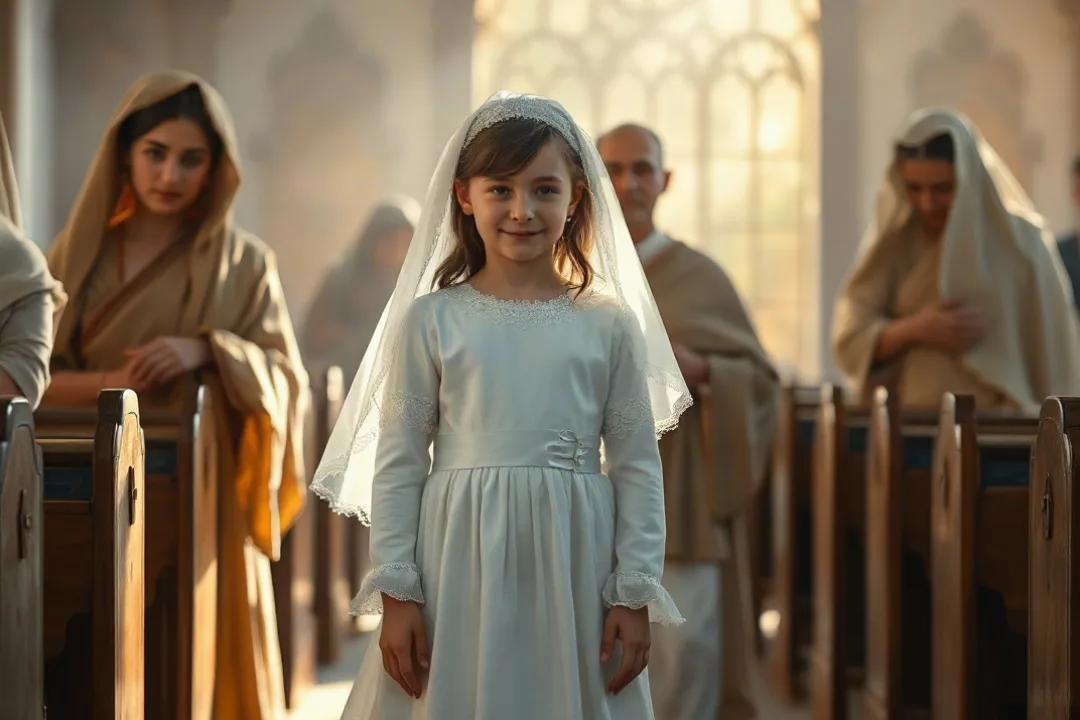
Girls' First Communion attire
A white dress remains the near-universal standard for girls. Styles vary from simple knee-length dresses to more elaborate gowns with lace, satin or tulle, but the color should stay in the white-to-ivory family. Common elements include:
- A veil or headpiece, often matching the lace or fabric of the dress
- White or ivory flat or low-heeled shoes, since the child will be kneeling, standing and walking during the ceremony
- White socks, tights or small ankle socks with lace trim
- A small white purse or clutch to hold a rosary or prayer book, if the parish allows it
- Simple jewelry, such as a small cross necklace, rather than anything flashy
Many parishes discourage overly elaborate gowns with long trains or heavy embellishment, since the goal is modest reverence rather than a pageant look. It's worth checking with the parish coordinator before buying, as some have specific guidelines about dress length, sleeve coverage or veil style.
Boys' First Communion attire
Boys typically wear a suit in white, ivory, navy or gray, paired with a white dress shirt. White suits remain the most traditional option and are still widely used, though navy or gray suits with a white shirt have become increasingly common and are considered perfectly appropriate. A boy's outfit usually includes:
- A collared dress shirt, almost always white
- A tie or bow tie, sometimes in a subtle pattern but often plain white or matching the suit
- Dress pants that match the jacket
- Polished dress shoes, typically black or white, with dress socks
- A white armband, which some parishes still use as a traditional touch
Comfort matters here as much as appearance. Boys will be sitting, standing and kneeling repeatedly during Mass, so a suit that fits well and doesn't restrict movement is more practical than one chosen purely for looks.
Tip: Have the child try on the full outfit, including shoes, at least a week before the ceremony and practice sitting, kneeling and walking in it. This avoids last-minute surprises with fit or comfort.
Why white is the traditional color for First Communion
The tradition of wearing white for First Communion developed over the nineteenth and twentieth centuries as the sacrament became more widely celebrated as a distinct milestone for children, separate from Confirmation or adult sacraments. White has long represented purity, innocence and new life within Christian symbolism, echoing the white garments given at baptism. Many priests describe First Communion as a renewal of baptismal promises, which is part of why the color carries through from one sacrament to the other.
While the color holds symbolic weight, the specific style of dress or suit is far less fixed by doctrine than people often assume. Parishes generally care more about modesty and reverence than about matching a particular fashion standard, which gives families some room to choose an outfit that fits their budget and taste.
What parents should wear to First Communion
Parents of the communicant sit in a strange middle ground: they need to look put-together for photos and the reception, but they also shouldn't compete visually with their child. A good rule of thumb is semi-formal, understated and comfortable for sitting through Mass.
For mothers
- A knee-length or midi dress in a solid color or subtle print, avoiding pure white
- A tailored skirt and blouse combination
- A dressy jumpsuit in a muted tone
- Low or mid-height heels, since there's often walking involved between the church and reception venue
- A light cardigan or blazer for air-conditioned churches or outdoor receptions
For fathers
- A suit or sport coat with dress pants
- A collared shirt, with or without a tie depending on how formal the parish celebration tends to be
- Dark dress shoes
- A tie in a neutral or subtly patterned color, saving bold prints for less formal occasions
Shoulders and knees should generally stay covered inside the church, particularly for mothers, since many parishes still expect a traditional standard of modesty during Mass even if it isn't strictly enforced.
What guests and extended family should wear
Grandparents, godparents, aunts, uncles and family friends attending the Mass should dress similarly to how they would for a Sunday service combined with a modest celebration. Business casual to semi-formal is almost always appropriate.
- Collared shirts or blouses paired with slacks or skirts
- Simple dresses in mid-length styles
- Closed-toe or low-heeled shoes for comfort during a standing-heavy Mass
- Light jackets or sweaters, since churches can run cool even in warmer months
Godparents sometimes play a more visible role, standing near the child during parts of the ceremony, so it's reasonable for them to dress slightly more formally than the general guest list, though still well within modest, neutral territory.
Important: White, ivory and cream should be avoided by everyone except the child receiving Communion. This isn't a strict rule everywhere, but it's a widely respected courtesy that keeps the focus on the communicant.
How the season and venue affect First Communion outfit choices
First Communion typically takes place in spring, often between April and June, which means families need to plan for warmer weather, outdoor photos and sometimes un-air-conditioned churches.
Warm-weather considerations
- Lightweight fabrics like cotton or linen blends for suits and dresses
- Breathable veils or headpieces that won't cause overheating during a long Mass
- Sunscreen-friendly styles if outdoor photos are planned before or after the service
- A change of comfortable shoes for the reception, since dress shoes can become uncomfortable after hours of standing and walking
Indoor reception versus outdoor celebration
If the celebration afterward is outdoors, such as a backyard gathering or a restaurant with an outdoor patio, it's worth choosing fabrics that won't wrinkle badly or show grass stains easily, especially for the child's outfit. Families hosting a more formal sit-down reception can lean slightly more toward evening-appropriate attire, while a casual backyard party calls for the same semi-formal clothing but perhaps lighter layers.
Common mistakes to avoid when choosing First Communion outfits
Even with good intentions, families sometimes run into avoidable problems. Keeping these points in mind can save stress on the actual day.
- Buying shoes too late: New shoes need breaking in before a day that involves long periods of standing and kneeling.
- Ignoring parish-specific rules: Some parishes have written guidelines about dress length, sleeve coverage, veil style or suit color — always check before purchasing.
- Choosing an outfit that's too tight or stiff: Children need to move freely to kneel, sit and walk down the aisle comfortably.
- Overlooking the weather: A heavy satin dress or a wool suit can be miserable in a warm church with no air conditioning.
- Wearing white as a guest: Even unintentionally, this can draw attention away from the child and is generally considered a faux pas.
- Forgetting about undergarments: Proper slips, undershirts or modesty shorts under a dress make a noticeable difference in comfort and appearance in photos.
- Skipping a trial run: A full dress rehearsal at home, including shoes and accessories, catches problems before the event itself.
Accessories and finishing touches that complete the look
Small details often matter as much as the main outfit. For girls, a simple cross necklace, pearl stud earrings or a delicate bracelet are popular choices that don't overwhelm the overall look. A small white handbag or basket to carry a rosary, missalette or prayer card is also common.
For boys, a rosary draped over the wrist or carried in a jacket pocket, along with a boutonniere matching the family's color scheme, adds a finishing touch without being excessive. Some families also choose a special pin or medal, often passed down from a parent or grandparent, worn during the Mass as a personal and spiritual connection to family tradition.
Photography is worth considering when picking accessories. Simple, classic pieces tend to photograph better and age more gracefully in family albums than trendy items that might look dated in a few years.
Many parish First Communion programs remind families that the goal of the day's attire is reverence, not spectacle — the clothing should support the sacrament, not overshadow it.
How to budget for First Communion attire without overspending
First Communion outfits can range widely in price, from budget-friendly options under fifty dollars to designer gowns and suits costing several hundred. A few practical approaches can help manage costs:
- Check with the parish or local Catholic community for gently used dresses or suits, since many families donate or lend outfits after the ceremony.
- Shop early in the season, as prices tend to rise closer to the typical spring Communion dates.
- Consider simpler styles, since an elaborate gown or suit isn't required by the Church and a modest outfit is just as meaningful.
- Rent formalwear for boys' suits if it's unlikely to be worn again soon, which can significantly reduce cost.
- Buy shoes with growing room but not so much that they affect walking comfort, since children's feet change quickly between fittings and the event.
Family members sometimes offer heirloom veils, cufflinks or ties that carry sentimental value, which can be a meaningful and budget-friendly way to personalize the outfit while honoring family history.
Frequently asked questions
Can a girl wear a colored dress instead of white for First Communion?
Most parishes expect white or ivory for the child receiving Communion, since it symbolizes purity and ties to baptismal tradition. Some parishes are stricter than others, so it's best to confirm expectations with the parish office before buying a colored dress.
Is it okay for guests to wear black to a First Communion Mass?
Yes, black is generally acceptable for guests as long as it's styled in a modest, semi-formal way rather than looking like funeral attire. Pairing it with lighter accessories or a colorful accent often keeps the look appropriate for a celebratory occasion.
Do boys have to wear a full suit, or is a dress shirt and pants enough?
Many parishes are flexible, and dress pants with a white collared shirt and tie are often acceptable if a full suit isn't available or affordable. Checking with the parish ahead of time helps confirm whether a jacket is specifically required.
What shoes work best for a child during a long First Communion ceremony?
Low, flat or minimally heeled shoes in white or a neutral color work best, since children often kneel, stand and walk repeatedly during the Mass. Breaking the shoes in beforehand prevents blisters and discomfort on the actual day.
Leave a Reply