
Exploring the Psychological Impact of Catholic Bibles
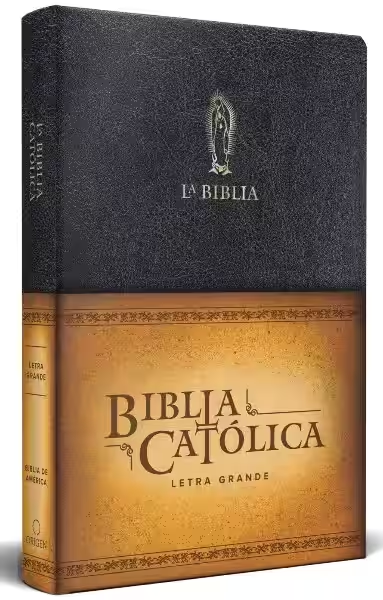
In a world grappling with complex emotions and spiritual journeys, the role of religious texts like Bíblias Católicas can't be understated. These books, containing stories of faith, miracles, and ethical guidance, often profoundly affect the psychological well-being of their readers. Understanding this impact is crucial for anyone seeking to navigate the complexities of faith and personal growth. Catholic Bibles offer comfort, inspiration, and a framework for understanding the world.
The stories within Bíblias Católicas often address fundamental human experiences like love, loss, and the search for meaning. These relatable narratives can provide solace during challenging times. For example, the story of Job, facing unimaginable suffering, offers a powerful testament to resilience and faith. Furthermore, the parables of Jesus, often simple yet profound, can be applied to everyday life, offering guidance and insights for personal decision-making. This direct application of narrative to personal struggles is a significant psychological element within the Catholic Bible.
The Role of Narrative in Shaping Beliefs and Values
Bíblias Católicas are more than just collections of historical accounts; they are powerful narratives that shape beliefs and values. The consistent themes and messages embedded within these texts, consistently repeated across chapters and books, reinforce specific perspectives on life, morality, and the divine. This iterative reinforcement creates a strong framework for understanding the world and personal choices.
For example, the emphasis on forgiveness and compassion in the Catholic Bible can significantly influence a person's approach to interpersonal relationships. This emphasis on forgiveness, frequently illustrated by stories of redemption and second chances, can foster a profound sense of personal growth and understanding. This consistent narrative has a strong psychological effect on readers, encouraging introspection and fostering empathy.
The Psychological Benefits of Faith Communities and Rituals
Beyond the individual impact of Bíblias Católicas, the shared experience of faith within a Catholic community contributes significantly to psychological well-being. The rituals, traditions, and communal gatherings centered around these texts offer a strong sense of belonging and shared purpose. This sense of collective identity can have a profound impact on one's mental health.
Consider the role of prayer groups, confession, and mass attendance—these communal experiences provide a sense of support and connection. These activities create a supportive framework, offering a sense of belonging and collective identity that can be quite beneficial for navigating life's challenges. This shared experience, often rooted in the teachings found in Bíblias Católicas, contributes significantly to psychological affirmation and strength.
Critical Considerations and Potential Challenges
While Bíblias Católicas can offer significant psychological benefits, it's crucial to approach these texts with critical awareness. Historical context, cultural interpretations, and individual interpretations can vary widely. It's important to approach these texts with an open mind and a desire to understand the various perspectives and interpretations.
Potential challenges include the risk of rigid dogma, potentially stifling individual expression or critical thinking. It's also important to recognize that not all individuals will find the same solace or guidance in these texts. A balanced approach, combining faith with critical analysis and a willingness to question beliefs, is key to leveraging the potential benefits of Bíblias Católicas in a meaningful and constructive manner. Open-mindedness and critical analysis of the material are important tools for maximizing personal growth and understanding.
Ultimately, the relationship between Bíblias Católicas and psychology is complex and multifaceted. These texts offer comfort, guidance, and a framework for understanding the world. Their influence on beliefs, values, and community participation is profound. A thoughtful and critical engagement with Bíblias Católicas, acknowledging the historical context and individual interpretations, is key to maximizing these texts' psychological benefits and navigating faith-related challenges.
By acknowledging the power of narrative, embracing community, and engaging with the texts with open minds and critical analysis, individuals can harness the potential of Bíblias Católicas to enrich their personal journeys and foster a deeper connection with themselves and the world around them.
Frequently Asked Questions
¿Qué son las Biblias Católicas?
Las Biblias Católicas incluyen los 73 libros canónicos reconocidos por la Iglesia Católica, a diferencia de las Biblias protestantes, que generalmente contienen solo 66 libros. La diferencia radica en los libros deuterocanónicos.
¿Cuáles son los libros deuterocanónicos?
Los libros deuterocanónicos, también conocidos como apócrifos, son aquellos incluidos en la Biblia Católica pero no en la mayoría de las Biblias protestantes. Estos incluyen Tobías, Judit, Sabiduría, Eclesiástico (Sirácida), Baruc, 1 Macabeos, y 2 Macabeos. Algunas ediciones también incluyen partes adicionales de Ester y Daniel.
¿Dónde puedo encontrar una Biblia Católica?
Las Biblias Católicas están disponibles en librerías católicas, librerías en general, y online a través de sitios web de venta de libros.
¿Qué diferencia hay entre las diferentes traducciones de la Biblia Católica?
Existen diversas traducciones de la Biblia Católica, cada una con sus propias características y enfoques. Algunas se centran en la fidelidad al texto original, mientras que otras priorizan la claridad y la comprensión moderna. Recomendamos comparar diferentes traducciones para encontrar la que mejor se adapte a sus necesidades.
¿Qué es la Psicología?
La psicología es la ciencia que estudia la conducta y los procesos mentales. Esto incluye el pensamiento, el sentimiento y el comportamiento.
¿Cuáles son las principales ramas de la psicología?
La psicología abarca diversas ramas, incluyendo la psicología clínica, la psicología social, la psicología del desarrollo, la psicología cognitiva, la psicología neuropsicológica, y muchas otras.
¿Para qué sirve la psicología?
La psicología ayuda a comprender mejor la mente humana, a tratar problemas de salud mental, a mejorar el bienestar personal y social, y a optimizar el funcionamiento de las personas en diferentes contextos.
¿Cómo puedo encontrar un psicólogo?
Puedes encontrar un psicólogo a través de recomendaciones, buscando en directorios online de profesionales de la salud mental, o contactando con tu médico de cabecera.