
Who is Saint Cecilia and why is she the patron of music

Saint Cecilia is a third-century Roman martyr venerated as the patron saint of musicians, singers and composers. According to tradition, she was a young noblewoman who kept a secret vow of chastity, married a man named Valerian whom she converted to Christianity, and was eventually put to death for her faith. Her connection to music comes from an old legend that she sang to God in her heart even as musicians played at her wedding, and that image has made her the patroness of church musicians, choirs and musical guilds for centuries.
Her feast day falls on November 22, and it remains one of the most widely celebrated days for musicians across the Catholic and Anglican worlds. Concerts, choral performances and special Masses are still held in her honor in cities from Rome to London to cities across the United States.
What the traditional story of Saint Cecilia tells us
The accounts of Cecilia's life come mostly from a document known as the Passio Sanctae Caeciliae, written centuries after she is believed to have lived, somewhere around the late second or early third century in Rome. Because the text was composed long after the events it describes, historians treat many details as pious legend rather than verified fact. Still, the story shaped how she has been honored for over a thousand years.
According to the Passio, Cecilia was born into a wealthy Roman family and had privately consecrated her virginity to God. Her parents arranged a marriage to a young pagan nobleman, Valerian. On their wedding night, Cecilia told him of her vow and said an angel was guarding her. Valerian asked to see the angel, and Cecilia told him he would see it only if he was baptized. He agreed, met a Christian bishop secretly, was baptized, and returned to find Cecilia with the angel standing beside her, holding two crowns of roses and lilies.
Valerian's brother Tiburtius also converted after this encounter. The two brothers became known for burying Christian martyrs who had been executed, a dangerous act under Roman law at the time. Eventually both were arrested and put to death for their faith. Cecilia buried their bodies and continued to preach, converting many Romans before she too was arrested.
How Cecilia was martyred, according to tradition
The legend says Roman officials first tried to suffocate Cecilia in the steam of her own bathhouse, sealing her inside for a full day and night. She survived unharmed. A soldier was then sent to behead her, but he struck three times without killing her, and under Roman custom a fourth blow was forbidden. She lived for three more days, during which she reportedly continued to teach and encourage the Christians who visited her, before finally dying from her wounds.
She was buried in the Catacombs of Callixtus along the Appian Way outside Rome. In the ninth century, Pope Paschal I had her remains transferred to the church now known as the Basilica of Santa Cecilia in Trastevere, built on the site believed to be her family home. When her tomb was reopened centuries later, in 1599, witnesses described finding her body remarkably preserved, dressed in gold and silk, which only deepened devotion to her.
A point worth remembering: much of Cecilia's story rests on legend written long after her lifetime, yet the devotion built around her has had a real and lasting influence on Western sacred music, from medieval chant to modern concert halls.
Why Saint Cecilia became the patron saint of music
The link between Cecilia and music is not stated outright in the earliest versions of her legend. The detail most often cited comes from a line describing how, as instruments played during her wedding feast, Cecilia sang silently to God in her heart, asking that her purity be kept unstained. Over time, this single image was enough to connect her name permanently with song and musical devotion.
By the late Middle Ages and especially during the Renaissance, Cecilia's association with music had grown into a full tradition. Guilds of musicians in European cities adopted her as their patroness, and artists began painting her holding or playing instruments, most commonly a small organ or a lute, even though nothing in the original legend mentions her playing music herself.
- Medieval guilds of organists and singers chose her as their protector and held annual feasts in her honor.
- Renaissance painters, including Raphael, depicted her surrounded by instruments, cementing the visual link between Cecilia and music in the public imagination.
- Baroque composers wrote odes and cantatas for her feast day, a tradition that includes well-known works by Henry Purcell and George Frideric Handel.
- Academies of music across Europe, including the Royal Academy of Music's early traditions in England, held formal celebrations on November 22 that combined sacred and secular performance.
How her feast day is still celebrated today
November 22 continues to be marked by choirs, orchestras and church musicians in many parts of the world. In Rome, special liturgies are held at her basilica, and musicians from various countries travel there specifically for the occasion. In the United States, parishes with active music ministries often schedule a dedicated concert or a sung Mass close to her feast day, sometimes inviting local choral groups or school ensembles to perform.
Some conservatories and music schools hold informal commemorations, treating the day as an occasion to recognize sacred music traditions even outside a strictly religious setting. It is common to see small gatherings where musicians perform works written specifically in her honor, continuing a custom that stretches back hundreds of years.
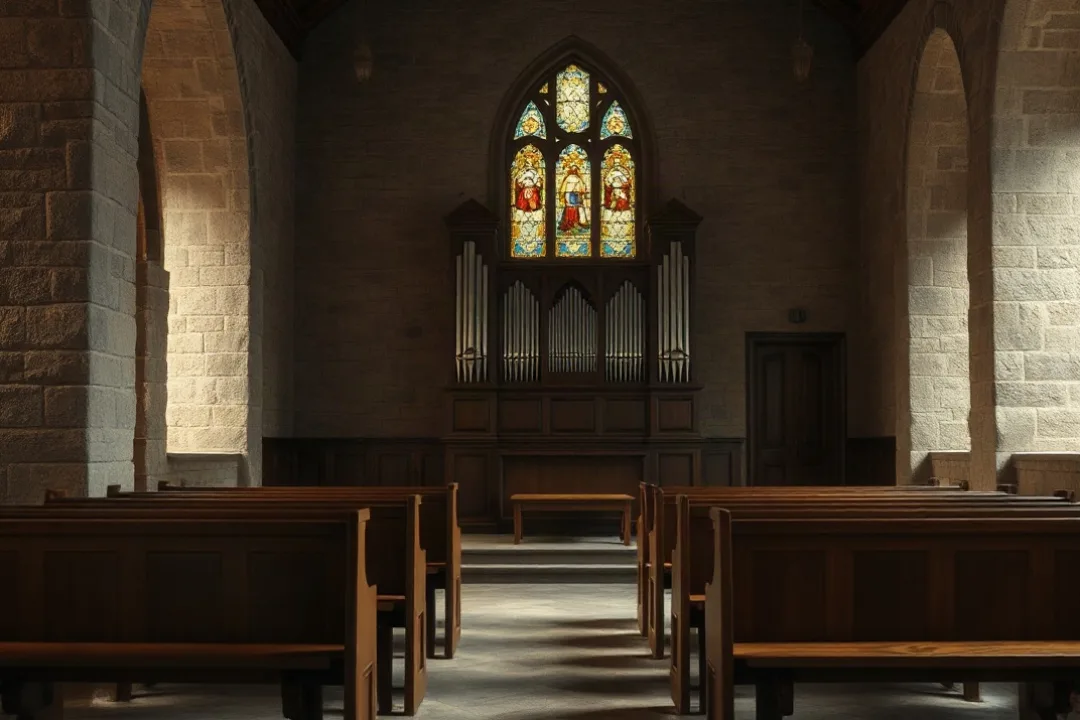
What Saint Cecilia's imagery and symbols represent
Artists over the centuries settled on a consistent set of symbols when depicting Cecilia, and recognizing them helps explain why certain statues or paintings are identified with her even when there is no written label.
- A small organ or portable keyboard instrument, often shown resting in her hands or nearby, representing her patronage of church music.
- Roses and lilies, recalling the crowns the angel is said to have brought to her and Valerian, symbolizing purity and martyrdom.
- A sword or wound at the neck, a quieter reference to the manner of her death.
- A halo or crown, standard in depictions of canonized martyrs, marking her sainthood.
One of the most famous images of her is Stefano Maderno's marble sculpture in the Basilica of Santa Cecilia, created shortly after her tomb was reopened in 1599. The statue shows her lying in a peaceful, almost sleeping pose, said to reflect how witnesses described finding her body.
Where her relics and major shrines can be found
The primary shrine dedicated to Cecilia is the Basilica of Santa Cecilia in Trastevere, Rome, which holds what are believed to be her relics beneath the main altar. Visitors can also see the remains of an ancient Roman house in the basilica's crypt, thought by some scholars to be part of her original family residence, along with the ruins of the bath chamber referenced in her legend.
Smaller relics and dedications to Cecilia exist in churches and cathedrals across Europe and the Americas. Many parishes named Saint Cecilia Church maintain active music programs as a direct reflection of her patronage, often with choir lofts or organ installations dedicated in her honor.
How musicians and parishes honor Saint Cecilia today
Honoring Cecilia does not require elaborate ceremony. Many church musicians use her feast day as a simple moment to reflect on the purpose behind their work, rather than treating music purely as performance.
- Attend or organize a Mass or service near November 22 that includes choral or instrumental music dedicated to her memory.
- Learn or perform a piece written in her honor, such as one of the historical odes composed for Saint Cecilia's Day celebrations in England.
- Teach children or students about her story as a way to connect music lessons to a longer historical and spiritual tradition.
- Pray for musicians and music ministries, something many parishes include in their intentions during the week of her feast.
- Visit a local Saint Cecilia parish if one exists nearby, many of which hold special events for the occasion.
For those drawn to her story for personal devotion rather than performance, a simple prayer asking for her intercession in matters of creativity, purity of intention, or perseverance through hardship is a common practice, echoing the themes present in her legend.
Tradition holds that as the wedding music played around her, Cecilia sang in her heart to God alone, asking that her body and soul remain untouched by corruption.
What historians say about the reliability of her story
Scholars studying hagiography, the study of saints' lives, generally caution that the Passio Sanctae Caeciliae was likely composed several centuries after Cecilia's supposed lifetime, drawing on earlier oral traditions mixed with literary conventions common to martyr narratives of the period. Details like the three failed blows of the sword or the exact dialogue between Cecilia and Valerian follow patterns found in other martyr stories from the same era, which raises doubts about their literal accuracy.
What is less disputed is that a woman named Cecilia was venerated in Rome from a very early date, that a church was built and dedicated to her memory, and that her cult grew steadily from antiquity through the medieval period into the present day. The basilica bearing her name has existed in some form since at least the fifth century, suggesting the devotion to her predates the written legend by a considerable margin.
Keep in mind: whether every detail of the Passio is historically precise matters less to most devotees than the enduring example Cecilia represents of faith held firmly under pressure, paired with a long-standing connection to sacred art and music.
How Saint Cecilia compares to other patron saints of the arts
Cecilia is not the only saint associated with creative work, and comparing her to others helps clarify her specific role.
- Saint Luke is the patron of painters and artists, tied to the tradition that he painted an image of the Virgin Mary.
- Saint Gregory the Great is linked to Gregorian chant and liturgical music more broadly, focused on the structure of sacred song.
- Saint Cecilia is specifically tied to musicians as individuals, including singers, instrumentalists and composers, with a more personal and devotional focus than Gregory's institutional connection to chant.
- Saint Dunstan is sometimes cited as a patron of goldsmiths and, in some traditions, of music as well, though his patronage is far less widespread than Cecilia's.
This distinction explains why Cecilia's name appears so often on music schools, choir lofts and parish music programs specifically, rather than on broader artistic institutions.
Frequently asked questions
Why is Saint Cecilia the patron saint of musicians?
The connection comes from her legend, which describes her singing silently to God in her heart while instruments played at her own wedding. That single detail grew into a centuries-long tradition linking her name to musicians, choirs and composers.
When is Saint Cecilia's feast day celebrated?
Her feast day is November 22. It is widely observed by church choirs, music schools and parishes, often with special concerts, sung Masses or performances of musical works composed specifically in her honor.
Where are Saint Cecilia's relics kept today?
Her relics rest beneath the main altar of the Basilica of Santa Cecilia in Trastevere, Rome, built on the site traditionally identified as her family home. The crypt also preserves remains of an ancient Roman house and bath chamber.
Is the story of Saint Cecilia historically accurate?
Much of it comes from a text written centuries after she is believed to have lived, so historians treat many details as legend rather than confirmed fact. Her veneration in Rome, however, dates back to antiquity and is well documented.
Leave a Reply