
What Pope Leo's Magnifica Humanitas says about education
If you work in a Catholic school, teach at a seminary, or simply follow church news, you may have come across the phrase Magnifica Humanitas and wondered what it actually means for everyday classrooms and curricula. The short answer is that it is a papal document from Pope Leo addressed to the world of Catholic education, urging teachers, administrators, and families to put the humanities and the formation of the whole person back at the center of learning.
The title itself gives away the core idea. Magnifica Humanitas is Latin for something like "magnificent humanity" or "the greatness of what is human." The phrase points to a conviction that runs through the document: education is not primarily about producing workers or test scores, but about helping each person grow into the fullness of what they are meant to be.
Who is Pope Leo and why did he write about education
Pope Leo is the current head of the Catholic Church, elected after years of service as a bishop and as a leader within a religious order known for its missionary and teaching tradition. Before becoming pope, he spent a significant part of his ministry working directly in formation, overseeing seminaries and communities where teaching young men and women was a daily task rather than an abstract policy question.
That background matters. A pope who has spent years in classrooms, formation houses, and pastoral assignments tends to write about education with a practical eye, not just a theoretical one. Magnifica Humanitas reads less like a philosophical treatise and more like a letter from someone who has watched students struggle, succeed, and sometimes lose their way, and who wants to offer a corrective.
The letter follows a line of teaching that earlier popes had already started, particularly around the renewal of Catholic universities and the call to connect faith, reason, and culture. Pope Leo picks up that conversation and pushes it further, focusing specifically on the humanities: literature, history, philosophy, language, and the arts.
What the term humanitas actually points to
In classical Latin, humanitas did not simply mean "humanity" in the biological sense. It referred to a kind of cultivated character: the refinement, compassion, and breadth of understanding that comes from being formed by good literature, serious conversation, and reflection on what it means to live well. Roman writers used the word to describe people who had been shaped by learning into something more generous and more thoughtful than they would otherwise have been.
The playwright Terence captured a related idea in a line that has echoed through Western education for over two thousand years.
Nothing that is human is foreign to me.
That sentiment sits close to the heart of Magnifica Humanitas. The document suggests that a genuinely Catholic education should make students more curious about and more compassionate toward the whole range of human experience, not less. A narrow, purely technical education risks producing graduates who are skilled but indifferent to anything outside their specialty.
The main themes found in the letter
Several threads run through Magnifica Humanitas, and they tend to repeat and reinforce one another rather than standing as separate chapters. Reading the document, a few consistent concerns stand out.
- The dignity of the human person as the starting point for every subject taught, not an afterthought added once the "real" curriculum is finished.
- The humanities as a necessary complement to technical and scientific training, rather than a decorative extra that schools can cut when budgets tighten.
- Formation over information, meaning the goal of teaching is to shape character and judgment, not only to transfer facts.
- Dialogue between faith and culture, encouraging students to engage seriously with literature, history, and philosophy that may not be explicitly religious but still speaks to deep human questions.
- The role of teachers as witnesses, since the letter repeatedly suggests that students absorb as much from how an educator lives as from what they say in a lecture.
None of these ideas is entirely new in Catholic teaching. What the letter does is tie them together under the single image of humanitas, making the case that a school or university loses something essential if it treats the humanities as optional.
Why the humanities get special attention in this document
It would be easy to assume a papal letter on education would focus mainly on religious instruction or moral formation in a narrow sense. Instead, Magnifica Humanitas spends considerable attention on subjects like literature, history, and the arts, treating them as tools that help students understand suffering, love, ambition, failure, and hope long before they encounter those realities directly in their own lives.
The argument is fairly concrete. A student who has read serious fiction, studied history honestly, or grappled with philosophical questions tends to arrive at adult life with more capacity for empathy and more resistance to simplistic answers. The letter treats this kind of formation as preparation for citizenship and for faith, not as a luxury reserved for students who are already academically strong.
Key idea: the letter does not ask schools to choose between technical skills and the humanities. It asks them to stop treating the humanities as the first thing to cut when resources are limited.
How the letter connects to earlier Catholic teaching on education
Readers familiar with recent church documents on universities and seminaries will notice that Magnifica Humanitas does not appear out of nowhere. It builds on a broader effort within the church to renew Catholic higher education after decades of concern that some Catholic institutions had drifted toward a purely secular academic model, where religious identity became a label rather than a living influence on how subjects were taught.
Pope Leo's letter extends that conversation into the specific territory of the humanities, arguing that this is one of the clearest places where a Catholic school or university can show a distinctive approach. A literature class that asks not only what a novel means technically but also what it reveals about the human search for meaning looks different from a purely secular version of the same course, even if the reading list is identical.
What this means for seminaries specifically
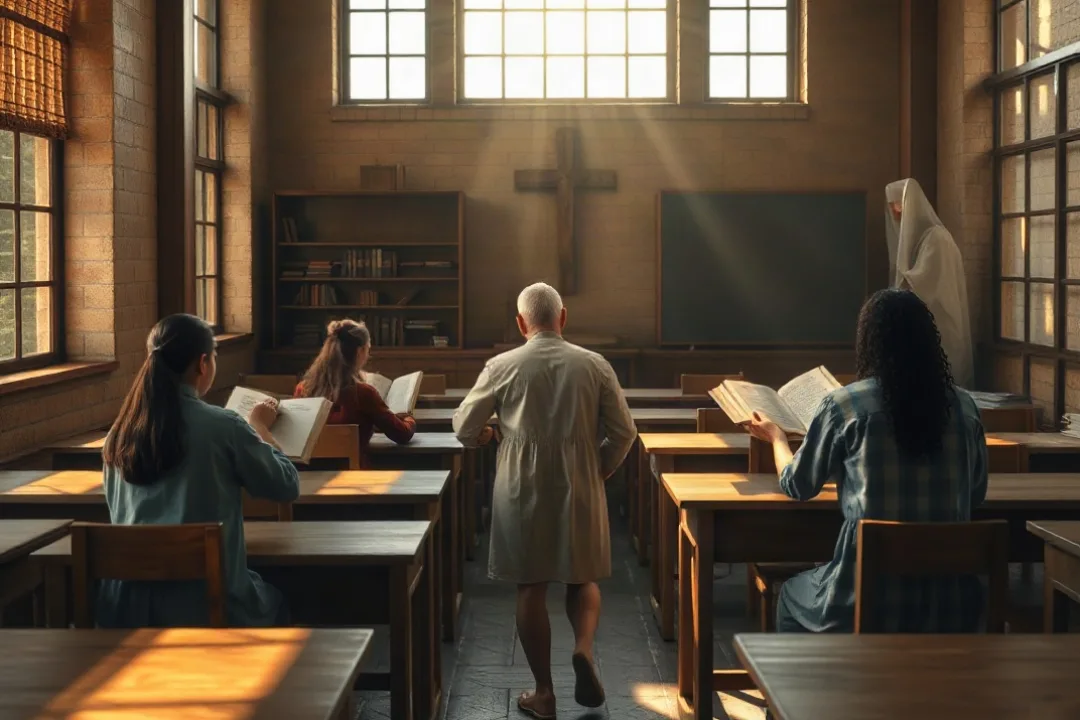
Because Pope Leo spent years overseeing seminary formation, the document gives particular weight to how future priests are educated. The concern expressed is that seminarians who receive only theological and pastoral training, without a solid grounding in literature, history, and philosophy, may struggle to connect with the people they are eventually meant to serve.
The letter suggests that a priest who has studied great literature and history tends to have a richer vocabulary for preaching, counseling, and simply listening to people's struggles. This is presented as a practical pastoral concern as much as an academic one.
What practical steps the document suggests for schools and teachers
While Magnifica Humanitas is a reflective document rather than a policy manual, it does point toward concrete directions that educators and administrators can take seriously. Several ideas recur often enough to function as practical guidance.
- Protect time for the humanities in the curriculum, resisting the pressure to shrink literature, history, and philosophy courses in favor of purely technical subjects.
- Choose texts that challenge students rather than only texts that confirm what they already believe, since genuine formation requires encountering different perspectives.
- Train teachers as mentors, not only as subject experts, recognizing that students learn as much from relationships as from content.
- Connect subjects across disciplines, so that science, history, and literature are not taught as isolated silos but as different windows onto the same human reality.
- Make room for silence and reflection, since the letter suggests that constant activity and testing can crowd out the kind of reflection that real formation requires.
None of these steps requires enormous budgets. Many Catholic schools already have the structures in place; the letter is asking them to reconsider priorities rather than to build entirely new programs.
How parents and students might read the message in practice
For a parent choosing a school, or a student deciding how to approach their own studies, Magnifica Humanitas offers a useful lens for asking better questions. Instead of judging a school purely by test scores or college admission rates, the letter invites families to ask what kind of person the school is trying to form.
A few practical questions can help translate the document's themes into everyday decisions.
- Does the school treat literature and history as core subjects, or as filler between more "important" classes?
- Are teachers encouraged to know their students personally, or does the structure of the school discourage that kind of relationship?
- Is there room in the schedule for students to read deeply, or is everything oriented toward short-term testing?
- Do students at the school seem engaged with ideas outside the classroom, or does learning stop the moment the bell rings?
These questions will not produce a perfect checklist, but they reflect the spirit of the letter more directly than standardized metrics tend to.
Why some educators find the letter demanding rather than comforting
It would be inaccurate to present Magnifica Humanitas as simply reassuring. For schools already stretched thin on budget and staffing, the call to protect humanities education can feel like one more demand layered on top of existing pressures. Teachers who already feel overextended may read the letter and wonder where they are supposed to find the time for the kind of deep, reflective teaching it describes.
The document does not pretend this tension does not exist. Its tone acknowledges that real formation is slower and harder to measure than standardized outcomes, and it asks institutions to accept that difficulty rather than look for shortcuts. That honesty is part of what gives the letter credibility among educators who have spent years in the classroom rather than in policy offices.
What makes this document relevant beyond Catholic institutions
Although Magnifica Humanitas is addressed specifically to Catholic educational institutions, its central argument touches a debate that extends well beyond church circles. Public conversations about education in the United States have wrestled for years with similar tension between technical skills training and a broader liberal arts formation.
Readers outside Catholic education may still find value in the letter's basic claim: that a person formed only in technical competence, without exposure to literature, history, and sustained ethical reflection, is less prepared for the complexity of adult life than one who has had both kinds of formation. That argument does not depend on religious belief to make sense, even though the letter frames it within a Catholic understanding of human dignity.
Worth remembering: the letter frames the humanities not as a luxury for the gifted few, but as something every student benefits from, regardless of their eventual career path.
How schools can start applying the letter's ideas this year
Institutions that want to respond to Magnifica Humanitas in a concrete way do not need to wait for a formal mandate or a diocesan program. Several starting points are within reach for most schools.
- Review the current curriculum to see whether humanities courses have been quietly reduced over recent years in favor of test preparation.
- Invite teachers across departments to design at least one shared project that connects a scientific or technical subject with history, literature, or ethics.
- Set aside regular time, even just once a week, for students to discuss a text or idea without the pressure of a graded assignment attached.
- Offer teachers professional development focused on mentoring and formation, not only on subject-matter updates.
These are modest steps, but they match the letter's own tone: a call to reorder priorities rather than a demand for an entirely new system.
Frequently asked questions
What is Magnifica Humanitas by Pope Leo about?
It is a papal letter addressed to Catholic educators that calls for renewed attention to the humanities, including literature, history, and philosophy, as essential to forming the whole person rather than just preparing students for technical careers.
Does Magnifica Humanitas apply only to Catholic schools?
The letter is written specifically for Catholic schools, universities, and seminaries, but its central argument about balancing technical education with the humanities is relevant to educators in other settings as well.
How does the letter relate to earlier church teaching on education?
It builds on previous efforts within the Catholic Church to renew universities and seminaries, extending that conversation specifically into the humanities and the formation of teachers and students alike.
What practical changes does the letter suggest for classrooms?
It encourages protecting time for humanities subjects, choosing challenging texts, training teachers as mentors, connecting different subjects, and making room for reflection rather than constant testing.
Leave a Reply