
The history of the Bible: how it came together
The Bible is not one book but a library of 66 to 81 separate writings, depending on the tradition, composed over roughly 1,500 years by dozens of authors in three different languages. Understanding its history means tracing how scattered texts, written on scrolls and copied by hand for centuries, were eventually gathered, translated, and printed into the single volume readers recognize today.
No single person decided one day to write "the Bible." It emerged gradually, shaped by communities of faith who preserved stories, laws, poems, prophecies, and letters they believed carried divine authority. The process involved oral tradition, careful scribal copying, heated theological debate, and eventually the invention of the printing press.
What the Bible actually is: a collection of texts, not one book
The word "Bible" comes from the Greek biblia, meaning "books" — plural, not singular. This matters because the Bible is really an anthology divided into two major sections: the Hebrew Scriptures (called the Old Testament by Christians and the Tanakh by Jews) and the New Testament, written specifically by early Christians.
Within these two sections sit many different literary forms:
- Historical narrative, such as the accounts of Israel's kings and the early Christian church
- Legal codes, including the laws found in Exodus and Leviticus
- Poetry and wisdom literature, like Psalms and Proverbs
- Prophetic writings, warning or encouraging Israel
- Letters, written by figures like Paul to specific early churches
- Apocalyptic literature, such as Daniel and Revelation
These texts were written by different people, in different centuries, for different audiences, and only later assembled into what we now call a single book.
How the Old Testament took shape across more than a thousand years
Most scholars place the composition of the Hebrew Scriptures between roughly 1200 BCE and 165 BCE, though oral traditions behind some stories likely stretch back further. Early material was passed down by word of mouth — genealogies, covenant stories, and legal traditions — before being written down by scribes connected to priestly or royal courts.
The first five books, known as the Torah or Pentateuch, reached something close to their final form during or after the Babylonian exile, a period when Israelite scribes had strong motivation to preserve their national and religious identity in writing. The historical and prophetic books followed over the next several centuries, often compiled from earlier court records, temple archives, and collections of prophetic sayings.
By the time of the Dead Sea Scrolls, discovered in caves near Qumran starting in 1947, nearly every book later included in the Hebrew Bible already existed in some written form. These scrolls, dating from roughly the third century BCE to the first century CE, gave scholars physical proof that the text had been transmitted with remarkable consistency for centuries before being standardized.
Jewish communities did not finalize their canon through a single council. Instead, a general consensus solidified among rabbinic authorities by the late first or early second century CE, settling which books counted as authoritative Scripture.
How the New Testament was written and gathered
The New Testament writings were composed far more quickly than the Old Testament — within roughly 50 to 100 years after the events they describe, mostly during the latter half of the first century CE. Paul's letters to churches in cities like Corinth, Philippi, and Thessalonica are generally considered the earliest surviving Christian texts, written before the Gospels took their final written form.
The four Gospels — Matthew, Mark, Luke, and John — drew on earlier oral preaching, eyewitness testimony, and possibly written source material that no longer survives. Mark is widely regarded by scholars as the earliest Gospel, with Matthew and Luke likely using it as one of their sources.
As Christianity spread across the Roman Empire, individual congregations began collecting and copying these letters and Gospel accounts. Some communities also circulated other writings — gospels, letters, and apocalypses — that were eventually excluded from what became the standard New Testament.
A common misconception: no emperor or pope personally selected the 27 books of the New Testament in one meeting. The process was gradual, shaped by which texts churches across different regions already treated as authoritative in worship and teaching.
How the canon was decided: councils, criteria, and debates
Early Christian leaders used several criteria to judge whether a writing belonged in Scripture. A text generally needed to show apostolic origin (written by an apostle or someone closely connected to one), widespread acceptance among churches, and consistency with core Christian teaching already recognized as authoritative.
Key moments in this process include:
- Writings like the Shepherd of Hermas and the Gospel of Thomas circulated widely but were ultimately not accepted as Scripture by most church leaders
- By the late second century, figures such as Irenaeus already treated the four Gospels and most of Paul's letters as settled Scripture
- Regional church councils in the fourth century, including gatherings at Hippo (393 CE) and Carthage (397 CE), affirmed lists matching the 27 books now found in Christian New Testaments
- Athanasius of Alexandria listed the same 27 books in a letter written around 367 CE, reflecting a consensus that had already formed in much of the church
The Old Testament canon used by Christians varies slightly between traditions. Catholic and Orthodox Bibles include additional books, often called the Apocrypha or deuterocanonical books, which Protestant Bibles generally exclude. This difference traces back to disagreements during the Reformation about which Jewish texts counted as fully canonical.
From scrolls to manuscripts: how the text was copied and preserved
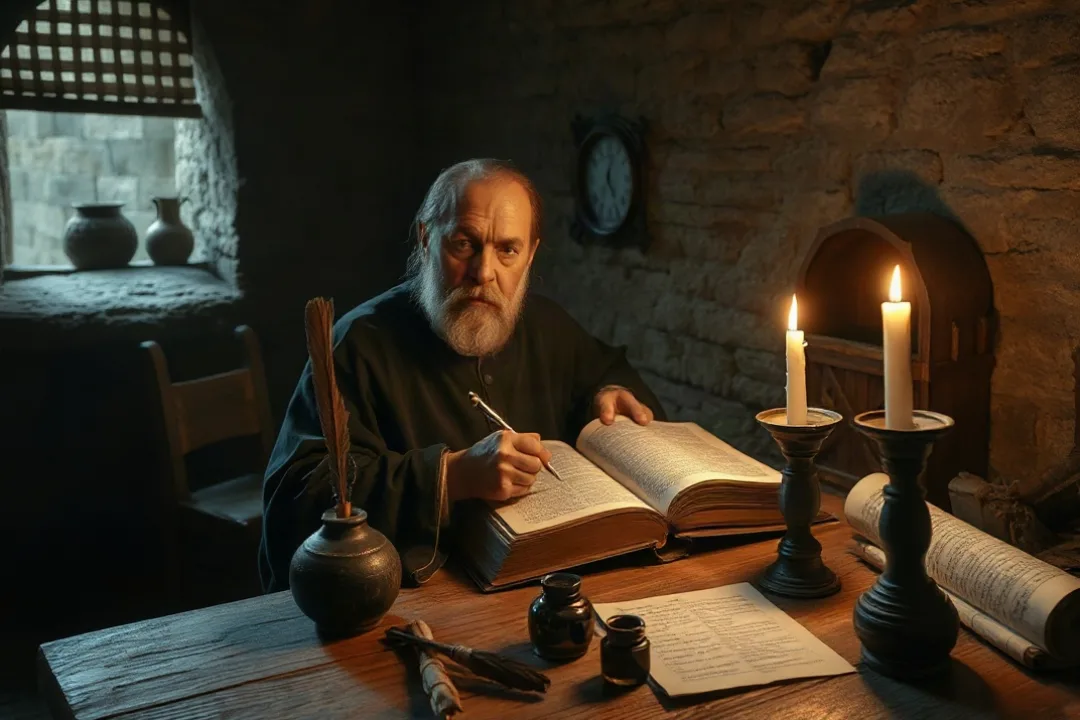
Before printing existed, every copy of Scripture had to be written by hand, usually by trained scribes working in monasteries or scriptoriums. Early texts were written on papyrus, a fragile material made from reeds, and later on parchment or vellum made from animal skin, which held up far better over time.
Scribes developed strict copying practices to limit errors, including counting letters and lines to check their work. Even so, small variations crept into different manuscript traditions over centuries, which is why modern scholars compare thousands of surviving copies to reconstruct the most reliable text possible.
Major manuscript discoveries have shaped how confident scholars feel about the accuracy of transmission:
- The Codex Sinaiticus and Codex Vaticanus, dating to the fourth century, are among the oldest nearly complete Greek New Testaments known
- The Dead Sea Scrolls confirmed that the Hebrew text of books like Isaiah had changed remarkably little over roughly a thousand years
- Thousands of fragmentary Greek New Testament manuscripts, some dating within a century or two of the originals, allow textual scholars to cross-check readings
This careful, repeated copying by hand continued for well over a thousand years before any mechanical alternative existed.
From Latin to English: how translation reshaped access to Scripture
For much of early Christian history, the standard Bible across Western Europe was the Vulgate, a Latin translation largely completed by the scholar Jerome around 400 CE. Because few ordinary people read Latin, access to Scripture for most of the medieval period ran through clergy who interpreted it aloud.
Jerome reportedly wrote, "Ignorance of Scripture is ignorance of Christ," reflecting the conviction that drove him to produce a more accurate Latin translation directly from Hebrew and Greek sources rather than relying on earlier, looser Latin versions.
Translating the Bible into everyday languages became a dangerous act of defiance in parts of medieval Europe. John Wycliffe produced an English translation from Latin in the late 1300s, and William Tyndale translated directly from Hebrew and Greek into English in the 1520s, work that led to his execution in 1536 under charges of heresy.
The invention of the printing press by Johannes Gutenberg around 1450 changed everything. His press produced the first printed Bible, making it possible to reproduce Scripture far faster and more cheaply than hand copying ever allowed, which accelerated both literacy and translation efforts across Europe.
Several landmark English translations followed:
- The Geneva Bible (1560), popular among English Protestants and brought to America by early colonists
- The King James Version (1611), commissioned by King James I and still widely used today for its literary influence
- The Revised Standard Version (1952) and later translations like the New International Version (1978), which incorporated updated manuscript scholarship and modern English
Today, the Bible has been translated, at least in part, into more than 3,000 languages, making it one of the most widely translated texts in human history.
Why understanding this history changes how people read the Bible today
Knowing how the Bible formed helps explain why different Christian traditions hold slightly different books as Scripture, and why translations continue to be revised as scholars discover older manuscripts or refine their understanding of ancient Hebrew and Greek. It also clarifies that the Bible's authority, for believers, rests less on a single dramatic moment of creation and more on centuries of careful preservation and communal recognition.
Modern readers benefit from tools earlier generations never had: digital access to ancient manuscripts, cross-referenced translation comparisons, and scholarly commentary explaining historical context verse by verse. These resources make it easier to appreciate both the complexity of the Bible's formation and the remarkable consistency of its core texts across centuries of copying and translation.
Frequently asked questions
Who actually wrote the Bible?
The Bible was written by dozens of different authors over roughly 1,500 years, including prophets, kings, priests, poets, and early Christian apostles and leaders. Traditional authorship is attributed to figures like Moses, David, and Paul, though scholars debate exact authorship for several books, especially those compiled from earlier oral or written sources.
Why do Catholic and Protestant Bibles have different numbers of books?
Catholic and Orthodox Bibles include several additional Old Testament books, often called the Apocrypha, that Protestant reformers removed in the 16th century because they weren't part of the Hebrew canon recognized by Jewish authorities. This disagreement over which ancient Jewish texts counted as fully canonical dates back to the Reformation.
How old is the oldest surviving copy of the Bible?
Fragments among the Dead Sea Scrolls, discovered near Qumran, date from roughly the third century BCE for some Hebrew texts. The oldest nearly complete Greek New Testament manuscripts, like Codex Sinaiticus, date to the fourth century CE, though smaller fragments survive from within a century or two of the original writings.
Was the Bible always available in languages people could read?
No. For much of medieval European history, Scripture circulated mainly in Latin, a language most ordinary people couldn't read. Translators like John Wycliffe and William Tyndale risked persecution to produce English versions, and widespread access only became realistic after the printing press made mass production of Bibles possible in the mid-1400s.
Leave a Reply