
Palm Sunday: meaning, origins, and how it's observed today
Palm Sunday is the Christian observance that marks Jesus's triumphant entry into Jerusalem on the Sunday before Easter, commemorating the moment crowds laid palm branches on his path as he rode in on a donkey. It opens Holy Week, the most solemn stretch of the Christian calendar, and sets the stage for the events of Good Friday and Easter Sunday. The date shifts every year because it depends on the date of Easter, which is calculated from the first Sunday after the first full moon following the spring equinox.
For many churchgoers, Palm Sunday is a familiar but easy-to-overlook occasion sandwiched between the quieter weeks of Lent and the intensity of Holy Week. Understanding what happened on that day, why palm branches matter, and how different traditions mark it can make the observance feel less like a formality and more like the hinge point it actually is in the Easter story.
What actually happened on the first Palm Sunday
The story is told in all four Gospels, with slightly different details in each account: Matthew 21:1-11, Mark 11:1-11, Luke 19:28-44, and John 12:12-19. According to these accounts, Jesus approached Jerusalem from the Mount of Olives and sent two disciples ahead to find a young donkey for him to ride into the city. This detail mattered to the Gospel writers because it echoed an old prophecy from Zechariah 9:9, which described a king arriving humbly, on a donkey rather than a war horse.
As Jesus rode toward the city gates, crowds gathered along the road. People reportedly spread their cloaks on the ground and cut branches from nearby trees, waving them and laying them down as a kind of makeshift red carpet. The Gospels describe the crowd shouting words of praise and welcome, calling out to the "Son of David" and declaring blessings on the one who comes in the name of the Lord, language drawn from Psalm 118.
In John's account, the crowd's cry is remembered as a plea for salvation and a greeting for a king arriving in the name of the Lord, a public, almost political acclamation that unsettled the city's religious authorities.
This was not a quiet, private moment. Jerusalem at that time of year was crowded with pilgrims arriving for Passover, so the entrance happened in full view of a packed city. The enthusiasm of the crowd, combined with the symbolism of the donkey and the palm branches, read as a direct, public claim that Jesus was the long-awaited king the people had been hoping for.
Why palm branches became the symbol of the day
Palm branches were not a random choice. In the ancient Near East, palm fronds symbolized victory, peace, and royal welcome. Waving palm branches was a traditional way to greet a victorious general, a returning king, or anyone being honored with the kind of welcome usually reserved for conquerors. Using them for Jesus signaled that the crowd saw him, at least in that moment, as a liberating and royal figure.
There is a layer of irony that later Christian reflection has often pointed to: the same crowd that welcomed Jesus with symbols of royal triumph would, within days, watch him arrested, tried, and executed. Palm Sunday's branches and shouts of praise stand in stark contrast to the events of Good Friday just a few days later. That contrast is part of why the day carries both joy and a quiet undercurrent of foreboding in how churches observe it.
Worth remembering: Palm Sunday isn't a standalone celebration. It's the doorway into Holy Week, and many church traditions deliberately keep some of its tone somber to reflect what's coming later in the week.
How different churches observe Palm Sunday today
Observance varies by denomination, but several elements show up across most Christian traditions:
- Distribution of palm fronds or substitute branches: Congregants receive actual palm leaves, or in places where palms aren't available, branches from local trees such as olive, boxwood, or willow.
- A procession: Many churches begin the service outside or in the back of the building, with the congregation walking in while holding their palms, reenacting the entry into Jerusalem.
- Reading of the Passion narrative: In Catholic and many Protestant liturgies, the service shifts tone midway, moving from the celebratory entry story to a full reading of Jesus's arrest, trial, and crucifixion. This is why the day is sometimes called "Palm Sunday" and sometimes "Passion Sunday" or a combination of both.
- Blessing of palms: In liturgical traditions, the palms are blessed by a priest or pastor before being handed out, and the leftover palms from the previous year are sometimes burned to produce the ashes used the following Ash Wednesday.
In Eastern Orthodox churches, Palm Sunday (sometimes called the Entry of the Lord into Jerusalem) is one of the twelve Great Feasts and carries a notably festive character, with willow or pussy willow branches often used instead of palms in regions where palm trees don't grow. Orthodox services typically keep a more celebratory tone throughout, saving the heavier, mournful liturgies for the days that follow.
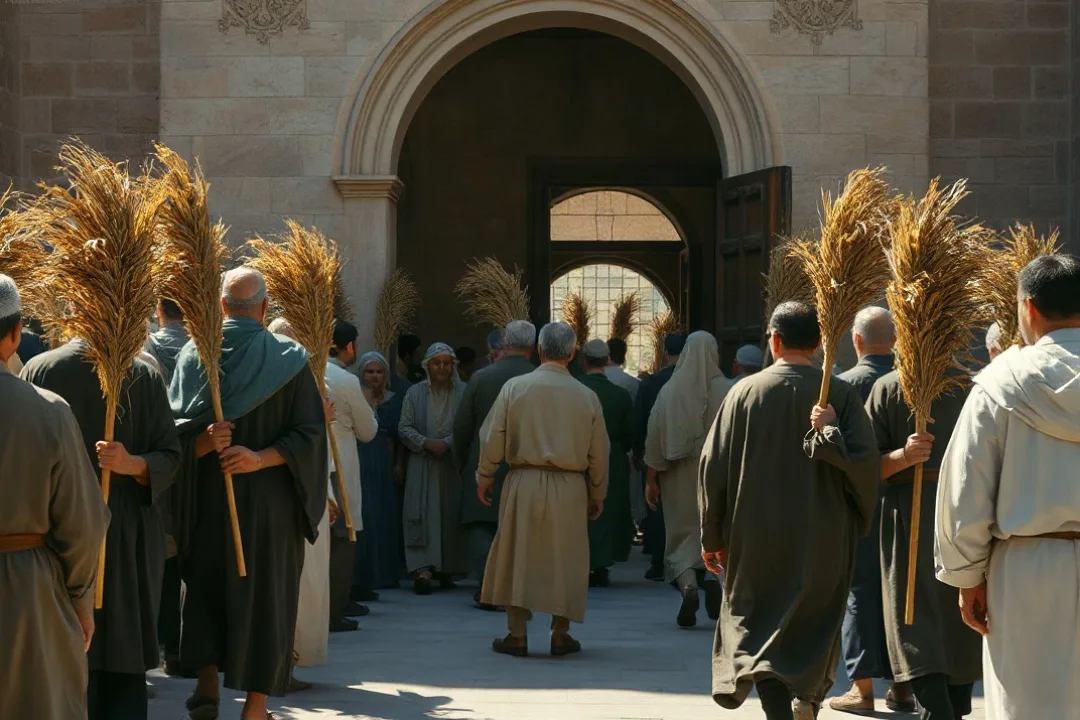
What people do with their palm branches afterward
Many Christians don't discard their palms after the service. Common practices include:
- Folding the palm into a cross shape and keeping it displayed at home, often behind a picture frame or near a crucifix, until the following year.
- Placing the palm near a doorway, based on older traditions that treated it as a symbol of protection for the household.
- Returning old, dried palms to the church to be burned for the following year's Ash Wednesday ashes.
This recycling of palms into ashes creates a quiet, symbolic loop in the liturgical calendar: the same plant material that marked a moment of celebration becomes, a year later, the sign of mortality and repentance used to open Lent.
Palm Sunday traditions around the world
Local customs have grown up around Palm Sunday in many countries, often blending the religious observance with older agricultural or seasonal customs.
- Spain and Latin America: Elaborate processions take place through town streets, often with life-size statues or floats depicting the entry into Jerusalem, accompanied by brass bands and large crowds.
- Poland and parts of Eastern Europe: Since palm trees don't grow in the region, people craft tall, decorative "palms" out of dried flowers, colored paper, and willow branches, some reaching several feet high, and bring them to be blessed.
- The Philippines: Woven palm fronds, shaped into intricate patterns, are a common sight outside churches on Palm Sunday, sold by vendors in the days leading up to it.
- Italy: Olive branches are often used alongside or instead of palm fronds, tying the day to the olive groves that are a familiar part of the Italian landscape.
In the United States, most parishes keep things simpler: ushers or volunteers hand out single palm fronds, sometimes pre-folded into small crosses, as people arrive for the service.
How Palm Sunday fits into the arc of Holy Week
Palm Sunday is the first of several closely spaced observances that make up Holy Week. Understanding the sequence helps explain why the tone of the day shifts the way it does:
- Palm Sunday – the entry into Jerusalem, celebrated with palms and often including a reading of the Passion story.
- Holy Monday through Holy Wednesday – quieter days commemorating events like the cleansing of the temple and the anointing at Bethany, observed with less fanfare in most churches.
- Maundy Thursday – commemorating the Last Supper and, in many traditions, foot-washing ceremonies.
- Good Friday – the solemn remembrance of the crucifixion, usually the most somber service of the year.
- Holy Saturday – a day of quiet waiting, with many churches holding no services at all until an evening vigil.
- Easter Sunday – the celebration of the resurrection, the culmination of the whole season.
Seen this way, Palm Sunday isn't an isolated feast but the opening note of a week-long narrative arc, moving from public acclaim to private betrayal, from a crowded street procession to an empty tomb. Churches that read the full Passion narrative on Palm Sunday itself are, in part, making sure that people who might only attend church once or twice a year still hear the full story, since not everyone who shows up for Palm Sunday returns for the Good Friday service later in the week.
Simple ways to mark Palm Sunday at home
Families who want to observe the day beyond attending a service sometimes build small traditions into their week. A few ideas that show up often in Christian households:
- Reading one of the Gospel accounts of the entry into Jerusalem together before or after church, discussing what the crowd's reaction might have meant.
- Weaving or folding palm fronds into simple crosses, a craft that works well with children and gives them something tangible to hold onto from the service.
- Starting a shared meal or quiet reflection time that continues, in smaller ways, through the rest of Holy Week, building toward Easter Sunday.
- Setting aside the palm from this year in a visible spot at home as a yearly reminder, replacing it when next year's palm arrives.
None of these require elaborate planning. The point of most Palm Sunday traditions, at church or at home, is simply to slow down enough to notice the turn the story is about to take, from celebration toward something much harder, and eventually toward the resurrection that Easter commemorates.
Frequently asked questions
Why is it called Palm Sunday?
It's named for the palm branches that crowds reportedly waved and laid on the ground as Jesus entered Jerusalem on a donkey, a gesture traditionally used to welcome kings and victorious leaders in the ancient world.
Does Palm Sunday fall on the same date every year?
No. Its date depends on Easter, which moves each year based on the lunar calendar. Palm Sunday always falls exactly one week before Easter Sunday, so it can occur anytime from mid-March to mid-April.
What do you do with the palm after church?
Many people fold it into a small cross and keep it displayed at home until the following year. Old, dried palms are often returned to the church, where they're burned to make the ashes used the next Ash Wednesday.
Is Palm Sunday the same as Passion Sunday?
In many liturgical traditions, yes, the two are combined into one service. The day begins with the joyful entry into Jerusalem and then shifts to a full reading of the Passion narrative, covering Jesus's arrest, trial, and crucifixion.
Leave a Reply