
The Parable of the Tares: Understanding Hidden Threats in Our Lives
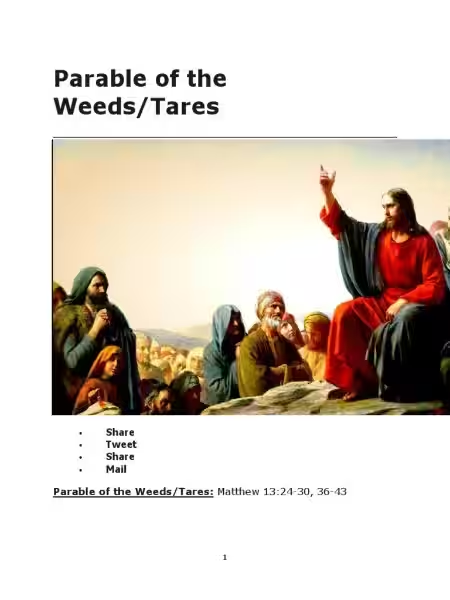
We all have experienced moments of uncertainty, times when our carefully cultivated plans seem threatened by forces beyond our control. This feeling of vulnerability resonates deeply with the parable of the tares, a story about seemingly innocent weeds that can quickly overshadow a farmer's hard work. This ancient narrative offers surprising insights into the psychology of dealing with unwanted challenges and maintaining our sense of purpose. Understanding the parable's message can help us navigate complex situations with greater resilience and clarity.
The parable itself depicts a farmer who sows good seeds, representing our positive aspirations and goals. However, an enemy secretly sows tares—weeds that look remarkably like the good wheat at first glance. This unexpected intrusion poses a significant challenge to the farmer, who is torn between the desire to protect his harvest and the fear of destroying the good seeds along with the weeds. This tension perfectly mirrors the struggles we encounter when confronted with insidious problems or unwelcome influences. The struggle to balance compassion with necessary action is a universal human dilemma.
The Psychology of the Hidden Enemy: Identifying the "Tares"
The key to overcoming the challenges presented by the parable is identifying the "tares" in our own lives. These can be anything from negative beliefs, toxic relationships, unhealthy habits, to unproductive distractions. They often masquerade as harmless or even desirable initially, making detection difficult. For example, a demanding job potentially offering high rewards might initially seem positive, but if it starts to erode your personal well-being, it becomes a "tare" that needs attention. Recognizing these disruptive forces is the first step to reclaiming control.
Self-reflection and honest introspection are crucial tools in this process. Asking yourself clarifying questions like: "What aspects of my life are not as productive as they could be?" or "Are there any relationships that are draining my energy and hindering my progress?" can reveal the hidden "tares." It's also important to cultivate an awareness of your emotional responses. If certain situations or people consistently leave you feeling depleted, question the underlying dynamics for potential "tares." Consider your values and priorities, and how well your actions align with them. This can provide important insight into whether something is truly benefiting you or merely pretending to.
The Importance of Patience and Distinction: Avoiding Premature Action
The parable highlights the importance of patient observation and discernment. The farmer is advised not to immediately weed out the field. Rushing into action can be detrimental, potentially uprooting valuable plants along with the undesirable weeds. Similarly in our lives, rushing to solve problems without a clear understanding of the situation can lead to unintended consequences. For instance, abruptly ending a relationship without understanding the underlying dynamics could harm both parties and prevent potential improvement.
Patience allows for a clearer evaluation of the situation, enabling us to distinguish between genuine threats and temporary setbacks. Developing critical thinking skills and seeking multiple perspectives can play a crucial role in avoiding hasty judgments. This process will facilitate a more nuanced and informed response. The key is to look for patterns of negative behavior or thoughts, rather than isolated incidents. This will prevent us from making rash decisions, ensuring a more effective and sustainable resolution.
The Farmer's Dilemma: Balancing Compassion and Action
The parable presents the farmer with a difficult dilemma. How do we balance compassion for the potential good with the need to address the harm caused by the weeds? This internal conflict mirrors the challenge many face when dealing with difficult situations. For example, a close friend engaging in self-destructive behavior might require tough love to guide them to change. We have to find a balance between being empathetic and taking decisive steps to help them address the problem. This is a delicate dance requiring understanding and empathy.
The farmer's eventual decision to allow the tares to grow until harvest time highlights the value of long-term perspective and trust in the ultimate outcome, even when facing adversity. Understanding when to intervene and when to wait are crucial skills. This patience allows the "good seed" to flourish, and the "tares" can be more easily identified and dealt with at the appropriate time. Trusting the process is often the most effective approach to complex issues. Relying on our intuition and experience to recognize the appropriate time to act is often the best course of action.
Frequently Asked Questions: The Parable of the Tares
What is the Parable of the Tares about?
The Parable of the Tares, found in Matthew 13:24-30, tells of a farmer who sows good seed (wheat) in his field, but an enemy secretly sows weeds (tares) among it. The servants suggest uprooting the tares, but the farmer cautions against it, fearing the wheat would be damaged in the process. He instructs them to let both grow together until the harvest, at which time the tares will be separated from the wheat and burned.
What is the symbolic meaning of the wheat and the tares?
The wheat generally symbolizes true believers or members of God's kingdom. The tares represent evil, false believers, or those who outwardly appear righteous but are inwardly wicked.
What is the significance of the farmer's decision to let both grow together?
The farmer's decision reflects God's patience and longsuffering. He allows both good and evil to coexist in the world until the final judgment (harvest), when a complete separation will take place. It also highlights the difficulty of distinguishing between true and false believers during this earthly life.
What does the harvest represent?
The harvest symbolizes the end times or the final judgment, when God will separate the righteous from the wicked.
What is the practical application of this parable to daily life?
The parable teaches us to be discerning, patient, and to trust in God's timing and judgment. It also cautions against prematurely judging others and highlights the importance of living a life that reflects true faith.
What are some different interpretations of the parable?
Interpretations vary, but common themes include the separation of good and evil in the world, the patience of God, the challenge of discerning true faith from false piety, and the ultimate victory of good over evil. Some interpretations also focus on the church and its struggle with internal hypocrisy.