
Understanding the Cultural Significance of Estampas de Santos
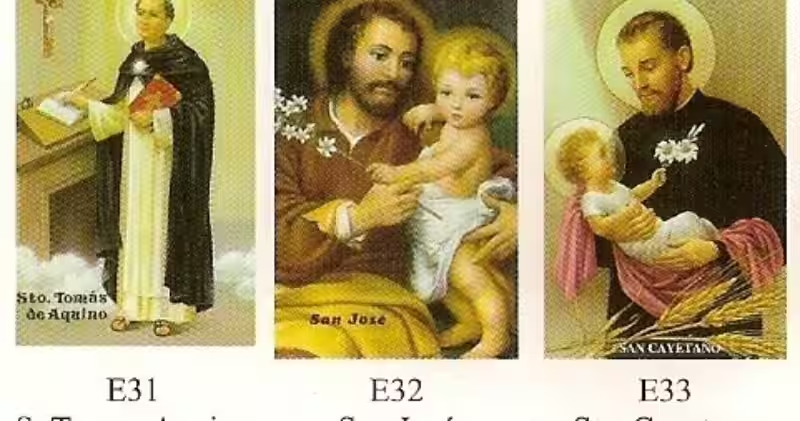
In the vibrant tapestry of Latin American culture, religious imagery plays a profound role, deeply interwoven with the daily lives of millions. One particularly captivating manifestation of this faith is the estampas de santos. These are devotional prints, often depicting saints, biblical figures, or scenes from religious history. Estampas de santos are more than just art; they are tangible expressions of faith, offering a connection to the divine and a shared cultural heritage.
The creation and display of estampas de santos are deeply rooted in folk Catholicism. This blend of traditional Catholic beliefs with local customs and traditions is evident in the diverse imagery found in these prints. This unique fusion often reflects the specific needs and aspirations of the communities that cherish them. Estampas serve as powerful reminders of stories, miracles, and the intervention of divine figures. Imagine walking into a home or a small chapel and being greeted by a collection of estampas de santos, each radiating a different, yet interconnected energy. This visual storytelling is a powerful tool for conveying spiritual messages.
The Historical Context of Estampas de Santos
The history of estampas de santos is intricately linked to the arrival of Catholicism in Latin America. Early prints were often expensive, created through intricate processes. This limited access to religious imagery, leading to a demand for more affordable alternatives. This demand fueled the development of woodblock printing techniques and later, lithographic processes, significantly contributing to the widespread production and availability of estampas de santos. This democratization of religious imagery made it accessible to a wider population, facilitating the spread of faith and cultural exchange. For example, a simple print of Saint Jude could be cherished in a home in Brazil, just as another print of a different saint might be honored elsewhere in the continent.
Over time, estampas de santos evolved to reflect the evolving religious and cultural landscape. Variations in styles and depictions emerged, owing to regional differences and local traditions. This evolution showcases the dynamic relationship between faith and culture. Artists and communities adapted and interpreted the estampas in unique ways, adding their own personal touch and meaning to the prints. This demonstrates the living nature of religious expression, its capacity to be reinterpreted and adapted over time.
The Psychological Impact of Estampas de Santos
Estampas de santos hold significant psychological value for many individuals. They offer a sense of comfort, connection, and belonging to a larger religious community. The act of displaying or venerating these prints can be a source of personal peace, offering refuge and solace during challenging times. For many, the images serve as visual reminders of sacred stories and the importance of faith. Individuals might find strength in the estampas during times of stress or vulnerability, fostering a sense of spiritual grounding.
The psychological impact extends beyond individual experiences. Estampas de santos can also represent a sense of collective identity within communities. They foster a shared cultural heritage and a sense of belonging to a broader tradition. This collective identity can be especially profound in communities where estampas de santos are a central feature of celebrations and rituals. Furthermore, the act of creating or collecting estampas can be deeply personal, fostering creativity and introspection. Imagine the act of creating a custom-made frame for a treasured estampa de santo, or the shared experience of discussing the stories behind these prints with others.
The Role of Estampas de Santos in Art and Culture
Beyond their religious significance, estampas de santos are important works of art. They showcase diverse artistic styles and techniques, reflecting the creativity and cultural richness of the regions where they were produced. Estampas often blend religious themes with local aesthetics, creating unique visual narratives. The intricate details and vibrant colors of estampas are often a testament to the artistry and skill of the artisans who created them. This blend of religious and artistic elements makes these prints truly captivating.
Moreover, the estampas de santos play a crucial role in preserving cultural heritage. They provide a window into the past, offering insights into beliefs, practices, and artistic traditions of various communities. The images themselves, often depicting saints and biblical scenes, can be powerful historical records. Collecting and studying these prints can illuminate the social and cultural context in which they were created. For example, looking at the evolution of depictions of saints across different periods reveals valuable insights into shifts in religious understanding and artistic trends.
Frequently Asked Questions: Estampas de Santos
¿Qué son las estampas de santos?
Imágenes religiosas impresas, generalmente pequeñas, que representan a un santo o santa en particular. A menudo se usan como objetos de devoción.
¿Cuál es el origen de las estampas de santos?
Su origen se remonta a la invención de la imprenta, permitiendo la reproducción masiva de imágenes religiosas, haciendo accesible la devoción a un mayor número de personas.
¿Para qué sirven las estampas de santos?
Sirven como recordatorio de la fe y la devoción a un santo específico. Se utilizan para la oración personal, como amuletos de protección o para adornar espacios religiosos en el hogar.
¿Dónde puedo conseguir estampas de santos?
En tiendas de artículos religiosos, mercados de artesanías, o a través de vendedores online.
¿Son todas las estampas de santos iguales?
No, varían en tamaño, estilo artístico, el santo representado y la calidad de impresión.
¿Hay estampas de santos de diferentes santos?
Sí, existe una gran variedad de estampas representando a numerosos santos, tanto conocidos como menos populares.
¿Tienen algún valor histórico o cultural las estampas de santos?
Sí, reflejan la evolución del arte religioso, las creencias populares y las prácticas devocionales a través del tiempo. Algunas estampas antiguas pueden tener un considerable valor de colección.