
Why God Stopped Moses—and Where He Appeared Next
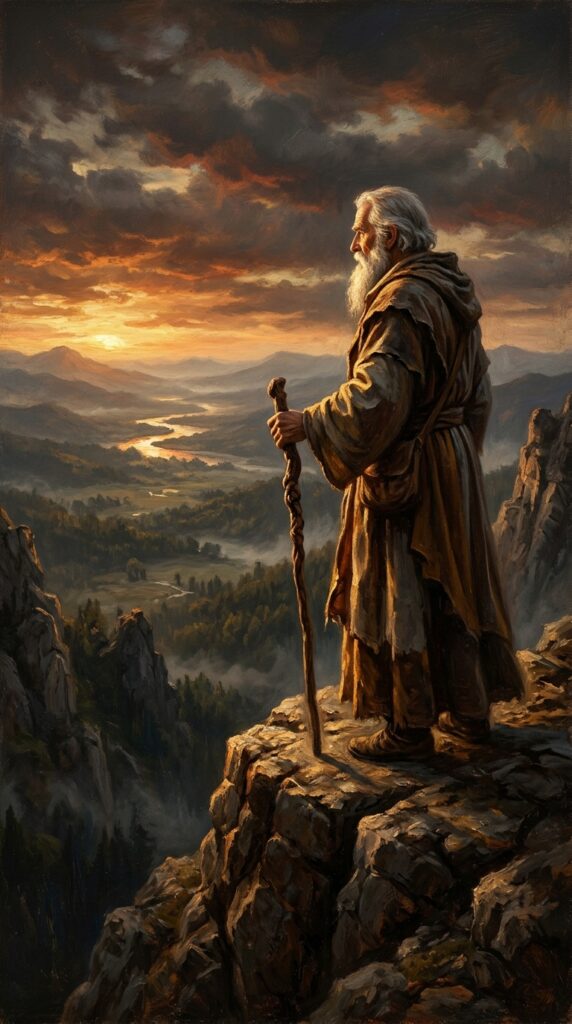
If you saw our video on Facebook, you were probably left wondering how one of the greatest heroes of the Old Testament could lead God's people for forty grueling years, only to be stopped right at the finish line. It feels like one of the most heartbreaking endings in the entire Bible. Moses endured Pharaoh's fury, parted the Red Sea, received the Ten Commandments on Mount Sinai, and put up with decades of rebellion from a stubborn congregation. Yet, when the border of the Promised Land finally came into view, God told him he could not cross the Jordan River.
It sounds devastating, and on the surface, it feels almost unfair. But as Scripture reveals, God's justice is always perfect, and His story for Moses was far from over. There is a reason God drew the line where He did, and an astonishing twist centuries later shows that God's grace had the final word.
The Long Journey That Stopped at the Border
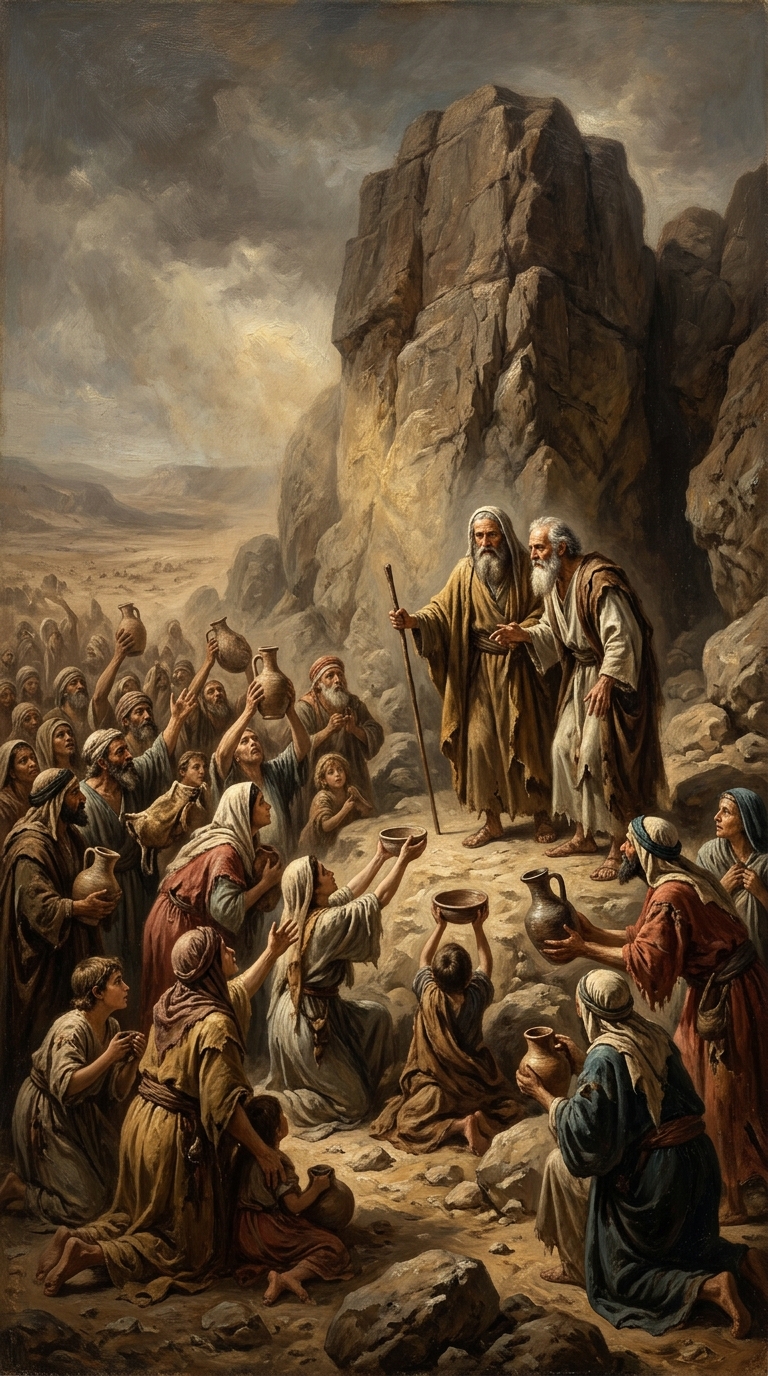
To understand what happened, we have to remember the weight Moses carried. For four decades, he led more than a million Israelites through an unforgiving wilderness. They lacked food, they lacked water, and they continually complained against both Moses and God. Moses was their intercessor, repeatedly pleading with the Lord to show mercy when the people turned to idols and rebellion.
By the time Israel approached the plains of Moab, the original generation that had left Egypt had passed away, and a new generation stood ready to claim what God had promised to Abraham, Isaac, and Jacob. Moses had spent his entire adult life preparing for this moment. His hopes, prayers, and tears had all been pointed toward the land flowing with milk and honey.
Yet, when the time came to enter, Moses remained behind. The root of this painful boundary did not begin on the banks of the Jordan; it happened at an oasis in the Wilderness of Zin, at a place called Meribah.
A Moment of Anger at the Waters of Meribah
The account is recorded in Numbers 20:2-13. The camp had arrived in Kadesh, and once again, there was no water for the community. The people gathered in opposition against Moses and Aaron, shouting that they wished they had died back in Egypt. Exhausted and grieved, Moses and Aaron went to the tent of meeting and fell facedown before God.
The Lord answered with clear, gracious instructions. In Numbers 20:8, God said:
"Take the rod, and gather thou the assembly together, thou, and Aaron thy brother, and speak ye unto the rock before their eyes; and it shall give forth his water, and thou shalt bring forth to them water out of the rock."
Notice the exact command: Moses was told to speak to the rock. Years earlier, at Mount Horeb (Exodus 17:6), God had told Moses to strike the rock with his staff to produce water. But this time, God instructed him only to speak to it.
Moses took the staff as commanded, but his patience was broken. Standing before the congregation, he let his frustration take control. Numbers 20:10-11 records his words and actions:
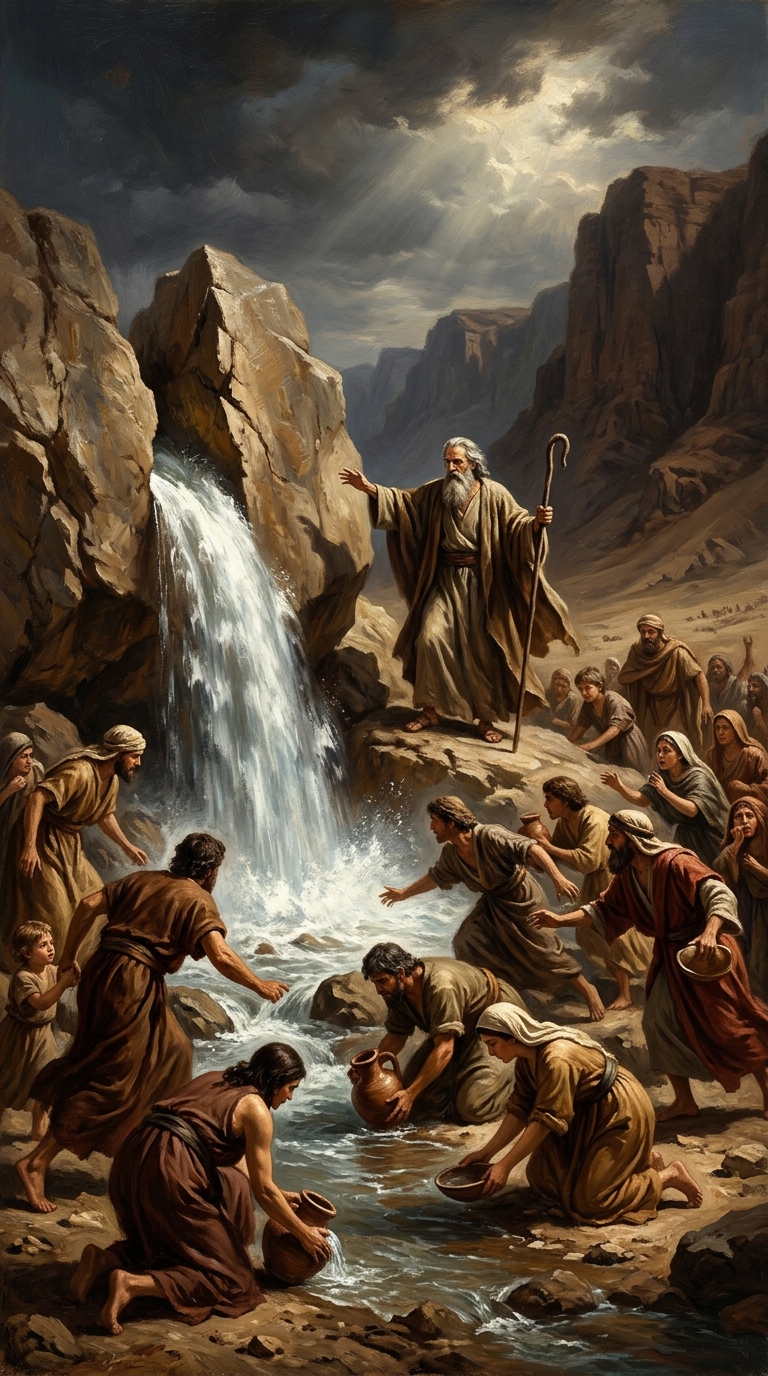
"And Moses and Aaron gathered the congregation together before the rock, and he said unto them, Hear now, ye rebels; must we fetch you water out of this rock? And Moses lifted up his hand, and with his rod he smote the rock twice: and the water came out abundantly, and the congregation drank, and their beasts also."
Water poured out because God is merciful to His thirsty people, but Moses had crossed a critical boundary. Instead of giving glory to the Lord, Moses said, "must we fetch you water out of this rock?" He struck the rock twice in anger instead of speaking to it in quiet faith. God's response was swift and solemn:
"Because ye believed me not, to sanctify me in the eyes of the children of Israel, therefore ye shall not bring this congregation into the land which I have given them." (Numbers 20:12)
Spiritual leaders carry a high responsibility. By lashing out and failing to uphold God's holiness before the nation, Moses misrepresented the character of God to the people he was called to shepherd.
A Lonely Farewell on Mount Nebo
Decades passed, the wilderness wanderings came to an end, and God reaffirmed His decree. Deuteronomy 34 describes the final earthly chapter of Moses' life. God commanded him to climb Mount Nebo, to the top of Pisgah, directly opposite Jericho.
From that high vantage point, God showed Moses the full panorama of the land: the territory of Gilead as far as Dan, all of Naphtali, Ephraim, Manasseh, Judah, the Negev, and the plain of the valley of Jericho. Moses looked out across the fertile hills and rolling valleys he had dreamed of for eighty years.
Deuteronomy 34:5-6 tells us what happened next:
"So Moses the servant of the Lord died there in the land of Moab, according to the word of the Lord. And he buried him in a valley in the land of Moab, over against Beth-peor: but no man knoweth of his sepulchre unto this day."
Moses was 120 years old, yet Scripture notes his eyes were not weak and his strength was not gone. God Himself laid His faithful servant to rest in an unmarked grave. For centuries, readers of the Old Testament closed the Torah thinking that Moses died on the outside, forever kept from walking on the soil of the Promised Land.
The Twist: Standing Inside the Promised Land
That is where the video left off, and this is where Scripture delivers an astonishing reveal. Moses' story did not conclude on the desolate cliffs of Mount Nebo. Fast forward roughly 1,400 years to the Gospels.
In Matthew 17:1-3, Mark 9:2-4, and Luke 9:28-36, Jesus took Peter, James, and John up onto "a high mountain" to pray. As Jesus prayed, His face shone like the sun, and His clothes became dazzling white. Then, out of heaven itself, two figures appeared in radiant glory to speak with Him: Elijah and Moses.
Where was this mountain? While the Gospels do not name the peak, church tradition and biblical geographers point to either Mount Tabor in Lower Galilee or the majestic slopes of Mount Hermon near Caesarea Philippi. Both locations share one undeniable geographic reality: they are located squarely inside the biblical boundaries of the Promised Land.
Think about the beauty of that moment. Moses did not cross the Jordan River with Joshua and the army of Israel. Instead, centuries later, God brought Moses directly onto a mountain inside the Promised Land to stand face-to-face with the Son of God.
Luke 9:31 adds a detail that makes this encounter even more profound: Moses and Elijah spoke with Jesus about His "decease"—in the original Greek text, His exodus—which Jesus was about to fulfill in Jerusalem. The man who led Israel through the first exodus came to speak with Christ about the ultimate exodus: our deliverance from sin and death through the cross and resurrection.
The Balance of God’s Discipline and Grace
The journey of Moses gives every believer a profound picture of who God is. Scripture demonstrates two vital truths side by side:
- God takes obedience seriously. Even His closest servants are accountable for their actions. Earthly choices bring real, earthly consequences, and God upholds His holiness above all else.
- God's discipline never cancels His grace. God said "no" to Moses entering the land under his own leadership, but God had a far greater entrance planned. Moses entered the land not as an aging general with a sword, but as a glorified saint standing beside the King of kings.
If you have ever felt that a past mistake permanently disqualified you from God's presence or ruined His plans for your life, let the story of Moses encourage your heart today. God may discipline us, but His redemptive love always has the final say for those who belong to Him.
Did you know that Moses finally set foot inside the Promised Land at the Transfiguration? What does this story teach you about God's patience and grace in your own life? Share your thoughts in the comments below!
Leave a Reply