
Stella Maris: the meaning behind Mary's title as Star of the Sea
Stella Maris is a Latin title meaning "Star of the Sea," used for centuries to honor the Virgin Mary as a guide and protector, especially for sailors, travelers, and anyone navigating uncertain circumstances. The phrase evokes the North Star, which mariners once used to find their way home across open water, and applies that same idea of steady guidance to Mary's spiritual role. The title appears in hymns, church names, religious art, and devotional prayers across the Catholic world and beyond.
You may have come across the spelling "stella marris" with a double "r," which is a common variation people search for, but the correct Latin spelling is Stella Maris, with a single "r" in "Maris," the genitive form of "mare," meaning "sea." Understanding where this title comes from, how it developed, and why it still matters today gives a fuller picture of one of Christianity's most enduring images.
Where the title Stella Maris comes from
The exact origin of the phrase is debated among scholars, but most trace it back to a copying error in early translations of Saint Jerome's work. Jerome, the fourth-century scholar who translated the Bible into Latin, wrote about the meaning of Mary's name using the Hebrew phrase "stilla maris," meaning "drop of the sea." Over time, through repeated copying by hand, "stilla" (drop) was transcribed as "stella" (star), and the new phrase stuck.
Whether accidental or not, the shift from "drop of the sea" to "star of the sea" proved far more evocative, and it spread quickly through medieval devotional writing. By the early Middle Ages, Stella Maris had become a fixed title for Mary, appearing in liturgical texts, poetry, and eventually in one of the most recognizable Marian hymns of the era.
The hymn that made the title famous
The Latin hymn Ave Maris Stella, meaning "Hail, Star of the Sea," dates to roughly the eighth or ninth century and became a staple of Vespers, the evening prayer of the church, throughout the medieval period. The hymn asks Mary to guide believers safely, comparing her role to a star that keeps sailors from losing their way in darkness.
This hymn did more than popularize the phrase. It cemented the connection between Mary and the sea in the religious imagination of coastal Europe, where fishing communities and seafaring towns adopted her as a patroness of safe voyages.
Why the sea became such a powerful symbol for Mary's role
The sea has always carried a double meaning in human experience: it provides food, trade, and connection between distant places, but it also threatens storms, shipwrecks, and sudden loss. For people living near coastlines or depending on sailing for their livelihood, the ocean represented both opportunity and danger in equal measure.
Framing Mary as a star that guides sailors home gave this uncertainty a sense of hope. A star doesn't control the weather or calm the waves, but it offers a fixed point of reference when everything else feels unpredictable. That is precisely the role many believers assign to Mary: not someone who removes hardship, but someone who offers direction and comfort within it.
A point worth remembering: the title Stella Maris was never meant to suggest Mary has power over nature itself. It's a symbol of guidance and intercession, not control over storms or circumstances.
How Stella Maris is used in churches, prayers, and daily devotion
The title shows up in several concrete ways across Catholic tradition and, to a lesser extent, in other Christian communities that honor Mary.
- Church names: Countless parishes around the world, particularly in coastal towns, are named Stella Maris or Our Lady Star of the Sea.
- Patronage of seafarers: Fishing fleets, naval chapels, and maritime organizations have historically invoked Mary under this title before voyages.
- Feast days and local customs: Some coastal communities hold processions or blessings of boats tied to devotions honoring Mary as Stella Maris.
- Personal prayer: Individuals facing difficult transitions, illness, or uncertainty sometimes pray under this title, asking for guidance rather than for the removal of hardship.
- Religious art: Paintings and statues sometimes depict Mary with a star above her head or on her mantle, a visual shorthand for the title.
In many of these settings, the appeal isn't limited to literal sea travel. The metaphor of a guiding star has been extended to any situation where someone feels lost, whether that's a major life decision, a health crisis, or a period of grief.
A short meditation many people use
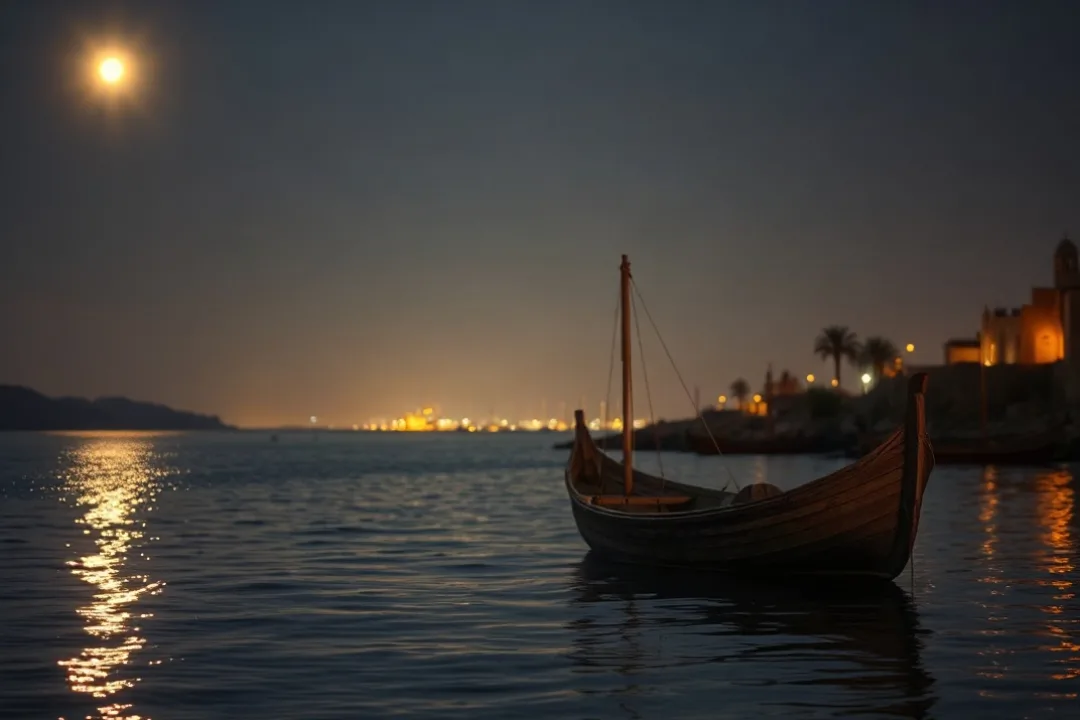
A simple way believers reflect on this title is to picture a ship at night with no visible shoreline, relying entirely on a fixed point of light overhead. The point isn't that the star solves the journey, but that it keeps the traveler oriented enough to keep moving forward. This image is often used in reflections tied to Luke 1:38, where Mary accepts her role with trust despite not knowing exactly what lies ahead.
How the title connects to broader Marian devotion
Stella Maris is one of many titles given to Mary throughout history, each highlighting a different aspect of her role in Christian belief. Some other well-known examples include:
- Our Lady of Sorrows, emphasizing her suffering alongside Christ
- Queen of Heaven, emphasizing her honored position in Catholic theology
- Our Lady of Guadalupe, tied to a specific apparition and cultural identity
- Mother of Mercy, emphasizing compassion and intercession
What sets Stella Maris apart is its focus on navigation and orientation rather than sorrow, authority, or a specific historical appearance. It speaks directly to the experience of uncertainty, which may explain why it has remained relevant across such different eras and cultures, from medieval fishing villages to modern reflections on personal struggle.
Hail, star of the sea, nurturing Mother of God, and ever Virgin, happy gate of Heaven.
That line, adapted from the traditional Ave Maris Stella hymn, captures the layered meaning believers associate with the title: guidance, nurture, and hope for a safe arrival, whether that arrival is literal or spiritual.
How the Stella Maris name is used today outside strictly religious contexts
Beyond churches and prayer books, the phrase has found its way into other areas of public life, often because of the strength of its imagery rather than strict theological intent.
- Schools and universities: A number of Catholic schools worldwide carry the name Stella Maris, often tied to a founding religious order or local parish.
- Maritime charities: Organizations supporting the welfare of sailors and port workers have adopted the name, most notably the international Catholic charity known as Stella Maris (formerly the Apostleship of the Sea), which provides chaplaincy and support services to seafarers in ports around the world.
- Place names: Streets, neighborhoods, and even small coastal towns in several countries carry the Stella Maris name, usually tracing back to a historic chapel or devotion in the area.
- Personal names: Some parents choose Stella Maris, or simply Stella, as a given name, drawn to its meaning even outside a strictly religious framework.
This spread shows how a phrase rooted in medieval Latin devotion can take on a life beyond its original liturgical setting, while still carrying traces of its older meaning: light, guidance, and safe passage.
What the title can mean for someone today, regardless of background
Even for readers who don't practice a particular faith, the symbolism behind Stella Maris carries a message that translates fairly easily into everyday life. It speaks to the value of having a fixed point of reference during periods of change, loss, or confusion, something steady enough to orient yourself by even when the full picture isn't visible yet.
Some practical ways people apply this idea without necessarily invoking the religious title directly include:
- Identifying one stable value or relationship to hold onto during a difficult transition
- Taking small, deliberate steps forward even without full certainty about the outcome
- Returning to a meaningful ritual, prayer, or reflection as an anchor during stressful periods
- Seeking guidance from a trusted mentor, counselor, or community rather than navigating major decisions alone
Whether approached as a matter of faith or simply as a useful metaphor, the image behind Stella Maris remains genuinely practical: a star doesn't remove the storm, but it helps a traveler keep their bearings until calmer water arrives.
Frequently asked questions
What does Stella Maris actually mean in English?
Stella Maris is Latin for "Star of the Sea." It's a traditional title for the Virgin Mary, symbolizing guidance and protection, particularly for sailors and travelers, though the imagery is often applied more broadly to anyone facing uncertainty or difficult decisions.
Is Stella Maris spelled with one R or two?
The correct Latin spelling is Stella Maris, with a single R in "Maris." The spelling "stella marris" is a common misspelling, but it isn't the historically accurate or traditionally used form of the title.
Why is Mary connected to the sea as Stella Maris?
The connection likely began as a copying error in early translations of Saint Jerome's writings, turning "stilla maris" (drop of the sea) into "stella maris" (star of the sea). The image stuck because it resonated with coastal communities who relied on stars for safe navigation.
Is Stella Maris only relevant to sailors or coastal communities?
No. While the title originated with maritime communities and remains tied to seafarer charities today, the symbolism of a guiding star has broadened over time to represent hope and direction for anyone navigating uncertainty, loss, or major life transitions.
Leave a Reply