
The Unfruitful Fig Tree: A Psychological Parable
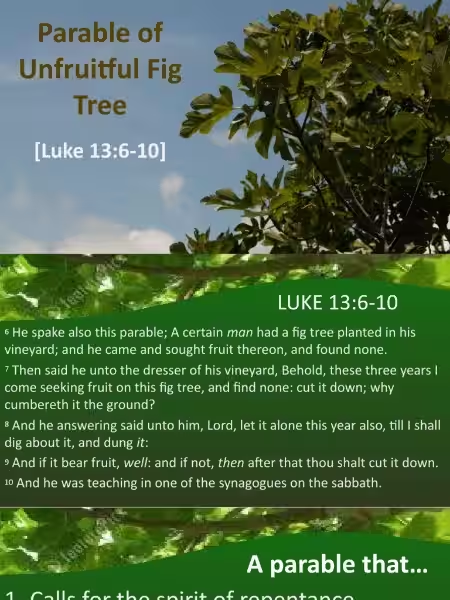
We all encounter moments in our lives when we feel like a barren fig tree. Perhaps we're not meeting our own expectations, or those of others. Maybe we're struggling in a relationship, a career, or even with personal growth. The seeds of our aspirations seem to fall on unyielding soil, failing to blossom into the fruits we desire. This feeling, while often painful, is a crucial aspect of our psychological journey.
This is where the parable of the unfruitful fig tree comes into play. It's not just a religious story; it's a powerful metaphor for understanding our inner landscapes. This parable reminds us that growth and change aren't always linear. Sometimes, we experience periods of perceived stagnation or unproductivity. These periods can be frustrating and discouraging, but they are also opportunities for self-reflection and crucial adjustments. Just like the owner of the fig tree, we must understand that patience and persistence are key.
The Roots of Stagnation: Understanding the "Why"
Why do we feel unfruitful? A deeper look at our situation often reveals underlying factors. These can be external pressures, such as economic hardship or societal expectations. But they can also be internal, such as self-doubt, fear of failure, or a lack of clear goals. Imagine a fig tree with insufficient sunlight or water. Similarly, our mental and emotional landscapes might need tending to. Addressing these issues is crucial for moving forward.
Consider a case study. A young professional might feel unfruitful in their job because they haven't been promoted. This could be due to internalized anxieties about not measuring up to their superiors or externally, due to a company-wide hiring freeze. Understanding the context, both internal and external, is vital for effective change. This is where self-assessment comes in handy. Techniques such as journaling, mindfulness, or seeking support from mentors or therapists can help identify and address these roots.
Pruning and Replanting: A Path to Fruitfulness
The parable highlights the owner's repeated attempts to find a solution: fertilization, more water, and even a consideration of completely removing it. This demonstrates a crucial aspect of growth and change; persistence in seeking better outcomes. In our lives, this means confronting our challenges head-on. Perhaps we need to re-evaluate our goals, seek new opportunities, or adjust our approaches. We need to make necessary adjustments and ask ourselves: What changes can I make, and what resources do I need? For example, a student struggling with poor grades might need to seek tutoring, adjust their study habits, or even consider a different learning environment.
It is important to understand that successful change isn't instantaneous. Just like a fig tree needs time to bear fruit, we too need time to grow. This journey might involve setbacks, but the key is to learn from them. Resilience and adaptability are essential for long-term success. Consider a musician who's been struggling to compose music. They might try new instruments, techniques, or even genres. Through persistence and adaptation, they can eventually find their voice and create beautiful music.
The Significance of Patience: Embracing the Process
The parable also teaches us profound lessons about patience. The fig tree owner's actions show us that impatience and frustration can hinder the process. Like the fig tree, we might feel the pressure to produce results immediately. However, our efforts need to be nurtured over time. Focusing on the process of growth, rather than the immediate outcome, is crucial. This means focusing on our progress, even if it feels slow, and celebrating small victories along the way.
Imagine a writer who's working on a novel. The initial stages of outlining and drafting can feel tedious and unproductive. However, persistence and patience are key. Accepting this process as part of the journey will make the completion of the novel feel rewarding. This illustrates that the journey to growth and fulfillment is often long and winding. Embrace the process, and you'll be rewarded with fruit.
Conclusion: Cultivating Your Own Fig Tree
The parable of the unfruitful fig tree offers a powerful message: we are all capable of growth and transformation. Like the fig tree owner, we need to be patient, persistent, and resourceful in our efforts. By understanding our own needs and challenges, we can nurture our own personal growth. Embrace the process; it is in the journey that we truly discover ourselves.
Ultimately, the parable emphasizes the importance of self-awareness, resourcefulness, and patience. It reminds us that change and growth are continuous processes, requiring effort and adjustments. Remember, just like the fig tree, we have the potential to bear fruit, but it requires tending to the roots, and embracing the journey.
Frequently Asked Questions: The Parable of the Unfruitful Fig Tree (Psykologi)
What is the main message of the parable of the unfruitful fig tree?
The parable highlights the importance of bearing fruit—representing positive actions, good deeds, or spiritual growth—in one's life. A lack of fruit signifies a lack of productivity and purpose, leading to potential consequences. From a psychological perspective, it can be interpreted as the need for self-actualization and contributing meaningfully to the world. Failure to do so can result in feelings of inadequacy and dissatisfaction.
How does the parable relate to the concept of self-actualization in psychology?
The parable mirrors the humanistic psychology concept of self-actualization, the process of fulfilling one's potential. The fig tree failing to produce fruit symbolizes a failure to reach one's potential and contribute to one's environment. The parable suggests that true fulfillment comes not from mere existence, but from actively striving for and achieving one's goals and contributing positively to the world around us.
What is the psychological significance of the fig tree's owner giving it more time?
The act of giving the tree more time before judgment can be interpreted as a representation of patience, grace, and the process of personal growth. Psychologically, it highlights the importance of self-compassion and understanding that personal growth takes time and effort. It suggests that setbacks do not necessarily equate to failure, and that opportunities for growth and change are ongoing.
What are the potential psychological implications of the tree's ultimate destruction?
The destruction of the fruitless fig tree symbolizes the potential consequences of prolonged unproductivity and lack of self-actualization. This can manifest psychologically as feelings of failure, depression, anxiety, and a sense of unworthiness. However, the parable also implies that there is a point where persistent inaction necessitates a change in approach or acceptance of consequences.
Can the parable be interpreted differently depending on the individual's beliefs and experiences?
Absolutely. The parable's interpretation varies depending on individual beliefs, cultural background, and personal experiences. One person might focus on the spiritual message of repentance and redemption, while another might emphasize the psychological need for self-improvement and goal-setting. The parable's open-ended nature allows for multiple interpretations, making it a rich source of personal reflection.