
Satan's Fall from Heaven: Causes, Chronology, and Consequences

When Did Satan Fall?
The Bible does not offer a definitive timeline for Satan's fall from heaven, but we do have significant clues scattered throughout Scripture. In Luke 10:18, Jesus describes witnessing Satan's descent, saying he saw him "fall like lightning from heaven"—a vivid image that emphasizes how swiftly and dramatically it occurred. To narrow down the timeframe, we know from Job 38:4-7 that angels were created before the Earth itself was formed. We also know that Satan was already a tempter when he approached Adam and Eve in Genesis 3, which means his rebellion must have taken place sometime between these two events: after the angels' creation but before humanity's fall. The exact moment remains one of Scripture's mysteries, but the window is clear enough for theological understanding.
Why Did Satan Fall?
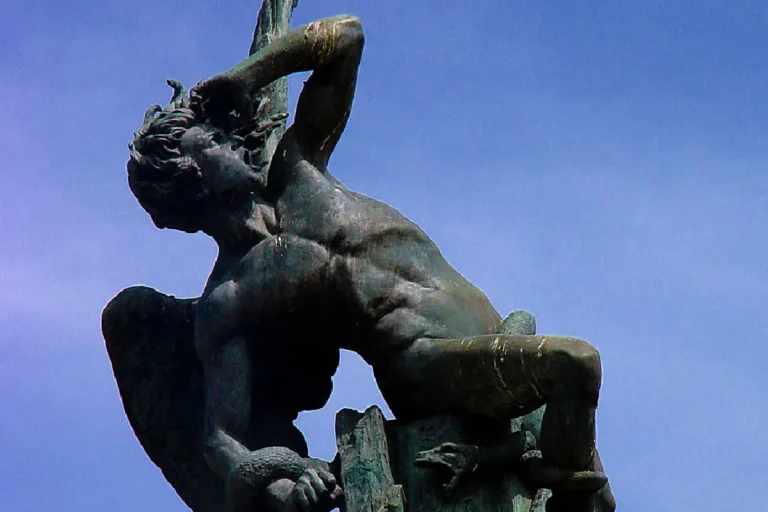
At the heart of Satan's rebellion lies a single, devastating flaw: overwhelming pride. Satan was not content with his exalted position among God's creations. Instead, he harbored an insatiable ambition to rise even higher—to dethrone God himself and seize control of the universe. Isaiah 14:12-15 and Ezekiel 28:12-15 paint a portrait of a being intoxicated with his own beauty and power, unwilling to acknowledge any authority above him. What makes this particularly tragic is that Satan's original sin became the template for humanity's temptation. When he later approached Adam and Eve in the garden, he offered them the same promise he had sought for himself: "You will be like God" (Genesis 3:5). In essence, Satan was projecting his own rebellion onto the first humans, attempting to recruit them into his war against the Almighty.
How Did Satan Fall?
God's response to Satan's defiance was decisive and complete. According to Isaiah 14:15 and Ezekiel 28:16-17, God cast Satan out of heaven with overwhelming force. There could be no compromise, no negotiation—heaven is God's sacred realm, and wickedness has no place there. Satan and his rebellion were violently expelled from the divine presence. This wasn't a gentle removal or a negotiated departure; it was a forceful ejection that underscored the absolute incompatibility between holiness and sin, between divine order and rebellion.
Satan's Access to Heaven After the Fall
Here's where things get theologically interesting. The Book of Job presents a puzzling scenario: even after his expulsion, Satan appears to have retained some access to God's presence and the heavenly realm (Job 1:6-7). In this passage, Satan presents himself before the Lord alongside the other "sons of God," suggesting he could still move between heaven and Earth. This raises an important question for Bible students: did Satan's access eventually get cut off, and if so, when? Some scholars point to Christ's death and resurrection at Calvary as the pivotal moment when Satan's power was decisively broken and his access restricted. Others look to Revelation 12:7-12, which describes an end-times war in heaven where Satan is finally cast down for good. The timing of Satan's permanent exclusion from heaven remains a subject of legitimate theological debate, with credible arguments on multiple sides.
The Origin and Fall of the Devil
- God created an extraordinarily powerful angel named Lucifer, who held one of the highest positions in the heavenly hierarchy.
- Lucifer's consuming pride and his craving for worship led inexorably to his downfall and rebellion.
- In his rebellion, he persuaded one-third of the angels to join him against God (Revelation 12:4).
- Lucifer became known as Satan, and the angels who followed him were transformed into demons—fallen beings now opposed to God's purposes.
Lucifer's Fall from Grace
- Ezekiel 28 and Isaiah 14 provide remarkably detailed descriptions of Lucifer as a "guardian cherub" or "anointed cherub," distinguished by exceptional beauty, wisdom, and divine power.
- His unrighteousness—his refusal to remain subject to God—combined with his insatiable desire for personal glory led to his catastrophic downfall.
- Most biblical scholars and theologians agree that these passages in Ezekiel and Isaiah, while using poetic and symbolic language, refer to Satan's rebellion as an angelic being who chose to resist God's authority.
Consequences of Satan's Fall
- Evil entered the world as a direct result of Satan's rebellion. Before his fall, God's creation existed in perfect harmony and purity.
- The good news for Christians is that they are not left defenseless or abandoned. Jesus Christ stands as their ultimate ally, having conquered Satan decisively at Calvary through His death and resurrection.
- God's original creation was untainted by wickedness, but Satan's actions introduced sin, suffering, and death into human experience—consequences that would ripple throughout all of history until Christ's final victory.
Frequently Asked Questions
When did Satan fall from heaven?
The Bible does not specify an exact date or moment, but Satan's fall occurred between the creation of the angels and the temptation of Adam and Eve. Jesus's reference to witnessing Satan's fall like lightning (Luke 10:18) tells us it happened suddenly and with finality, but the precise timing remains part of Scripture's mystery.
Why did Satan fall from heaven?
Pride and ambition drove Satan's rebellion. He was unwilling to accept his place in God's creation and instead sought to elevate himself above God, to claim the throne and dominion that belonged only to the Almighty. His desire for worship and supremacy became his undoing.
How did Satan fall from heaven?
God, in response to Satan's sin and rebellion, cast him out of heaven with divine judgment. The expulsion was not gradual or negotiable—it was a forceful removal that reflected heaven's incompatibility with wickedness and sin.
Does Satan still have access to heaven?
This remains an open question among biblical scholars. While the Book of Job suggests Satan had access to God's presence during that era, it's unclear whether this continued after Christ's resurrection or whether it will be permanently severed at some future point. Revelation 12:7-12 describes an ultimate war in heaven that may represent Satan's final expulsion, but the exact timing and nature of any current restrictions on his access is debated among theologians.