
Ray Stedman Sermons: A Treasure Trove of Biblical Insight

For many Christians, deepening your understanding of Scripture is essential to spiritual growth. Ray Stedman, a respected pastor and Bible teacher whose ministry spanned decades, left behind a remarkable collection of sermons that continue to shape how believers read and live out God's Word today.
Who Was Ray Stedman?
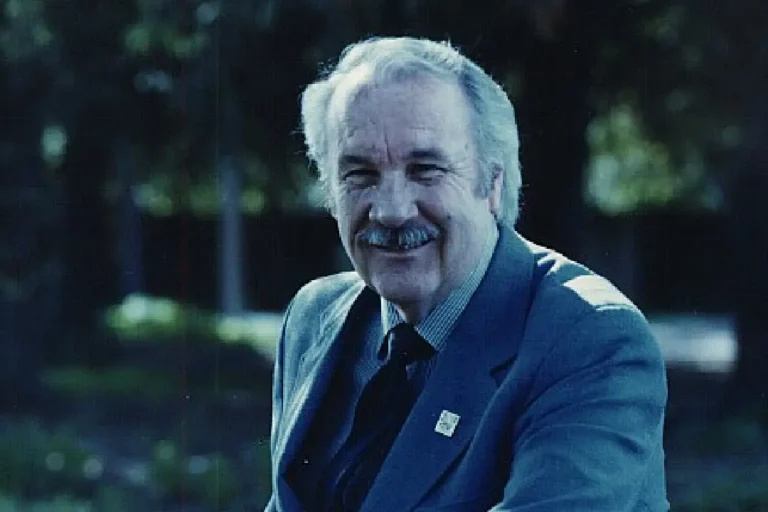
Ray Charles Stedman (1917–1992) was an American pastor, author, and Bible teacher who became one of the most influential evangelical voices of his era. For nearly 40 years, he served as senior pastor of Peninsula Bible Church in Palo Alto, California—a position from which he shaped the spiritual lives of thousands of churchgoers and, through his published works and recorded sermons, countless more beyond his congregation. What set Stedman apart was his distinctive approach: he could unpack complex biblical passages with remarkable clarity, making ancient texts feel immediately relevant to modern life. His reputation grew steadily, and today his sermons remain widely studied in churches, seminaries, and Christian study groups.
Ray Stedman Sermons
1. The Christian and Worldliness
Ray C. Stedman — April 29, 1956
Stedman’s central concern in this sermon is to challenge the traditional Christian idea that worldliness is primarily about external behavior: what Christians wear, where they go, what entertainment they consume, what they drink, and so on.
His argument is much deeper. According to Stedman, worldliness is fundamentally an attitude of the heart—a way of thinking about life that adopts the values, ambitions, priorities, and assumptions of the world rather than those of God. The sermon became notable precisely because of this practical and somewhat radical approach.
The basic problem
Stedman begins by confronting a common Christian tendency: creating lists of things that are supposedly "worldly."
A person might say:
- "A Christian shouldn't do this."
- "A Christian shouldn't go there."
- "A Christian shouldn't listen to that."
- "A Christian shouldn't dress like that."
But Stedman argues that this can completely miss the real issue.
Someone can avoid all the traditionally prohibited activities and still be profoundly worldly.
Why?
Because worldliness isn't ultimately determined by the objects around us. It is determined by the attitude with which we approach them.
A person can be surrounded by Christian activities, attend church regularly, use Christian vocabulary, and still have a heart completely governed by the world's values.
Conversely, a Christian can live and work in the middle of ordinary society without becoming worldly.
That distinction is one of the most important ideas in the sermon.
The Christian is not supposed to escape the world
Stedman emphasizes an important biblical balance.
Christians are supposed to be different from the world, but they aren't supposed to withdraw completely from the world.
The Christian mission requires contact with ordinary people.
Jesus Himself spent time with:
- sinners,
- tax collectors,
- ordinary workers,
- outsiders,
- people considered morally questionable.
Therefore, separation cannot simply mean physical isolation.
If Christians completely isolate themselves from unbelievers, they can become incapable of communicating the Gospel to them.
The Christian is therefore called to live in the world without allowing the world to become the controlling influence within him.
This is an important distinction:
Separation from the world is primarily separation in values, thinking, and allegiance—not geographical separation from people.
Stedman's approach is therefore much more demanding than simply following a list of rules.
What actually makes something worldly?
The important question becomes:
What controls your thinking?
Stedman argues that the world has a particular philosophy.
The world's basic assumptions often revolve around things such as:
- personal success,
- status,
- possessions,
- reputation,
- pleasure,
- power,
- comfort,
- recognition,
- self-advancement.
None of these things is necessarily evil in itself.
The danger is allowing them to become the central purpose of life.
For example, there is nothing inherently wrong with having money.
But if money becomes the measure of whether your life is successful, it has become an idol.
There is nothing inherently wrong with having a career.
But if your identity depends entirely upon professional achievement, your career has begun to control you.
There is nothing necessarily wrong with enjoying entertainment.
But if pleasure becomes the ultimate purpose of existence, it has replaced God.
This is why Stedman's definition of worldliness is much more profound than a list of forbidden activities.
Worldliness is a way of thinking
One of Stedman's strongest points is that Christians must learn to recognize the philosophy behind the behavior.
Two people can perform exactly the same action while having completely different motivations.
For example, two people might want to become wealthy.
One may want wealth because he wants security, status, luxury, and recognition.
Another may desire financial success because he wants to provide responsibly for his family and have greater freedom to serve others.
The external objective may look similar.
The heart is different.
That is why merely controlling external behavior doesn't necessarily produce holiness.
Christianity isn't fundamentally about creating people who behave differently while thinking exactly like everyone else.
It is about a transformation of the mind and heart.
The danger of Christian legalism
This leads Stedman toward a criticism of legalism.
Legalism attempts to define spirituality through external regulations.
It asks:
"What am I allowed to do?"
But the more mature Christian question is:
"What is controlling my heart?"
This changes everything.
Instead of asking:
"Is this technically permitted?"
the Christian begins asking:
"What effect does this have on my relationship with God?"
Or:
"What does this reveal about what I value?"
Or:
"Is this helping me become more like Christ?"
The Christian life therefore becomes a matter of inner transformation rather than merely external restriction.
The Christian's relationship with possessions
Another important dimension of Stedman's argument concerns material things.
The problem isn't necessarily having things.
The problem is being possessed by the things we possess.
A Christian can own a house, car, business, technology, clothes, musical instruments, and other possessions without those things becoming idols.
The question is:
Who owns whom?
Do I possess my possessions?
Or do my possessions possess me?
This is a recurring biblical principle.
Money becomes dangerous when it becomes a source of identity, security, or superiority.
The subtlety of worldliness
Perhaps the most challenging aspect of the sermon is that worldliness can appear extremely respectable.
It doesn't necessarily look immoral.
Sometimes it looks like:
- ambition,
- professionalism,
- success,
- respectability,
- intelligence,
- financial security,
- social influence.
That makes it particularly difficult to identify.
A Christian may not be committing obvious sins but may nevertheless be organizing his entire life around the same goals as everyone else.
The difference between a worldly person and a Christian therefore cannot simply be:
"One does bad things and the other doesn't."
The deeper difference is:
They have different ultimate loyalties.
The Christian asks what God wants.
The worldly person ultimately asks what will maximize his own satisfaction, security, status, or success.
The practical challenge
Stedman's sermon therefore becomes a call to examine the motives beneath ordinary life.
Instead of simply asking:
"Is this worldly?"
we should ask:
- Why do I want this?
- What am I hoping it will give me?
- What happens to me if I don't get it?
- Does my happiness depend upon it?
- Am I seeking God's approval or people's approval?
- Would I still want this if nobody knew I had it?
- Is this helping me love God and other people?
- Has this become more important to me than Christ?
Those questions expose worldliness much more effectively than a list of rules.
The central message
In condensed form, Stedman's argument is:
The Christian isn't called to abandon the world but to live in it without adopting its values.
Christian distinctiveness isn't primarily about looking strange, avoiding certain objects, or withdrawing from society.
It is about possessing a different center of gravity.
The world says:
"Live for yourself."
Christ says:
"Live for God."
The world says:
"Your value comes from what you have."
The Gospel says:
"Your value comes from belonging to Christ."
The world says:
"Build your identity through achievement."
The Gospel says:
"Your identity is received from God."
That is the heart of Stedman's understanding of Christian separation.
2. How to Kill a Lion on a Snowy Day
Ray C. Stedman — November 4, 1973
This is one of Stedman's classic sermons. It is based on 1 Chronicles 11:22–24, which describes Benaiah, one of David's mighty warriors.
The passage says that Benaiah:
- was a man of valor,
- performed great deeds,
- went down into a pit,
- encountered a lion,
- and killed it on a snowy day.
Stedman sees this seemingly obscure biblical incident as a powerful picture of how believers can confront seemingly impossible circumstances.
Benaiah's three great victories
Stedman begins by looking at three things for which Benaiah became famous.
He defeated formidable enemies, including a massive Egyptian warrior, and he killed the lion.
The lion incident is particularly striking.
Why?
Because the circumstances were terrible.
He didn't simply encounter a lion.
He encountered a lion:
in a pit
on a snowy day.
That detail becomes the entire foundation of Stedman's message.
The lion represents the enemy
Stedman connects the lion with the biblical description of Satan.
Peter describes the devil as a roaring lion seeking someone to devour.
The point isn't that every difficult event is literally caused by Satan.
Rather, the lion becomes a picture of the terrifying adversaries and circumstances that confront human beings.
Stedman identifies a broader biblical pattern involving three enemies:
The world
The world represents the external pressure to conform to values that oppose God.
The flesh
The flesh represents the sinful self-life—the part of us that resists God's will.
The devil
The devil represents the spiritual adversary who opposes and attacks God's people.
Benaiah's story provides Stedman with a vivid image of someone facing an enemy that appears overwhelmingly powerful.
Everyone has a "lion"
This is where the sermon becomes intensely personal.
Stedman asks the listener to consider:
What is the lion in your life?
The lion represents the thing you fear most.
It could be:
- a serious illness,
- financial collapse,
- the death of someone you love,
- loneliness,
- a devastating disappointment,
- failure,
- a broken relationship,
- an uncertain future,
- or some circumstance you desperately hoped would never happen.
The important point is that your lion may not be the same as someone else's.
What terrifies one person may not terrify another.
But almost everyone has something that, if it happened, would feel like:
"This is the worst thing that could possibly happen to me."
That is the lion.
The worst enemy in the worst place
But Stedman emphasizes something even more important.
Benaiah doesn't encounter the lion under favorable conditions.
He encounters it in a pit.
A pit means there is nowhere to run.
If you were forced to fight a lion, you would naturally want space.
You would want an escape route.
You would want distance.
You would want favorable circumstances.
Benaiah had none of those things.
He was trapped in close quarters with the animal.
And then comes the additional problem:
It was snowing.
Snow makes movement difficult.
The ground becomes slippery.
Visibility can be impaired.
Cold can numb the body.
Weapons become harder to handle.
So Stedman's description becomes:
The worst enemy, in the worst place, under the worst circumstances.
That is the central metaphor of the sermon.
Sometimes life puts you in the pit
Stedman then makes the metaphor personal.
Sometimes we encounter circumstances that we cannot escape.
You cannot simply walk away.
You cannot postpone them indefinitely.
You cannot find a convenient alternative.
You can't make the problem disappear.
You have to face it.
That is the "pit."
And sometimes the circumstances surrounding the problem are also terrible.
You may already be exhausted.
You may have other responsibilities.
You may have financial pressure.
You may be emotionally drained.
You may have other problems happening simultaneously.
And then the "lion" arrives.
This is why the story is so encouraging.
The Bible doesn't merely tell us that Benaiah encountered a lion.
It tells us that he killed it.
But how did Benaiah win?
This is the fascinating question.
The biblical passage doesn't provide a detailed combat manual.
It doesn't explain:
- exactly how he attacked,
- how long the fight lasted,
- what technique he used,
- or how he physically defeated the animal.
Stedman therefore looks for a deeper explanation.
He focuses on Benaiah's identity.
Benaiah was already described as a mighty man of valor.
The great deed didn't create his character.
The deed revealed his character.
This distinction is extremely important.
A crisis doesn't necessarily create character.
Often, a crisis reveals what has already been developing inside us.
The meaning of Benaiah's name
Stedman then explores the meaning of Benaiah's name and his father's name.
He points out that Benaiah is repeatedly identified as:
Benaiah, son of Jehoiada.
Stedman's interpretation of the names provides the central spiritual lesson:
Jehoiada — "God knows"
Benaiah — "God builds"
Together they give Stedman's central principle:
God knows. God builds.
That becomes the secret of surviving the lion.
"God knows"
The first truth is:
God knows.
God knows where you are.
He knows what you're experiencing.
He knows what you fear.
He knows the circumstances surrounding you.
He knows the details that other people don't know.
He knows your weakness.
He knows your history.
He knows what you cannot explain to anyone else.
Therefore, when you're in the pit, you're not in an unknown location as far as God is concerned.
God hasn't lost track of you.
God understands suffering
Stedman then emphasizes the Christian belief that God doesn't merely observe human suffering from a distance.
The Christian has someone who has entered human experience.
Jesus experienced:
- rejection,
- physical suffering,
- loneliness,
- betrayal,
- humiliation,
- injustice,
- and death.
Therefore, God understands suffering from the inside.
Stedman illustrates this through the story of Corrie ten Boom and her sister during their imprisonment under the Nazis.
In an especially humiliating moment, Corrie reminded her sister that Jesus Himself had experienced the humiliation of nakedness at the crucifixion.
The realization didn't remove their circumstances.
But it changed how they experienced them.
God knows.
That is the first foundation.
"God builds"
But Stedman doesn't stop with:
"God knows what you're going through."
That would provide sympathy but not necessarily hope.
The second truth is:
God builds.
God is doing something through the circumstances.
This is one of the most important ideas in the sermon.
The difficult experience isn't necessarily meaningless.
God can use suffering to produce qualities that could not have developed as easily otherwise.
Stedman connects this idea with Paul's teaching about suffering producing an eternal weight of glory.
God uses the pit
The pit isn't necessarily evidence that God has abandoned you.
The pit may become the place where God develops you.
Pressure can produce:
- patience,
- compassion,
- humility,
- perseverance,
- wisdom,
- dependence upon God,
- emotional maturity,
- tenderness toward others.
Someone who has never suffered may intellectually understand another person's pain.
Someone who has suffered deeply can sometimes understand it experientially.
That can transform a person's character.
The person who survives the lion may become a person capable of helping someone else facing another lion.
Suffering can change the person
Stedman makes a powerful observation:
People who pass through suffering while remaining in God's hands can emerge:
- softer,
- more compassionate,
- more mature,
- less self-centered,
- more understanding,
- more patient,
- more loving.
The goal isn't merely:
"Get me out of this."
Sometimes the deeper question is:
"What is God producing in me through this?"
That changes the way we approach suffering.
The Andrew Murray illustration
Stedman concludes with a famous passage associated with Andrew Murray.
Murray himself was experiencing severe physical pain when someone asked him what advice he would give to a person experiencing trouble.
He essentially turned the lesson inward.
The perspective can be summarized as four stages:
1. God appointed me here
The circumstances haven't escaped God's awareness.
2. God is keeping me here
Even while I'm in the difficulty, I'm not outside His care.
3. God is training me here
The experience can become part of my spiritual formation.
4. God will bring me out in His time
The timing and manner of deliverance ultimately belong to Him.
This produces a radically different response to suffering.
Instead of:
"Why is this happening to me?"
the Christian can begin asking:
"What is God doing here?"
The ultimate lesson
The sermon isn't really about learning how to fight lions.
It is about learning how to trust God when circumstances become impossible.
The lion represents the overwhelming problem.
The pit represents the lack of escape.
The snow represents unfavorable circumstances.
And Benaiah represents the believer who discovers that God's presence and purposes remain true even when circumstances become terrifying.
The final principle can therefore be summarized:
God knows where you are, and God is building something through where you are.
That is why the Christian can face the lion.
Not because the Christian is naturally stronger than the lion.
Not because the circumstances are favorable.
Not because the danger isn't real.
But because God is greater than the circumstances.
Stedman's official transcript identifies this as the central lesson: God knows and God builds—the two truths that enable a person to face the worst enemy, in the worst place, under the worst circumstances.
The two sermons together
Interestingly, these sermons complement each other extremely well.
The Christian and Worldliness asks:
"What is controlling my heart?"
How to Kill a Lion on a Snowy Day asks:
"What do I do when life becomes overwhelming?"
The first deals primarily with the internal orientation of the Christian.
The second deals primarily with the external circumstances that test that orientation.
Together, they create a fairly powerful picture of Christian maturity:
Don't let the world determine what you value.
Don't let circumstances determine what you believe about God.
The first sermon says, in effect:
Don't allow the world to become your master.
The second says:
Don't allow the lion to become bigger than your God.
And both ultimately move the believer away from self-reliance and toward dependence upon God.
What Made Stedman's Sermons Stand Out
If you've listened to preachers across different traditions, you've probably noticed wide variations in style and substance. Stedman's sermons had several defining characteristics that explain their lasting appeal:
- Biblical Depth: Stedman didn't settle for surface-level readings. He invested significant time studying the original languages, historical context, and theological nuances of Scripture. This meticulous approach meant his sermons were grounded in genuine scholarship, not shortcuts or proof-texting.
- Clarity and Simplicity: Here's the remarkable thing: despite his depth, Stedman excelled at translating theological complexity into everyday language. Someone without formal Bible training could follow his logic; a seminary student would find new insights. This accessibility was a gift, not a limitation.
- Practical Application: Stedman rejected the idea that the Bible exists merely for intellectual exercise. He consistently asked, "How does this truth change the way we live on Monday morning?" His sermons bridged the gap between doctrine and discipleship, showing listeners how ancient wisdom addresses modern struggles—marriage problems, workplace ethics, doubt, worry, purpose.
- Christ-Centeredness: Every sermon pointed toward Jesus. Whether Stedman was preaching on the Old Testament, Paul's epistles, or the Gospels themselves, he maintained Jesus at the center. This wasn't forced or artificial; it flowed naturally from his conviction that all Scripture reveals Christ and His redemptive work.
Where You Can Access Ray Stedman's Sermons Today
One advantage of living in the digital age is that Stedman's voice isn't confined to Peninsula Bible Church's archives. His sermons are surprisingly accessible:
- Online Platforms: Websites like SermonAudio and YouTube host large collections of Stedman's sermons. You can search by book of the Bible, topic, or sermon title. Many are available free to stream or download.
- Audio Recordings: If you prefer physical media or higher-quality audio, CDs and MP3 recordings of individual sermon series are available for purchase through Christian bookstores and online retailers. Some come packaged with study guides.
- Sermon Notes and Transcripts: For those who learn better by reading, written outlines and full transcripts of many sermons exist. These can be printed for study or used alongside audio to deepen retention and reflection.
- Published Collections: Stedman also authored numerous books that compile and expand on his sermon themes—resources like Authentic Christianity and Spiritual Warfare bring his teaching into a more structured format.
Why Listening to Ray Stedman Matters for Your Faith
You might wonder whether spending time with sermons from decades past is worth your limited time. Consider what regular engagement with Stedman's teaching can offer:
- Growing in Biblical Knowledge: Stedman's sermons don't just tell you what the Bible says; they show you how to read it carefully yourself. Over time, you'll develop interpretive skills and theological confidence that transform how you approach Scripture personally.
- Spiritual Growth: His teachings consistently call listeners toward greater faith, deeper character transformation, and a more authentic relationship with God. Stedman challenges complacency and shallow belief without being harsh or condescending.
- Practical Wisdom for Daily Life: Whether you're facing a relational conflict, a career decision, or a crisis of faith, Stedman's practical insights help you think Biblically about real situations. You're not just hearing abstract theology; you're learning how to live it.
- Inspiration and Encouragement: There's something powerful about hearing a seasoned believer articulate what it means to follow Jesus with integrity and joy. Stedman's sermons inspire you toward a life of purpose, whether that's in your family, workplace, church, or community.
Whether you're a longtime Christian seeking to refresh your foundation or someone newer to faith exploring what the Bible actually teaches, Ray Stedman's sermons serve as a trusted companion. His combination of scholarly rigor, clear communication, practical insight, and spiritual warmth makes him an excellent guide for anyone serious about understanding God's Word and living it out authentically.