
Ishmael and Isaac: A Tale of Two Sons
Origins of the Brothers
In the biblical narrative, Ishmael and Isaac are the sons of Abraham, a patriarch whose influence shaped the foundations of Judaism, Christianity, and Islam. Their origins, however, differed significantly: Ishmael was born to Hagar, an Egyptian slave, while Isaac was born to Sarah, Abraham's wife. This distinction in parentage would fundamentally alter the course of their lives and the destinies of the peoples descended from them.
Rivalry and Conflict
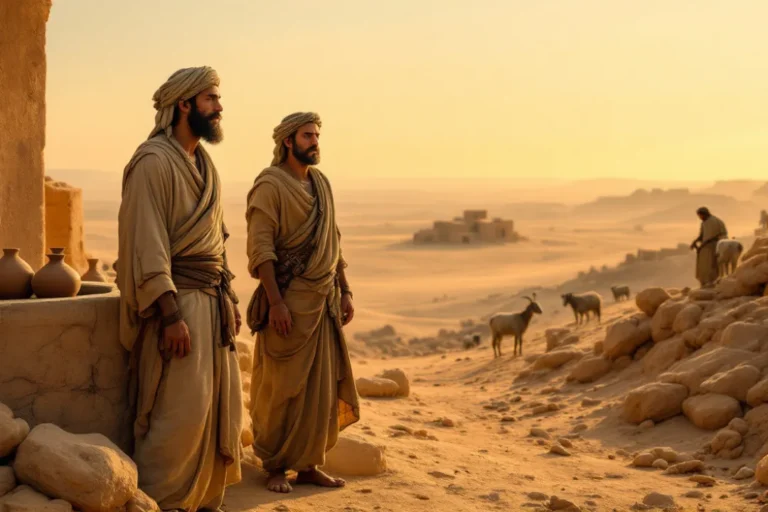
The arrival of Isaac sparked tension that had been simmering beneath the surface of Abraham's household. Sarah's jealousy of Hagar and Ishmael's presence grew unbearable, particularly when it became clear that Abraham favored Isaac as his rightful heir. Unable to tolerate the situation any longer, Sarah demanded that Abraham cast out both Hagar and Ishmael from their home. Though Abraham initially resisted this harsh demand, he eventually complied, believing he was acting under God's instruction. This pivotal moment would separate the brothers forever, setting them on completely different trajectories.
Hagar and Ishmael's Journey
Following their expulsion, Hagar and Ishmael were forced to wander the wilderness of Beersheba, facing the unforgiving conditions of desert life. They endured severe hunger and thirst, their survival hanging by a thread until divine intervention provided them with a miraculous well of water. Rather than breaking his spirit, this ordeal shaped Ishmael into a resilient figure. He became a skilled archer and renowned hunter, developing the practical skills necessary to thrive in the harsh environment around him. His self-sufficiency in the desert would become the defining characteristic of his legacy.
Isaac's Inheritance
Isaac's path diverged sharply from his brother's experience. Remaining in Abraham's household, Isaac inherited his father's wealth, land, and spiritual blessings. His life followed a more conventional trajectory within the patriarchal structure: he married Rebekah and fathered two sons, Jacob and Esau. Crucially, Isaac's descendants became the Israelites, the people whom Hebrew scripture identifies as God's chosen nation. Through Jacob and his offspring, Isaac's lineage would establish a covenant relationship with God that defined an entire civilization.
Similarities and Differences
Despite the vast gulf between their circumstances, Ishmael and Isaac shared meaningful common ground. Both grew up in Abraham's household under the influence of a devout patriarch, and both inherited their father's monotheistic faith. They worshipped the same God and were shaped by his teachings, even as their life experiences pulled them in opposite directions. Yet their divergence was equally profound: one remained sedentary and integrated into settled society, while the other became a nomadic figure of independence; one inherited institutional religious authority, while the other preserved a more individualistic spiritual tradition.
Ishmael: A Wild and Free Spirit
Ishmael's character became defined by a spirit of independence and resilience. Known for his untamed nature and prowess as a hunter and archer, he embraced a nomadic lifestyle that suited both his temperament and his circumstances. He did not merely survive the desert—he mastered it, developing the skills and mindset of a self-reliant wanderer. His legacy extended far beyond his lifetime: his descendants became the Arab nations, inheriting and perpetuating his values of independence, mobility, and adventurous spirit. The cultural imprint he left shaped entire civilizations across the Arabian Peninsula and beyond.
Isaac: A Man of Faith
Isaac's identity centered on quite different virtues. More settled and pious than his brother, Isaac embodied faith and obedience to God's covenant. He inherited not just his father's material wealth but his spiritual authority and religious obligations. His descendants, the Israelites, would build a civilization around agricultural settlement, structured law, and covenant devotion. Where Ishmael represented adaptability and nomadic freedom, Isaac represented the stability of agrarian life and the binding commitments of organized faith. Both approaches had their own dignity and purpose within the larger narrative.
The Lasting Legacy
The story of Ishmael and Isaac transcends simple sibling rivalry; it is a complex tale of faith, destiny, and the different paths human lives can take. Though born to the same father, the brothers' divergent experiences created two distinct cultural and religious trajectories that would influence human history for millennia. Ishmael's wild and enterprising spirit and Isaac's steadfast faith and obedience each left indelible marks on civilization. Their story reminds us that people respond to life's challenges and opportunities in profoundly different ways, and that these responses can have consequences that ripple across generations and continents.
Frequently Asked Questions
What is the relationship between Ishmael and Isaac?
Ishmael and Isaac were half-brothers, both sons of Abraham. Ishmael's mother was Hagar, an Egyptian slave in Abraham's household, while Isaac's mother was Sarah, Abraham's wife. This difference in maternal lineage proved crucial to their distinct roles in religious history.
How did Hagar and Sarah treat each other?
The relationship between Hagar and Sarah was fraught with tension and resentment. Sarah's jealousy of Hagar stemmed from the latter's position as the mother of Abraham's firstborn son. Sarah's treatment of Hagar became so harsh that she ultimately pressured Abraham into expelling both Hagar and Ishmael from the household, an act that would permanently separate the brothers.
What happened to Ishmael after he was sent away?
After his banishment, Ishmael adapted to life in the desert as a nomadic wanderer. He eventually married an Egyptian woman and established his own family line, fathering twelve sons. His descendants flourished and became the foundation of the Arab peoples, carrying forward his legacy of independence and resilience across generations.
What happened to Isaac after he was born?
Isaac's life took a markedly different course. He became the designated heir to Abraham's covenant with God, inheriting both material and spiritual authority. He married Rebekah, and their two sons, Esau and Jacob, continued the patriarchal line. Through Jacob, Isaac's legacy led directly to the establishment of the Israelite nation and its enduring covenant relationship with God.
What is the significance of the story of Ishmael and Isaac?
This narrative carries profound theological and historical significance. The story illustrates how different responses to divine will and circumstance can shape entire peoples and cultures. It also foreshadows the complex relationship between Israelites and Arabs that would define Middle Eastern history. Beyond the religious dimension, the brothers' story explores universal themes of rivalry, inheritance, faith, and the divergent paths that siblings can take when faced with radically different life circumstances.