
Every Sin in the Bible: A Comprehensive Guide
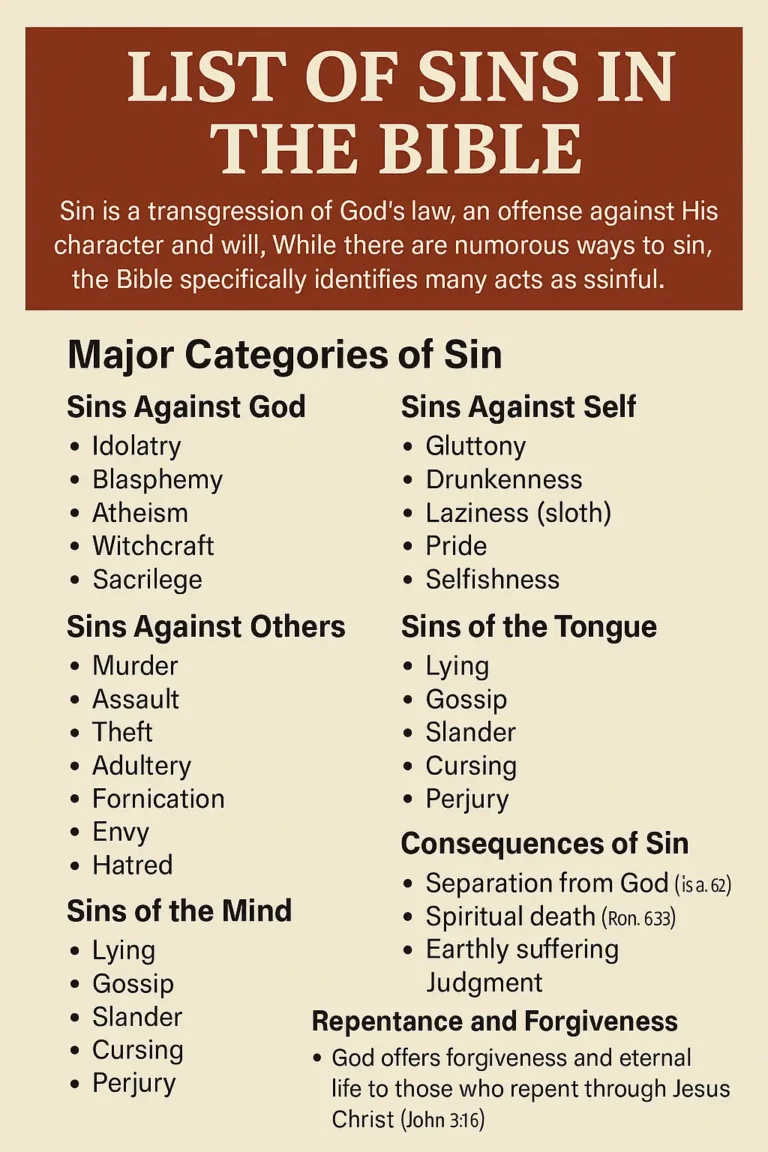
Sin is defined in the Bible as a transgression of God's law, an offense against His holy character and divine will. While human nature can find countless ways to rebel, the Bible explicitly identifies many specific sins, offering a moral framework for living a righteous life.
This article presents a clear and comprehensive list of sins in the Bible, helping readers understand God’s boundaries, the consequences of sin, and the hope of forgiveness through Jesus Christ.
🔍 Major Categories of Sin in the Bible

The list of sins in the Bible can be organized into five major categories. Each highlights a different dimension of rebellion—against God, others, self, and even thought and speech:
1. Sins Against God
These are offenses that directly violate God’s authority and holiness:
- Idolatry – Worshiping anything other than God
- Blasphemy – Speaking irreverently about God
- Atheism – Denial of God's existence
- Witchcraft & Sorcery – Seeking supernatural power apart from God
- Sacrilege – Desecrating sacred things or places
2. Sins Against Others
These sins harm other human beings, violating God's commandments on love and justice:
- Murder
- Assault
- Theft
- Adultery
- Fornication
- Envy
- Hatred
- Oppression and injustice
3. Sins Against Self
These behaviors are destructive to one’s own body, soul, and moral integrity:
- Gluttony
- Drunkenness
- Laziness (sloth)
- Pride
- Selfishness
4. Sins of the Tongue
The Bible warns repeatedly about the power of the tongue to do evil:
- Lying
- Gossip
- Slander
- Cursing
- Perjury (false testimony)
5. Sins of the Mind and Heart
These are internal sins—attitudes and desires that corrupt our inner being:
- Lustful thoughts
- Covetousness
- Unbelief
- Anger
- Bitterness
- Self-righteousness
📚 Complete Biblical List of Sins (Examples with References)
| Category | Specific Sins | Scripture References |
|---|---|---|
| Sins Against God | Idolatry, blasphemy, witchcraft | Exodus 20:3-5, Leviticus 19:31, Matthew 12:31 |
| Sins Against Others | Murder, theft, adultery, slander | Exodus 20:13-16, Romans 1:29-30 |
| Sins Against Self | Gluttony, pride, drunkenness | Proverbs 23:20-21, James 4:6 |
| Sins of the Tongue | Lying, gossip, cursing | Proverbs 6:16-19, Ephesians 4:29 |
| Sins of the Mind | Lust, anger, unbelief, covetousness | Matthew 5:28, Hebrews 3:12, Colossians 3:5 |
⚖️ Consequences of Sin
Scripture doesn't sugarcoat this topic. The Bible is remarkably clear about the consequences of sin, and understanding them isn't meant to induce despair but to help us grasp why grace matters so much. Think of these consequences less as arbitrary punishments and more as the natural fallout of choosing our own way over God's design.
- Separation from God: Sin doesn't just bend the rules; it creates distance in a relationship. As Isaiah put it, “Your iniquities have separated you from your God” (Isaiah 59:2). It's the same kind of rift you'd feel after betraying someone's trust—except here, it's our connection to our Creator that's fractured.
- Spiritual death: Paul doesn't mince words either: “The wages of sin is death” (Romans 6:23). This isn't only about physical mortality—it points to a deeper, spiritual deadness that cuts us off from the life God intended for us.
- Earthly suffering: Beyond the eternal implications, sin has a way of wrecking our everyday lives here and now. It invites turmoil, bondage, and guilt into our lives—think of the anxiety of hiding a lie, or the way old habits can feel like chains we can't shake.
- Judgment: Left unaddressed, unrepentant sin leads to eternal separation from God—a sobering reality that underscores why repentance and forgiveness aren't just religious formalities, but matters of life and death.
✝️ Repentance and Forgiveness
Despite the severity of the list of sins in the Bible, God’s mercy is greater. Through repentance and faith in Jesus Christ, forgiveness is possible:
“If we confess our sins, He is faithful and just to forgive us...” (1 John 1:9)
- Jesus’ sacrifice (John 3:16) made it possible for sinners to be cleansed.
- Repentance involves turning away from sin and aligning one’s life with God’s will.
- Righteousness is not earned, but received through grace and a renewed heart.
✅ Final Thoughts: Why the List of Sins in the Bible Matters
Understanding the list of sins in the Bible helps us discern God’s moral expectations, recognize our own need for transformation, and seek His grace through Christ. The more we understand the nature of sin, the more we appreciate the depth of God's forgiveness and the freedom found in living a life of obedience.