
Bible Verses for Praises: Learning to Worship in Every Season
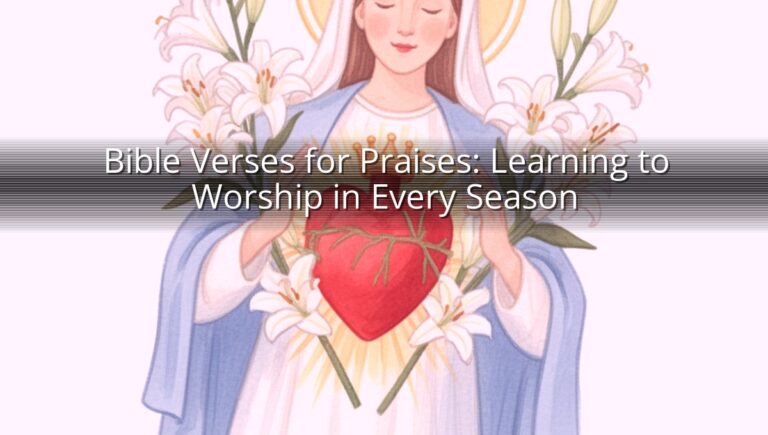
Bible Verses & Devotional
Bible Verses for Praises: Learning to Worship in Every Season
Praises don’t deny your feelings—they redirect your attention. When circumstances press in, worship can feel hard, yet God repeatedly invites His people to praise Him with trust, gratitude, and reverence. These verses gather together a powerful encouragement: praise steadies a worried heart, strengthens faith in suffering, and reminds us that God’s love is reliable. Whether you’re praising after victory, during uncertainty, or in a season of quiet struggle, Scripture teaches that worship is both a response and a practice. As you read, let these promises shape the way you speak, sing, pray, and think. The goal isn’t pretending everything is fine; it’s learning to see God clearly again. Take a breath, open your heart, and begin with Scripture—because there is always a reason to praise God.
Bible Verses
Psalms 34:18 (King James Version)
“The LORD is nigh unto them that are of a broken heart; and saveth such as be of a contrite spirit.”
It assures the brokenhearted that God is near, so praise becomes possible because His presence comforts.
Psalms 145:18 (King James Version)
“The LORD is nigh unto all them that call upon him, to all that call upon him in truth.”
This promise connects praise with prayerful dependence, reminding you that God hears those who call on Him.
Isaiah 12:4-6 (King James Version)
“And in that day shall ye say, Praise the LORD, call upon his name, declare his doings among the people, make mention that his name is exalted. Sing unto the LORD; for he hath done excellent things: this is known in all the earth. Cry out and shout, thou inhabitant of Zion: for great is the Holy One of Israel in the midst of thee.”
These verses call believers to give thanks and make known God’s greatness, offering a joyful framework for worship.
Psalms 150:1-6 (King James Version)
“Praise ye the LORD. Praise God in his sanctuary: praise him in the firmament of his power. Praise him for his mighty acts: praise him according to his excellent greatness. Praise him with the sound of the trumpet: praise him with the psaltery and harp. Praise him with the timbrel and dance: praise him with stringed instruments and organs. Praise him upon the loud cymbals: praise him upon the high sounding cymbals. Let every thing that hath breath praise the LORD. Praise ye the LORD.”
This “worship anthem” expands praise beyond feelings, inviting every aspect of life to honor God.
Philippians 4:6-7 (King James Version)
“Be careful for nothing; but in every thing by prayer and supplication with thanksgiving let your requests be made known unto God. And the peace of God, which passeth all understanding, shall keep your hearts and minds through Christ Jesus.”
It links thanksgiving with peace, showing that praising God can calm anxiety and guard the heart and mind.
Praise Is a Choice That Trains Your Heart
Many people assume praise must wait for perfect circumstances. Scripture presents something deeper: praise can begin as a decision. Psalm 34:1 invites worship as a steady lifestyle—“I will bless the LORD… His praise…” It’s not dependent on mood alone. Instead, it reflects a heart that chooses to remember God’s character and respond with gratitude.
When you feel spiritually drained, praise can seem “too small” compared to the weight of your problems. Yet God often works through simple faith practices. Praise is not a performance for God; it’s formation for you. As you repeatedly turn your attention to what is true about Him—His faithfulness, His nearness, His goodness—your emotions gradually align with the truth rather than with the noise of the moment.
This is why praise and God’s presence belong together. Psalm 34:18 teaches that God is near to the brokenhearted. If your life feels fractured, this verse gives you permission to praise without pretending you’re not hurting. You can praise God for His nearness even before your heart feels whole.
Finally, Isaiah 12:4-6 shows that praise is also proclamation. The faithful response to God’s saving work is thanksgiving that spills into speech. That means praise isn’t only something you feel inside; it’s something you express—through words, prayers, and worshipful honesty.
In everyday life, this might look like reading one verse, pausing, and saying, “Lord, You are near,” or “God, You hear me,” or “I will give thanks because You are great.” Over time, these responses become a spiritual rhythm. Praise trains your heart to notice God again.
Praise Turns Anxiety Toward God’s Peace
Anxiety tends to narrow your focus: you replay fears, calculate outcomes, and anticipate the worst. But Philippians 4:6-7 interrupts that cycle. Paul instructs believers not only to pray, but to pray with thanksgiving. In other words, praise is part of the pathway out of worry.
The sequence matters. Thanksgiving isn’t an accessory; it’s an expression of trust. When you give thanks, you’re declaring that God’s character matters more than your immediate circumstances. That declaration doesn’t erase problems overnight, but it changes the way your heart processes them.
Paul adds that God’s peace will guard your heart and mind. This is important: peace is not merely a feeling that arrives; it’s a protection that God provides. Praise helps you receive that protection by re-centering your thoughts on the One who hears.
Psalm 145:18 complements this well. The verse assures that God is near to all who call on Him, to all who call on Him in truth. Sometimes praise feels distant because you feel like your prayers are imperfect. Yet Scripture points to calling on God in truth—meaning honest, faith-filled dependence. Praise can be born even out of weakness when it’s offered sincerely.
So, when anxiety rises, don’t wait to become calm before you praise. Begin with small acts of thanksgiving. Say, “Lord, thank You that You hear me.” Then continue, “Lord, thank You that You are guarding my heart and mind.” As you practice this, worry loses some of its grip.
Praise also expands your perspective. Instead of being trapped inside “what if,” worship reminds you of “who God is.” That shift—fear to faith—often happens through repeated engagement with God’s Word. The verses above are not just inspirational lines; they are spiritual tools God uses to steady you.
Praise in Trials: Worship With Purpose, Not Denial
Many Christians struggle with praise when suffering lasts longer than expected. It can feel unfair to sing or thank God when you’re still waiting for answers. Yet James 1:2-4 provides a surprising angle. The passage encourages believers to consider trials as something that can produce perseverance, maturity, and completeness.
This does not mean trials are “good” in themselves, nor does it suggest you should ignore pain. Instead, it reframes purpose. If God can use trials to shape endurance and spiritual maturity, then praise becomes more than celebration—it becomes trust in God’s work.
When you’re in a hard season, praise might sound different. It may not be loud and joyful; it may be quiet, trembling, and honest. But God welcomes that kind of worship. Psalm 34:18 reminds you that He is near to the brokenhearted. Nearness is not permission to quit—it’s comfort that sustains you while God works.
Psalm 150:1-6 then gives a wide, practical picture of worship. It calls everything that has breath to praise the LORD. That means praise isn’t reserved for the emotionally stable. It’s available to the weary, the grieving, and the waiting. Even if your circumstances haven’t changed, worship acknowledges that God remains worthy.
Isaiah 12:4-6 adds another layer: praise is a response to God’s salvation and greatness. When you’re suffering, you may not yet see deliverance in full, but you can still praise God for what He has promised and what He has already done.
In daily practice, this could mean praising God for endurance (“Lord, teach me perseverance”), for wisdom (“Lord, I need Your guidance”), and for the hope that grows through trials. Praise doesn’t deny the storm; it anchors your soul to the God who is storm-proof.
Ultimately, worship in trials is a spiritual declaration: “I trust You even now.” And that trust can steady your mind, strengthen your faith, and keep you moving forward.
Make Praise an Everyday Habit (Not an Emergency Response)
When praise becomes an emergency response—only offered when the crisis is over—you may miss its strengthening power. Psalm 150:1-6 challenges believers to worship as a comprehensive life practice. It’s a call for every breath to praise. That means praise belongs in ordinary routines: the drive to work, the cleaning of a room, the quiet walk at night.
One reason this matters is that your “default thinking” will either be shaped by worry or by worship. If you only read Scripture when you feel desperate, your heart may not have spiritual fuel ready when pressure hits. But if you build praise into your daily rhythm, you’ll have something to lean on.
Psalm 34:1 provides a simple starting point: decide to bless the Lord continually. This can be done with brief prayers. For example, before meals, before bed, or right when you wake up, you can pause and say, “Lord, I will bless You.” Then read one verse from this list as a reminder of what God is like.
Psalm 145:18 encourages calling on God in truth. Try pairing Scripture with honest speech. If you feel overwhelmed, say so. If you’re grateful, name it. Praise grows when it’s authentic.
Isaiah 12:4-6 highlights thankfulness and proclamation. Consider using praise in conversation—sharing what God has been teaching you, how He has helped you, or what you’re grateful for in this moment. That’s how worship becomes contagious within a community.
Finally, Philippians 4:6-7 teaches that thanksgiving and prayer work together. You can structure your day with that pattern: (1) pray about what’s on your mind, (2) add thanksgiving for God’s faithfulness, (3) ask for His peace to guard your heart and mind.
Praise as a habit doesn’t guarantee life will be easy. But it ensures your heart is pointed toward God before the storm gets loud. Over time, you’ll discover something profound: worship isn’t only what you do when you feel strong—worship is how you become strong.
A Simple 7-Day Plan to Turn Scripture into Praise
Pick one verse reference from the list each day. Then practice a short “praise loop” in under five minutes.
1) Read: Slowly read the verse reference and ask, “What does God reveal about Himself here?”
2) Respond in truth: Say one sentence back to God. If you’re brokenhearted, use Psalm 34:18 language: “Lord, thank You that You are near.” If anxiety is high, use Philippians 4:6-7: “Lord, I bring my worries to You with thanksgiving.”
3) Offer thanksgiving: Write down one specific reason to praise today (a mercy, an answered prayer, a promise, or even the ability to breathe and pray).
4) Speak it: Turn your response into a short prayer or worship line. Isaiah 12:4-6 reminds us praise can be proclamation—so speak it out, even quietly.
5) End with peace: Before you move on with your day, ask God to guard your heart and mind with His peace (Philippians 4:7).
Optional: If you lead others (family, group, students), begin your time with Psalm 150:1-6 as a worship cue. Encourage everyone to share one breath-worthy reason to praise.
If your emotions fight you, don’t abandon the practice. Praise is a faith action. God honors sincere worship and uses it to reshape your inner life.
Frequently Asked Questions
What are some scripture for praising God when I feel overwhelmed?
Try Psalm 34:18 for comfort when you’re brokenhearted, and Philippians 4:6-7 for anxiety—praise and thanksgiving belong in your prayers. Psalm 145:18 also helps because it assures God listens to those who call on Him in truth.
Which verses to worship God are best for difficult seasons or trials?
James 1:2-4 reframes trials with purpose and growth, reminding you that God uses pressure to shape perseverance. Psalm 34:18 strengthens you with God’s nearness, while Psalm 150:1-6 keeps your worship focused on God’s worth even when life is hard.
How can Bible passages for giving praise help with anxiety?
Philippians 4:6-7 directly connects thanksgiving with the peace that guards your heart and mind. When worries rise, pray specifically and include gratitude, even if it feels small. Over time, your thoughts learn to return to God’s character.
Are there promises in the Bible for praise when answers aren’t here yet?
Yes. Psalm 145:18 assures God hears you, and Psalm 34:18 reminds you He is near to the brokenhearted. Isaiah 12:4-6 encourages praise that points to God’s saving greatness, even while you’re still waiting to see it fully unfold.
A Short Prayer
Lord, You are worthy of praise in every season. When my heart feels heavy, draw me close as You promised in Your Word. Teach me to turn my worries into prayerful thanksgiving and to speak worship with truth, not fear. Guard my heart and mind with Your peace, and shape me through trials with perseverance. Help me offer praise not only when life feels bright, but because You are always faithful. Amen.