
What a Catholic pilgrimage is and how to plan your own
You keep hearing friends mention a trip to Lourdes, the Camino de Santiago, or the Holy Land, and something in you wants to understand what makes those journeys different from an ordinary vacation. A Catholic pilgrimage is a journey made with a specific spiritual purpose: to pray at a sacred place, seek healing or grace, give thanks, or deepen conversion. It is movement toward God made visible through actual footsteps, miles, and sacrifice.
Unlike sightseeing, a pilgrimage asks something of you before you even arrive. The destination matters, but so does the posture you bring to it: openness, humility, and a willingness to let the journey change you rather than just entertain you.
What makes a trip a pilgrimage rather than ordinary travel
The difference between a pilgrimage and a vacation is not the airplane ticket or the hotel room. It is intention. A Catholic pilgrim travels to a place set apart by tradition, miracle, or memory of a saint, and goes there specifically to pray, seek grace, or fulfill a promise.
Several elements tend to mark a true pilgrimage:
- A sacred destination — a shrine, basilica, apparition site, tomb of a saint, or place tied to the life of Christ.
- A spiritual motive — thanksgiving, petition, penance, conversion, or simply the desire to grow closer to God.
- Some form of sacrifice — time, money, physical effort, or discomfort offered willingly as part of the prayer.
- Participation in the sacraments — many pilgrims go to confession, attend Mass, or receive Communion at the shrine itself.
You can visit St. Peter's Basilica as a tourist, snapping photos of Michelangelo's Pietà and moving on. Or you can visit it as a pilgrim, pausing to pray at the tomb of the apostle, attending Mass, and carrying intentions for people back home. The building is the same; the heart brought to it is not.
A simple test: if you removed the prayer from your trip, would anything essential be missing? If the answer is yes, you are planning a pilgrimage, not just a getaway.
The major Catholic pilgrimage destinations around the world
Catholic tradition has produced a long list of sites that draw millions of pilgrims every year. Some are ancient, tied directly to the life of Christ or the apostles; others are more recent, connected to approved Marian apparitions or the lives of modern saints.
Sites connected to the life of Christ
- The Holy Land — Bethlehem, Nazareth, and Jerusalem, including the Church of the Holy Sepulchre and the Via Dolorosa, walked by pilgrims who want to retrace the Gospel narrative on the actual ground where it unfolded.
- Rome — home to the tombs of Saints Peter and Paul, the four major basilicas, and centuries of martyrs' relics beneath the city's churches and catacombs.
Marian shrines
- Lourdes, France — where Mary appeared to Saint Bernadette Soubirous in 1858, and where the spring water is associated with physical and spiritual healing.
- Fatima, Portugal — site of the 1917 apparitions to three shepherd children, now a major center of prayer for peace and conversion.
- Guadalupe, Mexico — the basilica housing the image associated with the 1531 apparition to Juan Diego, among the most visited Catholic shrines in the world.
- Czestochowa, Poland — home to the icon of the Black Madonna, a destination for Polish pilgrims for centuries.
Walking pilgrimages
- The Camino de Santiago — a network of routes across Spain and Portugal leading to the tomb of Saint James in Santiago de Compostela, walked on foot or by bicycle over days or weeks.
- The Via Francigena — an ancient route from northern Europe to Rome, increasingly popular with pilgrims who prefer a quieter alternative to the Camino.
Closer to home, the United States has its own pilgrimage sites, including the National Shrine of the Immaculate Conception in Washington, D.C., the Shrine of Our Lady of Guadalupe in La Crosse, Wisconsin, and smaller diocesan shrines scattered across nearly every state.
How to prepare spiritually and practically before you leave
A pilgrimage asks more of you than a packing list. Preparing well means attending to both the soul and the logistics, since neglecting either one can derail the trip.
Spiritual preparation
- Clarify your intention. Are you going to give thanks, to ask for healing, to pray for someone specific, or to seek direction for a decision? Naming it helps you stay focused once you arrive.
- Go to confession before you leave. Many pilgrims begin the journey in a state of grace so the whole trip becomes an extension of that reconciliation.
- Read ahead about the site. Knowing the history of an apparition, a saint's life, or the significance of a relic makes the prayer there far richer than arriving uninformed.
- Carry intentions for others. Pilgrims have long carried written petitions, rosaries, and photographs to leave or pray over at a shrine on behalf of family and friends.
Practical preparation
- Choose between a guided group and independent travel. Parish and diocesan pilgrimages often include a priest who offers daily Mass, which many pilgrims find invaluable.
- Budget realistically for flights, lodging, donations at shrines, and any required visas.
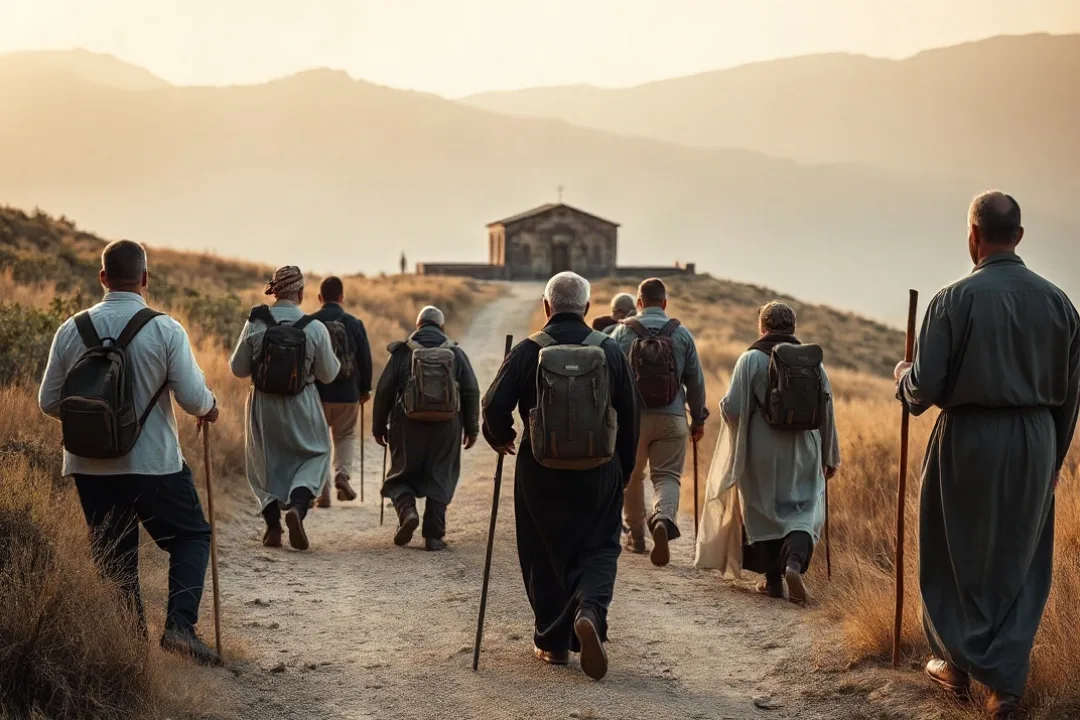
- Pack for walking. Comfortable, broken-in shoes matter more than almost anything else, especially on walking pilgrimages like the Camino.
- Bring a small prayer kit: a rosary, a pocket missal or breviary, and a notebook for reflections.
As one well-known pilgrim's prayer puts it, in words traditionally attributed to St. Francis of Assisi:
Lord, make me an instrument of your peace.
Carrying that kind of simple, repeatable prayer gives you something to return to when fatigue or distraction sets in during a long journey.
What actually happens during a guided pilgrimage
If you join a parish or diocesan group, the days tend to follow a rhythm that balances prayer, travel, and rest. Understanding that rhythm ahead of time helps you adjust expectations.
A typical day might include:
- Morning Mass, often celebrated at the shrine itself or in a nearby chapel.
- Guided visits to the main sites, usually with a local guide who explains the history and significance.
- Free time for personal prayer, confession, or simply sitting quietly in a church.
- Group reflection in the evening, sometimes with the Rosary prayed together or a short talk from the accompanying priest.
Group pilgrimages can be physically demanding, especially walking routes or trips that involve long hours standing in lines at major basilicas. They can also be emotionally intense: it is common to feel unexpectedly moved to tears at a shrine, even for pilgrims who did not expect a strong reaction.
Good to know: many shrines offer the Sacrament of Reconciliation in multiple languages, with priests available almost continuously during peak pilgrimage seasons. Lourdes and Fatima, for example, schedule confession hours specifically to accommodate the volume of pilgrims.
Making a meaningful pilgrimage without leaving the country
Not everyone has the time or money for Rome or the Holy Land, and that does not have to stop the practice of pilgrimage. The Catholic tradition has always recognized smaller, local versions of the same spiritual act.
Consider these options closer to home:
- Visit a diocesan shrine or basilica within driving distance, even if it means a half-day trip rather than a flight.
- Walk to a church instead of driving, turning an ordinary errand into a short act of pilgrimage with intention attached.
- Join a parish-organized day trip to a nearby National Shrine, grotto, or monastery chapel; many dioceses publish lists of approved pilgrimage sites within their region.
- Visit during a Jubilee Year or Holy Year, when the Church grants special indulgences for pilgrimages to designated churches, including some that do not require international travel.
What matters is not the distance covered but the intention carried. A two-hour drive to a quiet grotto, made with real prayer and purpose, can mark someone's life as deeply as a flight to Jerusalem.
Common mistakes that take away from the experience
Pilgrims who return disappointed often point to the same handful of avoidable issues. Knowing them ahead of time can save a trip from feeling rushed or hollow.
- Overpacking the itinerary. Trying to see six shrines in three days leaves no room for the stillness that makes a pilgrimage different from a bus tour.
- Treating the trip as a photo opportunity first. Images matter less than attention; it helps to put the phone away during Mass and quiet prayer.
- Ignoring physical limits. Walking pilgrimages especially require honest assessment of fitness level and footwear well before departure.
- Skipping preparation at home. Arriving without having read about the apparition, the saint, or the history of the site means missing most of what makes the place meaningful.
A pilgrimage rewards patience. The long lines, the early Masses, the tired feet, and the unpredictable weather are not obstacles to the spiritual experience; for many pilgrims, they turn out to be part of it.
Frequently asked questions
What is the difference between a pilgrimage and regular religious tourism?
Both can involve visiting the same churches and shrines, but a pilgrimage is defined by spiritual intention: prayer, penance, thanksgiving, or seeking grace. Religious tourism focuses mainly on history, art, or culture without that same deliberate spiritual purpose guiding the trip.
Do Catholic pilgrims need special permission from their priest or diocese?
No formal permission is required for most pilgrimages, though it helps to tell your parish priest, since many parishes organize group trips with a chaplain. For Jubilee Year indulgences, specific churches and conditions are usually announced by the diocese or Vatican.
How long should a first Catholic pilgrimage last?
Many first-time pilgrims choose trips of five to ten days, long enough to visit the main sites without feeling rushed. Shorter local pilgrimages of a single day are also valid and can be a good way to start before attempting an international trip.
Is the Camino de Santiago only for very fit or young travelers?
No. Pilgrims of many ages and fitness levels walk sections of the Camino each year, and routes can be shortened or split across multiple trips. Some pilgrims also travel shorter distances by bicycle or arrange for luggage transport to reduce physical strain.
Leave a Reply