
Today's daily text: what it means and how to use it well
You wake up, grab your phone, and before checking anything else you type in a search for today's daily text. Maybe it's a habit you picked up years ago, or maybe someone mentioned it and you want to understand what people are actually looking for. Either way, the daily text is simply a short daily reading meant to give you a scripture and a brief thought to carry with you through the day.
For many readers, "the daily text" refers specifically to the annual calendar-style publication used by Jehovah's Witnesses, officially titled something like Examining the Scriptures Daily in recent years. Each page covers one calendar day and pairs a short Bible verse with a few paragraphs of explanation drawn from earlier magazine articles or convention talks. But the broader idea of a "daily text" — a bite-sized scripture plus commentary meant to be read once a day — also shows up in other Christian traditions under names like devotionals, daily bread, or daily meditations.
What the daily text actually is
At its core, the daily text is a structured daily reading plan. Instead of opening the Bible at random or trying to decide which book to study, you get a single verse chosen for you, along with a short written reflection that explains the verse's context or draws out a practical lesson.
In the version produced for Jehovah's Witnesses, the format has stayed fairly consistent for decades:
- A scripture reference and a short quotation or paraphrase at the top of the page
- A few paragraphs of commentary, usually two to four, explaining the verse
- Occasional footnotes pointing to the original source material, such as a Watchtower magazine issue or a talk given at an assembly
- Sometimes a closing thought or question meant to prompt personal reflection
The text is printed in a small calendar book that many households keep on a kitchen counter or nightstand, and it's also distributed digitally through an app and a website, which is usually what people mean when they search for today's reading specifically.
Where to find today's daily text
If you're trying to track down the current day's reading, there are a handful of reliable places to look:
- The official website associated with the publisher usually posts the current day's text on its homepage or in a dedicated section, updated at midnight local time or shortly after.
- A dedicated app often lets you read the text offline, bookmark favorites, and even listen to an audio version if you prefer listening during a commute or while doing chores.
- The printed calendar book, distributed yearly, remains popular with people who like turning a physical page each morning rather than looking at a screen.
- Social media accounts connected to local congregations sometimes repost the day's text as an image, which is convenient but worth double-checking against an official source if you want the full commentary.
Tip: if you want consistency, pick one source — app, website, or printed book — and stick with it. Switching between sources can lead to confusion if formatting or wording differs slightly between editions.
How the daily text is actually put together
The scripture chosen for each day isn't random. Editors typically select a verse that connects to a broader theme being emphasized that year, then pull commentary from material that has already been published and reviewed. This means the thought you read today was likely written and approved well in advance, sometimes a year or more before it appears on your screen.
Because the commentary draws from existing publications, you'll often notice a consistent voice and tone across different days, even though the specific verses and topics vary widely — from encouragement during hardship to practical advice about relationships, work, or parenting.
Why the same verse can appear more than once over the years
Readers who have followed the daily text for a long time sometimes notice a familiar verse resurfacing after several years. That's intentional. Scripture is deep enough that the same passage can support different angles of discussion depending on what theme is being highlighted that year, so repetition isn't a mistake — it's a deliberate choice to revisit a verse with fresh context.
How to get more out of reading it each day
Reading the daily text in under a minute is easy, but getting something lasting out of it takes a little more intention. Consider building a short routine around it rather than treating it as something to scroll past.
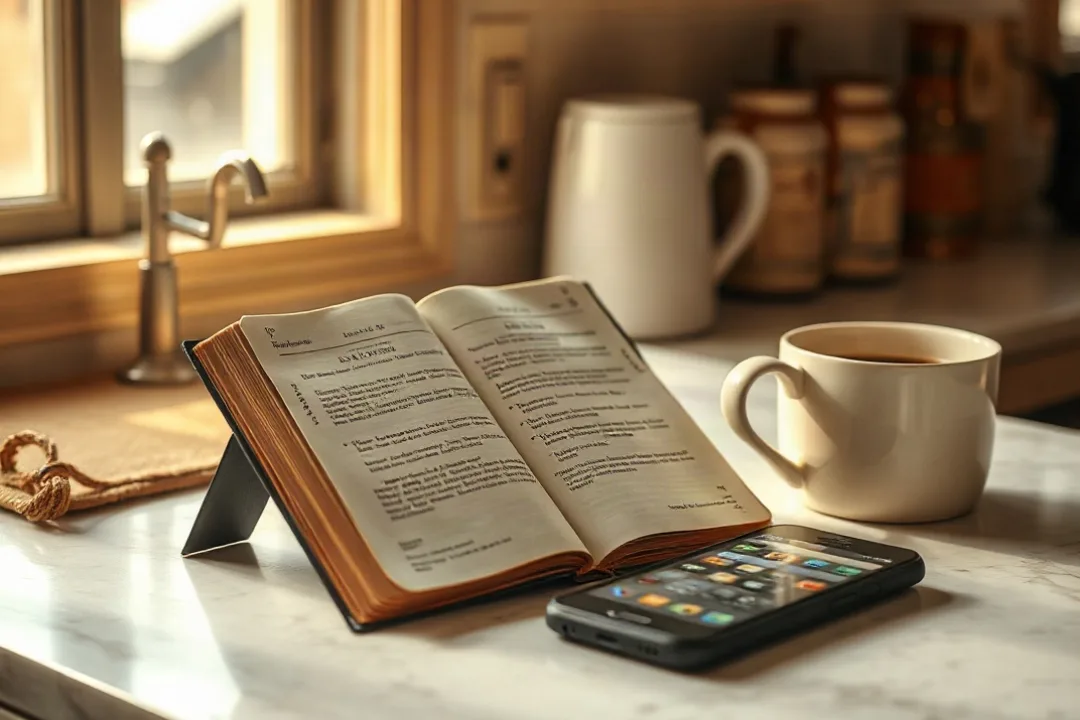
- Read it at a consistent time, whether that's with morning coffee, during a commute, or right before bed, so it becomes a habit rather than an afterthought.
- Pause before moving on. Ask yourself what the verse is actually saying before reading the commentary, rather than jumping straight to the explanation.
- Write down one sentence that summarizes what stood out to you. This single habit does more for retention than rereading the whole page several times.
- Connect it to something happening in your day. If the text talks about patience and you have a difficult conversation ahead, notice that connection on purpose.
- Discuss it with someone else</strong, whether a spouse, a friend, or a small group, even briefly. Explaining a thought out loud tends to deepen understanding.
Some readers also keep a small notebook specifically for the daily text, jotting down the date, the reference, and a short personal note. Over a year, that notebook becomes a simple record of what you were thinking about and struggling with at different points.
Common mistakes people make with the daily text
Treating the daily text as a box to check rather than a moment to reflect is the most common pitfall, but it's far from the only one. Watch out for these habits:
- Reading it too fast. Skimming the verse and commentary in ten seconds rarely leaves anything behind. Slowing down, even by thirty seconds, makes a measurable difference in what sticks.
- Relying only on secondhand summaries. Screenshots and reposts are convenient, but they sometimes crop out part of the commentary or miss the footnote that explains where the thought came from.
- Skipping days and trying to catch up all at once. Reading five days' worth of text back to back defeats the purpose of a daily rhythm; it's better to simply pick up with today's reading and move forward.
- Not applying it personally. It's easy to nod along with a verse about kindness or patience without asking how it applies to an actual relationship or situation in your own life right now.
- Using it as a substitute for deeper study. The daily text is meant to be a starting point, not the only Bible reading you do. Readers who want more depth usually pair it with a longer weekly study session.
Using the daily text for family or group discussion
Many households use the daily text as a short anchor for family worship or a brief morning discussion before everyone heads out the door. Because each reading is short, it works well for groups with mixed ages or attention spans.
A simple approach that works for families with children involves reading the verse aloud, letting a child explain what they think it means in their own words, and then reading the commentary together to see how close they got. For adult groups or couples, the discussion often shifts toward how the thought applies to decisions made that week, whether at work, in parenting, or in managing stress.
A thought is only as useful as the moment you decide to act on it — the daily text works because it asks for a decision, not just a reading.
How the daily text differs from other daily devotionals
Plenty of Christian publishers produce daily devotionals, and on the surface they look similar: a verse, a short reflection, a date. The differences usually come down to source material and tone.
- Source material: the Jehovah's Witnesses' daily text draws its commentary almost entirely from previously published Watchtower-related material, while many other devotionals are written fresh each year by a single author or small team.
- Length and style: some devotionals include personal stories or anecdotes from the author's life, while the daily text tends to stay close to scriptural explanation without much personal narrative.
- Distribution: the daily text is tied closely to congregation life, often discussed briefly at meetings, whereas general devotionals are usually a private, individual practice.
- Continuity: because the daily text follows an annual theme, reading it from January through December gives a sense of a connected thread, something not every devotional is designed to do.
None of these differences make one approach better than another — they simply reflect different goals. If your aim is a quick daily touchpoint with scripture tied to a specific faith community's teaching, the daily text fits that purpose well. If you're looking for broader devotional variety, you might end up mixing sources.
Building today's reading into a longer habit
One reading rarely changes much on its own, but a year of consistent daily readings tends to shift how someone thinks about patience, honesty, or relationships, simply through repeated exposure and reflection. The value isn't in any single day's text; it's in the cumulative effect of showing up for it regularly.
If you've only recently started checking today's daily text, give yourself a realistic goal — a week, then a month — rather than expecting an instant shift in mindset. Habits around reflection build slowly, and missing a day here or there doesn't undo the ones you've already read.
Frequently asked questions
What time does today's daily text usually update?
Most official sources update the daily text at midnight or shortly after, based on the local time zone of the publisher. If you're checking from a different time zone, the date shown may briefly lag behind or run ahead of your local calendar day.
Can I read past daily texts if I missed a few days?
Yes, most apps and websites keep an archive organized by date, so you can go back and read any previous day's text. It's generally more useful to continue with today's reading and revisit missed days later rather than trying to catch up all at once.
Is the daily text the same every year?
No, the scripture selections and commentary change annually, though some verses may reappear over the years under a different theme. Each year's calendar book or digital edition is typically built around a specific overarching topic chosen in advance.
Do I need a printed book to follow the daily text?
Not necessarily. A free app and an official website both publish the current day's reading, often with an audio option. The printed calendar book is simply an alternative format for people who prefer reading on paper.
Leave a Reply