
The journey to Emmaus: what it means and why it matters
The journey to Emmaus refers to the walk two disciples of Jesus took from Jerusalem to a nearby village called Emmaus on the same day his tomb was found empty. According to the Gospel of Luke (24:13-35), a stranger joined them on the road, explained the scriptures to them, and was only recognized as the risen Jesus once he broke bread with them at the table. The story is one of the most studied resurrection accounts in the New Testament because it centers on recognition, doubt, and the moment ordinary hospitality becomes something far more significant.
Readers come back to this story for different reasons. Some want to understand the biblical text itself. Others are drawn to the emotional arc of two grieving men who don't realize they're talking to the person they thought they had lost. Still others want to know why the phrase "Emmaus moment" shows up so often in sermons, books, and retreats. All of these threads are worth untangling.
What actually happens in the Emmaus account in Luke 24
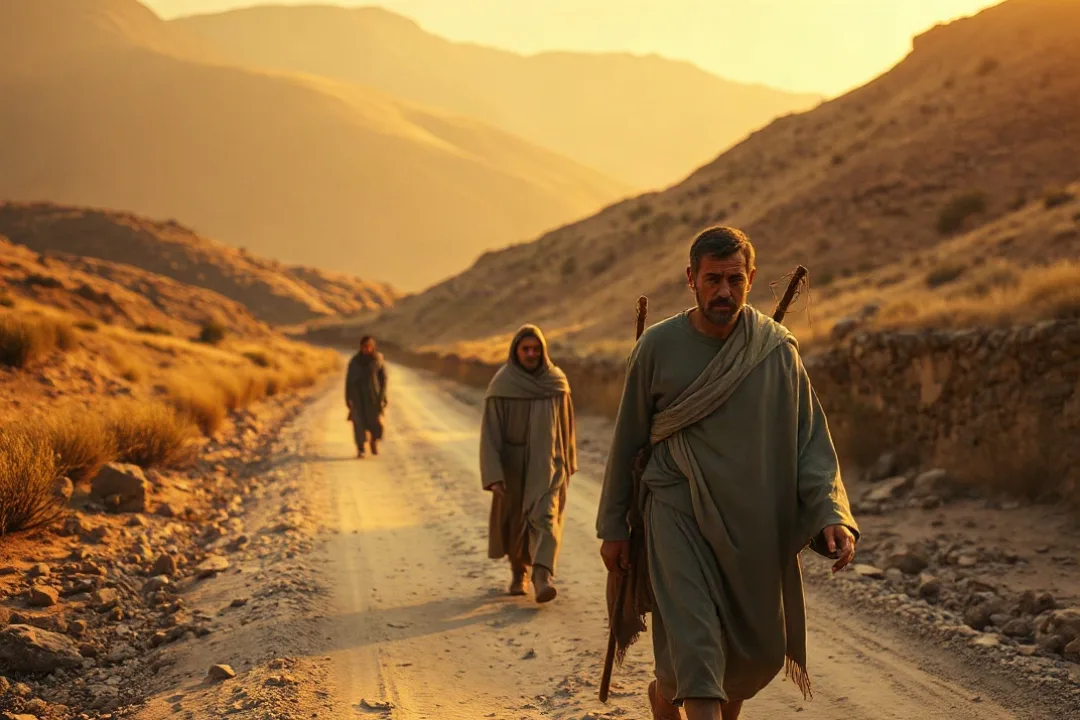
The narrative opens on the same day as the resurrection. Two disciples, one named Cleopas, are walking away from Jerusalem toward Emmaus, a village Luke places about seven miles from the city. They are talking about the events of the previous days: the arrest, crucifixion, and the strange reports from the women who said the tomb was empty.
A third person joins them on the road. Luke tells readers plainly that this is Jesus himself, but the two travelers don't recognize him. Several details matter here:
- The stranger asks what they're discussing, and they're surprised he hasn't heard the news.
- They describe Jesus as a prophet who was handed over to be crucified, and they admit their hope that he was the one to redeem Israel had been shaken.
- The stranger responds by walking them through the Hebrew scriptures, showing how the prophets had already pointed to a suffering messiah.
- As they near Emmaus, the two disciples urge the stranger to stay with them for the evening meal rather than continue on.
It's at the table, when the guest takes bread, blesses it, and breaks it, that the disciples finally recognize him. The moment he's known, Jesus disappears from their sight. The two immediately get up and return to Jerusalem to tell the other disciples what happened, arriving to find that reports of the resurrection are already spreading.
Where Emmaus was and why the setting is significant
Scholars have never settled with certainty on the exact location of ancient Emmaus. Several sites in the region west of Jerusalem have been proposed over the centuries, including the towns now called Abu Ghosh, El-Qubeibeh, and Motza, among others. The uncertainty isn't a flaw in the story; it reflects how ordinary and unremarkable the destination was meant to be.
That ordinariness is part of the point. Emmaus wasn't a holy city or a center of religious authority. It was simply where two disciples happened to be headed, likely toward home or lodging, after a devastating week. The resurrection, in this account, doesn't first appear in the temple or to a crowd. It appears on a dusty road to two people who are tired, confused, and heading in the wrong direction, away from Jerusalem rather than toward it.
A quiet detail worth noticing: the disciples were walking away from the place where the resurrection news was emerging. The story suggests that recognition doesn't always happen where you expect it, or even where you're looking for it.
Why didn't the disciples recognize Jesus right away
This question has occupied commentators for centuries, and there's no single accepted answer. Several explanations are commonly offered, and they aren't mutually exclusive.
- Grief and distraction: the two men were absorbed in their own sorrow and confusion, which can narrow a person's attention and make even a familiar face hard to place.
- Altered appearance: some readers point to other resurrection accounts where Jesus appears changed in some way, suggesting the risen body wasn't instantly identical to how he looked before.
- Theological emphasis: Luke may be making a deliberate point that recognizing Jesus isn't primarily about sight. It happens through the explanation of scripture and through the shared action of breaking bread, not through visual identification alone.
This last point is the one most preachers and theologians return to. The disciples' eyes were "kept from recognizing him," as Luke puts it, until a specific ritual gesture, the breaking of bread, opens their understanding. The sequence matters: first the word is explained, then the meal is shared, and only then does recognition arrive. For early Christian communities reading this account, the pattern would have echoed their own experience of hearing scripture read and then gathering for a shared meal.
What the burning hearts and the breaking of bread represent
After Jesus vanishes, the two disciples ask each other whether their hearts had been "burning" while he spoke with them on the road. This image has become one of the most quoted lines associated with the story, often used to describe a sudden inner conviction or a feeling of truth settling into place before a person can fully explain why.
The breaking of bread carries its own weight. For readers familiar with Luke's Gospel, the gesture recalls the earlier meal where Jesus took bread, blessed it, broke it, and gave it to his disciples the night before his death. Scholars generally see this repetition as intentional. Luke seems to be showing that the presence of the risen Jesus is made known in the same act that he had instituted earlier, suggesting continuity between that final meal and the ongoing life of the early church.
A few threads come together in this part of the story:
- Scripture is explained first, giving the disciples a framework to understand what has happened.
- Hospitality is extended, since the disciples invite the stranger to stay rather than let him continue alone.
- A shared meal becomes the setting where recognition finally occurs.
- The response to recognition is immediate action, returning to Jerusalem despite the late hour.
Each of these steps has been picked up by different Christian traditions as a model for worship, community life, or personal reflection, which is part of why the story continues to be referenced so widely outside of strict biblical study.
How the Emmaus story is used today, beyond the biblical text
The phrase "road to Emmaus" or "Emmaus moment" has moved well past theology classes. It shows up in several contexts:
- Retreats and renewal programs: many church groups run "Emmaus walks" or weekend retreats named after the story, built around the idea of encountering something unexpected on an ordinary path.
- Grief counseling and pastoral care: the story is often used with people processing loss, since it begins with two mourners who don't yet understand what they're walking through.
- Art and literature: the supper at Emmaus has been painted by major artists for centuries, often focusing on the exact instant of recognition at the table.
- Everyday language: some writers use "Emmaus moment" loosely to describe any situation where understanding arrives suddenly, after a period of confusion, often in hindsight.
This broader usage sometimes drifts from the original text, but it reflects how durable the central image is: a long walk, a hidden companion, and a late realization that something important had been present the whole time.
Practical ways readers reflect on the Emmaus story
For readers wanting to engage with the story rather than just read about it, a few approaches are commonly suggested by pastors, teachers, and retreat leaders.
- Read it slowly in one sitting. The passage is short enough to read in a few minutes, and reading it straight through, rather than in fragments, helps preserve the pacing of the walk itself.
- Notice the questions Jesus asks. Rather than announcing who he is, the stranger asks the disciples to explain what's troubling them. Many readers find this approach, asking rather than telling, worth reflecting on in their own conversations.
- Pay attention to hospitality. The disciples didn't recognize Jesus until after they invited a stranger to stay and eat. The story ties recognition to generosity, not the other way around.
- Consider the return trip. Once they understand what happened, the two disciples don't stay at Emmaus. They go back the way they came, which some readers interpret as a reminder that insight is meant to be shared, not kept to oneself.
A note on timing: the seven-mile walk from Jerusalem to Emmaus would have taken a few hours on foot. The disciples then turned around and walked the same distance back, at night, immediately after recognizing Jesus. The urgency of that return trip is often overlooked but says a great deal about how the encounter affected them.
Taken together, the journey to Emmaus offers something slightly different depending on what a reader brings to it. As a historical account, it's a resurrection narrative with specific, traceable details about location, timing, and dialogue. As a theological text, it's a meditation on how recognition of the divine often happens gradually, through explanation and shared action rather than instant sight. And as a cultural touchstone, it has given language to the experience many people have of realizing, often only after the fact, that something significant was happening to them all along.
Frequently asked questions
Where was Emmaus located in relation to Jerusalem?
Luke's Gospel places Emmaus about seven miles from Jerusalem, but the exact site was never clearly identified and several locations west of the city have been proposed over the centuries. The uncertainty doesn't affect the meaning of the story, since Emmaus functions mainly as an ordinary, unremarkable destination.
Why didn't the two disciples recognize Jesus on the road?
Luke doesn't give a single clear reason. Grief and distraction likely played a role, and some interpreters point to a changed appearance after the resurrection. Many theologians emphasize that recognition in this story comes through explained scripture and shared bread rather than through sight alone.
What does the phrase "burning hearts" mean in the Emmaus story?
After the stranger leaves, the two disciples ask each other whether their hearts had been burning while he explained the scriptures to them. The phrase describes a strong inner conviction that something true was happening, even before they understood who they were speaking with.
Who was Cleopas in the Emmaus narrative?
Cleopas is the only one of the two disciples named in Luke's account; his companion is left unidentified. Little else is known about him from the biblical text itself, though some early Christian traditions tried to connect him with other figures mentioned elsewhere in the Gospels.
Leave a Reply