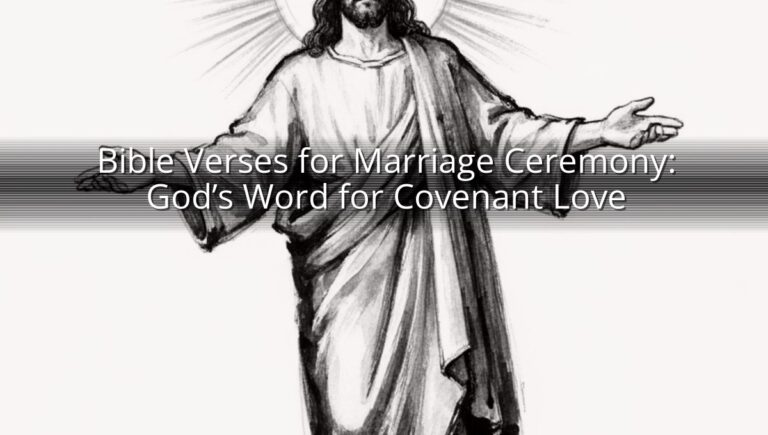
Bible Verses for Marriage Ceremony: God’s Word for Covenant Love
Bible Verses & Devotional
Bible Verses for Marriage Ceremony: God’s Word for Covenant Love
A marriage ceremony is more than a celebration—it’s a spiritual commitment made before God. Using Scripture helps the couple and the whole congregation remember that Christian marriage is built on God’s design, not only on feelings or tradition. The right “bible verses for marriage ceremony” can frame vows in truth: God created marriage, calls spouses to honor one another, and promises strength for the journey ahead. These verses also comfort the couple during real-life pressures—communication struggles, financial stress, family tensions, and seasons of change. Read these passages as blessings, anchors, and reminders that love is lived out through patience, faithfulness, and prayer. When you invite God’s Word into your wedding, your vows gain depth, clarity, and hope for years to come.
Bible Verses
Ecclesiastes 4:9-12 (King James Version)
“Two are better than one; because they have a good reward for their labour. For if they fall, the one will lift up his fellow: but woe to him that is alone when he falleth; for he hath not another to help him up. Again, if two lie together, then they have heat: but how can one be warm alone? And if one prevail against him, two shall withstand him; and a threefold cord is not quickly broken.”
It highlights the strength found in partnership, encouraging a couple to face life together.
1 Peter 3:7 (King James Version)
“Likewise, ye husbands, dwell with them according to knowledge, giving honour unto the wife, as unto the weaker vessel, and as being heirs together of the grace of life; that your prayers be not hindered.”
This verse teaches respect and honor between spouses, reinforcing kindness and spiritual consideration.
Psalms 127:1 (King James Version)
“Except the LORD build the house, they labour in vain that build it: except the LORD keep the city, the watchman waketh but in vain.”
It reminds couples that God builds what lasts, fitting for a ceremony that seeks divine help and guidance.
God Designed Marriage for Unity and Covenant
When Christians speak about marriage, we don’t begin with a contract or a romantic moment—we begin with God’s purpose. Genesis 2:24 gives the foundation: a man leaves, is united, and becomes “one flesh.” In a wedding setting, this verse helps everyone understand that the ceremony isn’t merely public commitment; it’s a covenant response to God’s design. Marriage becomes a sacred joining, intended to reflect unity, intimacy, and shared life.
Because God created marriage, the couple can approach their vows with more than emotion—they can approach with conviction. The unity promised in Genesis is not only physical; it also points toward shared goals, a shared future, and a shared moral direction under God.
Ecclesiastes 4:9-12 adds practical encouragement: life is easier when you walk together. Two are better than one, not because either person is weak, but because companionship creates resilience. The picture of a cord that is strengthened by twisting together communicates something vital for married life: love grows stronger through daily agreement, mutual support, and steadfast presence.
This is why Scripture belongs at the center of a marriage ceremony. Verses like Genesis 2:24 and Ecclesiastes 4:9-12 frame the couple’s new season as purposeful and protected. They also remind the congregation that God’s plan for marriage is both spiritual and practical—unity that strengthens the relationship when circumstances challenge it.
Love in Marriage Is Sacrificial, Not Selfish
One of the greatest needs in every marriage is love that mirrors Christ. Ephesians 5:25-33 places the standard where it belongs—on sacrificial love and respectful honor. This passage doesn’t treat love as a mood; it treats love as a choice that builds the other person up. In a marriage ceremony, reading Ephesians 5:25-33 helps the couple see that their vows will be tested, and they are being called to respond with Christlike faithfulness.
At the same time, this passage is not only about what husbands should do. It describes mutual reverence and the deep unity marriage is meant to display. When congregations hear Ephesians in the context of a wedding, it shapes expectations: marriage is not about domination; it’s about devotion.
To bring the message into everyday life, pair Ephesians with 1 Corinthians 13:4-7. Many couples recognize these verses as a “love chapter,” but at a wedding they function as a mirror. 1 Corinthians 13 describes love that is patient when misunderstandings rise, kind when words could cut, and willing to endure when circumstances are difficult. It also states that love is not boastful or easily angered—qualities that matter in every home.
Read together, these passages guide both heart and behavior. Ephesians shows the reason love exists in marriage—Christ-centered sacrificial commitment. 1 Corinthians shows what that commitment looks like day by day—patience, kindness, and perseverance.
In the end, the marriage ceremony becomes more than a promise to stay—it becomes a promise to grow into love that reflects Jesus.
Honor, Respect, and Prayer Matter From Day One
A healthy marriage is built on honor. First Peter 3:7 reminds spouses to live with understanding and respect. It’s a verse that challenges couples to consider each other’s perspective rather than dismissing it. In a ceremony moment, it can feel like more than advice; it’s a declaration that love is expressed through thoughtfulness and reverence.
This kind of honor is especially important because marriage blends two backgrounds—different family cultures, different communication styles, and different expectations. Without respect, differences become conflict. Without understanding, disagreement becomes distance. First Peter 3:7 calls the couple to approach their shared life with spiritual seriousness and compassion.
Prayer also belongs at the center of marriage, because marriage doesn’t run only on willpower. Psalm 127:1 says that unless the Lord builds the house, the builders labor in vain. That truth is both humbling and hopeful. It teaches that a marriage can be strong not simply because people are determined, but because God is invited to lead.
In a ceremony setting, Psalm 127:1 can be read as a blessing: “Lord, build what we cannot build on our own.” It acknowledges that life includes pressures that no couple can outwork—illness, grief, financial changes, and emotional seasons. But it also reassures the couple that God is not absent from the hardest chapters.
If you want your wedding to be shaped by Scripture, these verses provide a clear path. Honor each other with understanding (1 Peter 3:7). Seek God’s help and direction (Psalm 127:1). Then the vows become rooted in faith, not just in romance.
How to Live These Wedding Verses Every Day
After the ceremony, Scripture becomes a practice, not only a reading. Start by choosing one verse to revisit weekly with your spouse. For example, read Genesis 2:24 as a reminder that you are “one flesh” in shared decisions—finances, schedules, and priorities. Ask a simple question after dinner: “How did we act like one this week?”
Second, turn love definitions into daily habits. Use 1 Corinthians 13:4-7 as a conversation starter during real situations, not only during calm moments. When you feel tempted to respond harshly, pause and ask: “Which part of love are we practicing—patience, kindness, or endurance?” Keep it practical: take turns listening, speak gently, and repair quickly after conflict.
Third, build an “honor routine.” Apply 1 Peter 3:7 by speaking respectfully even when you disagree. Practice gratitude out loud. Thank your spouse for specific actions, and avoid sarcasm that slowly erodes trust.
Fourth, begin a shared prayer life immediately. Psalm 127:1 reminds you that God builds what lasts. Set aside a short time each morning or evening to pray for the home, the relationship, and wisdom. Even one shared sentence prayer counts: “Lord, build our marriage.”
Finally, remember Ephesians 5:25-33 as a guide for the way you love. Make one sacrificial choice each week—something that costs you comfort but benefits the other person. Over time, Scripture at the wedding becomes Scripture in the living room.
Frequently Asked Questions
Which wedding ceremony Bible verses best fit Christian vows?
Great options include Genesis 2:24 for unity, Ephesians 5:25-33 for sacrificial love, and 1 Corinthians 13:4-7 for what love looks like in action. These passages speak directly to covenant, character, and daily love—making them strong Scripture readings for a Christian marriage.
What verses to bless a marriage ceremony when you want God at the center?
Consider Psalm 127:1 as a blessing that honors God’s role in building a lasting home. Pair it with 1 Peter 3:7 to emphasize respect and understanding. Together, they highlight dependence on God and faithful care between spouses.
How can we include bible verses about marriage covenant love without making the ceremony too long?
Choose one foundational verse (like Genesis 2:24) and one love-practice passage (like 1 Corinthians 13:4-7), then add a short encouragement verse (such as Psalm 127:1). This keeps the program concise while still covering unity, character, and God’s help.
Are there Scripture readings for a Christian marriage that encourage teamwork?
Yes. Ecclesiastes 4:9-12 is especially suitable because it highlights companionship, strength in unity, and resilience. It’s a clear reminder that marriage is teamwork—walking together through both ordinary days and challenging seasons.
A Short Prayer
Heavenly Father, thank You for the covenant You designed and for the love You call us to live. Build this home with Your wisdom and grace. Help us honor one another, love with patience and kindness, and serve sacrificially as a reflection of Christ. Strengthen us when life is easy and hold us steady when it is hard. In Jesus’ name, Amen.